Ingredients & Recipes
Coconut Oil, Olive Oil, and Palm: The Beginner Soap Trio
Learn how coconut oil, olive oil, and palm work together in a beginner soap recipe. Includes percentages, lye safety, and FAQ.
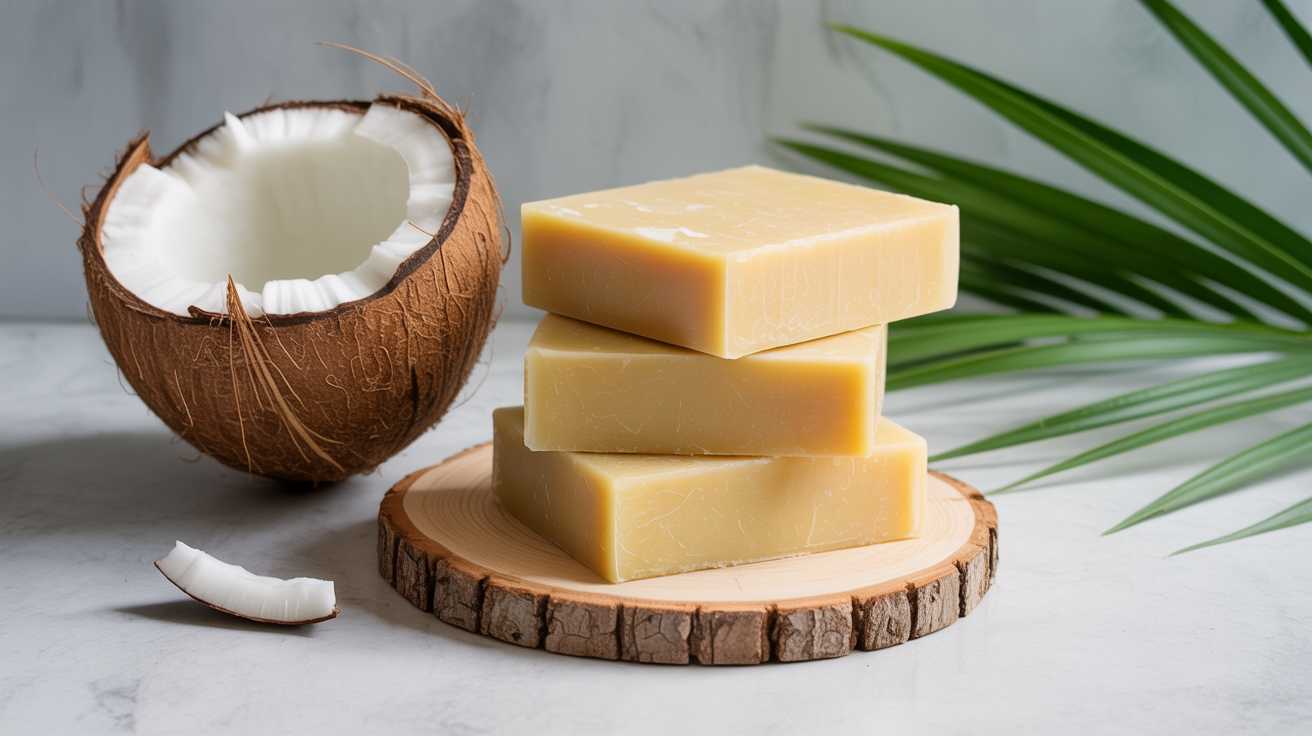
Many soap makers start with a kit or a single-oil experiment, but the coconut-olive-palm combination is the one they often return to for years. Each oil covers a gap the other two leave: coconut brings a firm bar with generous, airy lather; olive adds skin-conditioning slip; palm gives body and a stable, creamy foam. Together they balance in a way that no single-oil recipe quite manages.
A quick note before we get into specifics: this guide is about cold-process soap, which uses sodium hydroxide (lye). Lye is caustic. It can cause severe chemical burns and releases fumes when mixed with water. Every time you handle it, wear goggles and gloves, work in a ventilated space away from children and pets, and always add lye into water (never water into lye). Run every recipe through a reputable lye calculator before you make a batch. The percentages below are starting points for understanding the blend, not a finished recipe ready to use without calculating lye.
What Each Oil Brings to the Bar
Coconut oil is the workhorse of this trio. It saponifies quickly, produces a hard bar, and creates the kind of big, fluffy bubbles most people picture when they think of handmade soap. Its main limitation is that high percentages can feel drying on skin, which is why most recipes keep it at or below 30 percent of the total oil weight.
Olive oil sits at the other end of the spectrum. It takes longer to trace and needs a longer cure before the bar is ready to use, but it leaves skin feeling soft rather than stripped. Recipes built heavily around olive oil, sometimes called bastille soap when olive makes up 70 to 80 percent of the blend, produce a thinner, creamier lather rather than tall peaks of bubbles. In a three-oil recipe, olive typically runs from 30 to 50 percent.
Palm oil bridges the gap between the two. It hardens the bar similarly to coconut oil but without the same drying effect, and it contributes a smooth, even lather. Most recipes use it at 25 to 30 percent. (If you prefer to avoid palm for sustainability reasons, lard or tallow perform similarly in the bar.)
For a broader look at how each oil behaves across recipes and what you can substitute when one is out of stock, the guide to the best oils for soap making covers properties and tradeoffs in detail.
A Starting Percentage Breakdown
There is no single correct ratio for this trio, but the following split is a balanced place to start. It produces a bar that is hard, conditioning, and lathers well without leaning too far in any direction.
| Oil | Percentage | Amount in a 500 g batch |
|---|---|---|
| Coconut oil | 30% | 150 g |
| Olive oil | 40% | 200 g |
| Palm oil | 30% | 150 g |
A few directions you can take it as you get more comfortable:
- Milder and more conditioning: Raise olive to 50%, drop coconut and palm each to 25%. The bar will need a longer cure, closer to six weeks, but it will feel gentler on sensitive skin.
- Harder and longer-lasting: Raise coconut to 35% and reduce olive or palm slightly. A higher-coconut bar unmolds faster and holds up well in a humid shower dish, though it can feel drying for daily use without a slightly higher superfat.
Running This Blend Through a Lye Calculator
Never skip the lye calculator, even for a recipe you have made before. Each oil has its own saponification value (SAP value), which determines how much sodium hydroxide converts it to soap. When you blend three oils, the math has to account for each oil's share of the total. A lye calculator handles this automatically and accurately.
Steps to use one:
- Enter your total batch size in grams or ounces.
- Enter each oil as a percentage or exact weight.
- Set your water amount. A lye concentration of 33 percent (a roughly 2:1 water-to-lye ratio) is a common starting range for beginners.
- Set your superfat. Five percent is a typical starting point for a conditioning bar. The superfat guide explains how raising or lowering this number changes the bar's feel and lather.
- Use the lye amount the calculator outputs exactly. Do not round up or down.
Small errors in lye amount can leave excess lye in the finished bar, which means the bar could still burn skin even after a full cure. The calculator removes that guesswork.
Working Temperatures and Getting to Trace
Coconut and palm oil are both solid at room temperature (below about 76 F / 24 C). Melt them before combining with olive oil. Palm oil can separate if it cools down too quickly before you pour, so melt it fully and keep the blend warm until you are ready to work.
Most makers target oils and lye solution both cooled to somewhere between 90 F and 110 F (32 C and 43 C) before combining. Exact temperature matching is not required, but large gaps can affect how the soap behaves.
With 40 percent olive oil in the blend, this recipe traces more slowly than an all-coconut or high-coconut recipe. A stick blender brought to short pulses with stirring in between will take it to a light trace in two to four minutes. Stop at light trace if you want to add swirls or layers; bring it a bit further to medium trace for a simple pour.
After the soap is in the mold, cover it and leave it undisturbed for 24 to 48 hours. Unmold when the bar feels firm enough not to dent under light pressure. Cut within a day of unmolding to avoid crumbling at the edges.
Cure Time and Testing Before Use
Cure serves two purposes: water continues to evaporate, making the bar harder and longer-lasting, and saponification finishes completely.
Plan for a minimum of four weeks on open-air racks, with six weeks producing a noticeably firmer bar. Olive-heavy recipes benefit most from the extra time. Before you use any bar or give one away, do a zap test: touch the tip of your tongue briefly to the bar surface. A sharp zap or tingle, similar to touching a 9-volt battery, means excess lye is still present. The bar needs more cure, or should be discarded. No zap means the bar has cured through and is safe to use.
A step-by-step walkthrough of a beginner cold-process recipe takes you through the full sequence from weighing oils to unmolding, so you can see how this kind of blend looks in a real batch.
Frequently Asked Questions
Can I substitute another oil for palm? Yes. Lard and tallow are close substitutes that give similar hardness and lather stability. Shea butter works as a partial substitute at lower percentages, generally up to about 15 percent, though it softens the bar more than palm does. Any time you change an oil, re-run the recipe in a lye calculator since SAP values differ between oils.
Why is my bar still soft after 48 hours in the mold? Olive oil takes longer to firm up than coconut or palm. If the bar dents easily, leave it in the mold for another day and check again. Once cut and placed on cure racks, bars with a good share of olive oil firm up noticeably over the first couple of weeks.
How much fragrance or essential oil should I add? A practical starting point for most fragrance oils is 3 percent of the total oil weight, which works out to 15 g in a 500 g batch. Essential oils vary considerably by type. Check the usage rate listed by your fragrance supplier before you add it, since some fragrance oils accelerate trace quickly in this blend.
Do I need to insulate the mold after pouring? With 30 percent coconut and 30 percent palm, this blend will gel on its own in a warm room. If you want a consistent gel phase across the bar, wrap the mold in a towel after pouring. If you prefer to avoid gel (it changes the appearance slightly), put the mold in the refrigerator for the first 24 hours. Neither choice affects the safety or quality of the finished soap.
What if the soap seizes in the pot before I can pour it? Fragrance oils are the most common cause of sudden trace in a three-oil recipe. If the batter goes thick very fast, spoon or spatula it into the mold as quickly as you can and smooth the top. A seized bar is usually still usable; it just will not have clean edges or poured layers. For future batches, add fragrance at a lighter trace and test the fragrance oil with a small amount of batter first.