Ingredients & Recipes
How Much Water to Use in Cold Process Soap
Learn how to set the right water amount in cold process soap, understand lye concentration, water discounts, and why distilled water matters for beginners.
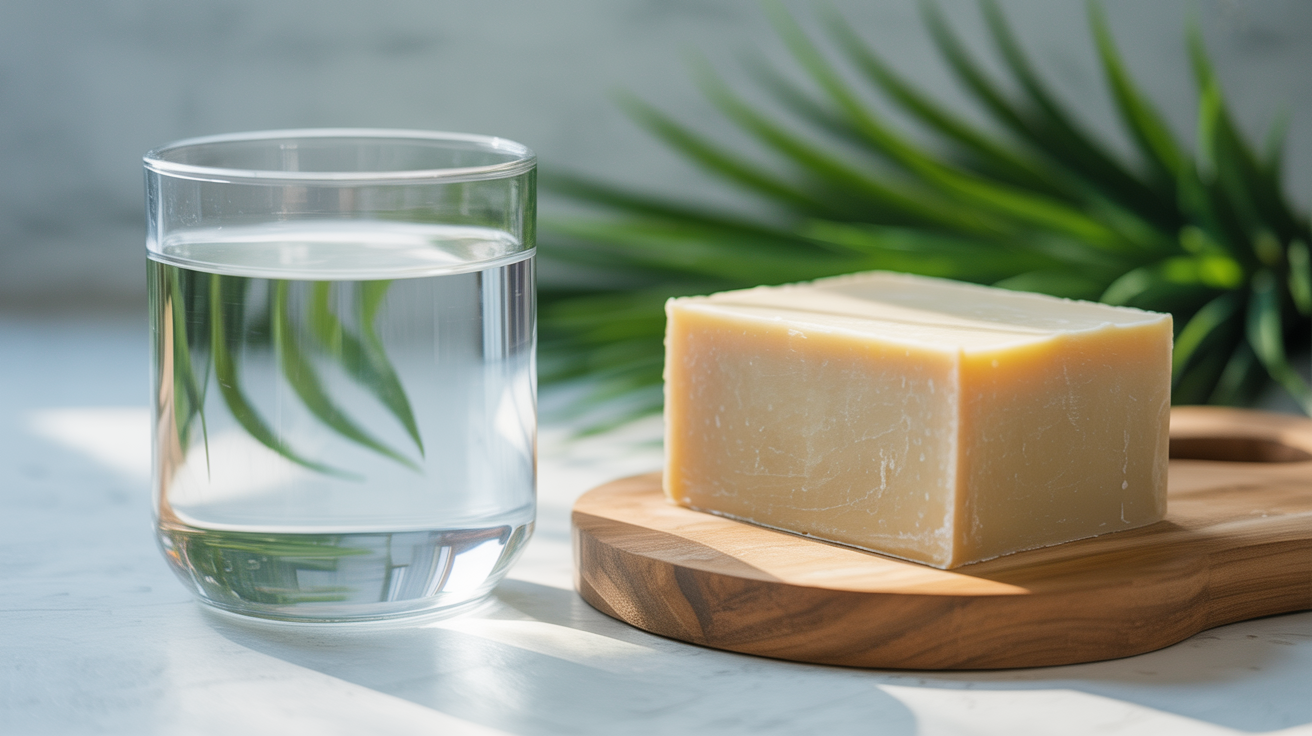
Water in cold process soap does one job: it dissolves the lye so you can safely mix it into your oils. The amount you use is adjustable, and lye calculators let you express it three ways, as a percentage of your total oils, as a water-to-lye ratio, or as a lye concentration percentage. A lye concentration of around 33–38% is a reliable starting point for beginners, and you can let any good calculator translate that into grams for you.
What Water Actually Does in Soap
Lye (sodium hydroxide) is a dry solid. It cannot react with oils on its own, it needs to dissolve into water first to form a lye solution. Once mixed into your oils, that solution triggers saponification, the chemical process that turns fats into soap.
After saponification is complete, most of the water is just excess. It sits in your soap during the cure and slowly evaporates over four to six weeks, leaving behind a harder, longer-lasting bar. The amount of water you start with affects how that process unfolds: more water means a softer, wetter batter that takes longer to trace and longer to unmold; less water gives a faster, firmer result.
One thing that does not change: you must use distilled water. Tap water contains minerals and trace elements that can interfere with saponification, cause discoloration, or speed up rancidity. Distilled water is predictable. Buy it at any grocery store and keep it on hand for every batch.
The Three Ways Lye Calculators Express Water
Every lye calculator asks you to set your water level before it generates a recipe. The three formats look different but describe the same thing.
Water as a Percentage of Oils
This is the amount of water expressed relative to your total oil weight. If your recipe uses 500 g of oils and you set water at 38%, you add 190 g of water. Common range: 33–38%.
Water-to-Lye Ratio
This compares grams of water directly to grams of lye. A 2:1 ratio means you use twice as much water as lye, so if your lye is 70 g, your water is 140 g. Most beginner recipes fall between 1.5:1 and 2.5:1.
Lye Concentration
This expresses how much of the lye solution is actual lye. At 33% lye concentration, one-third of the solution by weight is lye and two-thirds is water. At 40%, less water is present and the solution is more concentrated.
All three are equivalent ways of saying the same thing. A 33% lye concentration equals a roughly 2:1 water-to-lye ratio and about 38% water as a percentage of oils. Your calculator converts between them automatically, pick whichever format makes sense to you and let the math handle itself.
Recommended beginner setting: 33–36% lye concentration (or water at 33–38% of oils). This gives you enough working time to bring the batter to trace without rushing, while still producing a bar that releases from the mold within 24–48 hours.
Water Discounts: What They Are and When to Use Them
A "water discount" simply means using less water than the calculator's default (which is often around 38% of oils or a 2:1 water-to-lye ratio). More experienced soapers often use water discounts to speed things up and produce harder bars.
Here is how different water levels affect your batch:
| Water Setting (% of oils) | Lye Concentration | Trace Speed | Unmold Time | Risk Level |
|---|---|---|---|---|
| 38% | ~27% | Slow, lots of working time | 2–3 days | Low; beginner-friendly |
| 33% | ~33% | Moderate | 24–48 hours | Low-moderate |
| 28% | ~38% | Fast | 18–24 hours | Moderate; watch for partial gel |
| 23–25% | ~44–47% | Very fast; may seize | 12–18 hours | Higher; fragrance/colorant timing is tricky |
A water discount accelerates saponification and reduces the time your soap spends soft and vulnerable in the mold. The tradeoffs:
- Cracking and soda ash. Less water means heat builds up faster inside the loaf. If your soap overheats, it can crack through the center or develop a thick white soda ash layer on the surface.
- Faster trace. Heavily discounted water can cause batter to thicken quickly once fragrance is added, which can be a problem if you are planning swirls or layered designs.
- Shorter working time. That matters when you are still learning how your oils and fragrances behave.
For your first several batches, stay above 30% water (as a percentage of oils) or keep lye concentration at or below 36%. You get adequate working time, manageable trace, and predictable unmolding.
When a Water Discount Makes Sense
Once you are comfortable with basic technique, a modest discount (water at 28–30% of oils) can:
- Speed up the cure timeline slightly
- Help high-conditioning recipes (lots of soft oils like sunflower or canola) reach a usable firmness faster
- Reduce glycerin rivers in heavily insulated batches
Learn more about choosing the right oils for your recipe before experimenting with water discounts, since your oil blend affects how quickly batter thickens.
How to Measure and Mix Your Water Safely
Accurate weighing matters. Do not measure water by volume, milliliters and grams are close for pure water but the habit will fail you with other liquids. Weigh everything on a digital scale.
Steps:
- Weigh your distilled water into a heat-safe container (stainless steel or heavy plastic, nothing aluminum, lye corrodes it).
- Weigh your lye separately, never the other way around.
- Add lye to water, not water to lye. Pouring water onto lye can cause a violent, spattering reaction.
- Stir slowly until the lye is fully dissolved. The solution will heat up sharply (to 80–90°C or higher). Work in a ventilated area and avoid breathing the fumes.
- Set the solution aside to cool before adding it to your oils. Most soapers aim for 40–50°C for both liquids before combining.
Some soapers freeze a portion of their water as ice and add lye directly to the ice. This slows the temperature spike and can be useful for milk soaps or high-water recipes. It works, but it is not necessary for a standard batch.
Understanding your water level is connected to understanding your superfat setting and your oil blend. If you have not already, read what superfat means and why it matters before finalizing your recipe.
Ready to see these numbers in a real recipe? This simple beginner cold process recipe shows how water, lye, and oils work together in practice.
Frequently Asked Questions
Can I use tap water instead of distilled?
Technically the soap will form, but tap water introduces minerals (calcium, magnesium, chlorine) that can cause off-colors, spots, or faster rancidity. Distilled water is inexpensive and removes that variable entirely. Use it for every batch.
What happens if I use too much water?
Extra water extends trace time and leaves your soap softer for longer in the mold. It also increases the chance of glycerin rivers (translucent streaks caused by heat and excess water). Your bar will still soap, it just needs a longer cure. Too much water can also dilute the lye solution enough to slow saponification slightly.
What happens if I use too little water?
Very low water (lye concentration above 45%) makes the lye harder to dissolve fully, speeds trace dramatically, and increases the risk of the soap overheating in the mold (called "volcaning" when it gets bad). Stay above 30% water as a percentage of oils until you have a few batches under your belt.
Do I need to adjust water if I change my oil blend?
Changing oils changes the amount of lye you need (which is why lye calculators exist), but it does not directly change the water percentage you choose. What does matter is that soft, high-oleic oils (like olive or high-oleic sunflower) produce naturally slower-tracing batters, you may want slightly less water with those recipes to avoid a very long wait at trace.
My calculator shows different defaults depending on which format I use. Are they the same?
Yes. The calculator is just expressing one quantity three different ways. If you set 33% lye concentration, switch to "water as % of oils," and the number changes to approximately 38%, you have not changed anything, those two numbers describe the same amount of water for your specific recipe.