Ingredients & Recipes
How to Use Hard Butters in Soap: Shea, Cocoa, and Mango
Learn how to use shea, cocoa, and mango butter in cold process soap, including safe usage rates, what each butter contributes, and how to avoid common issues.
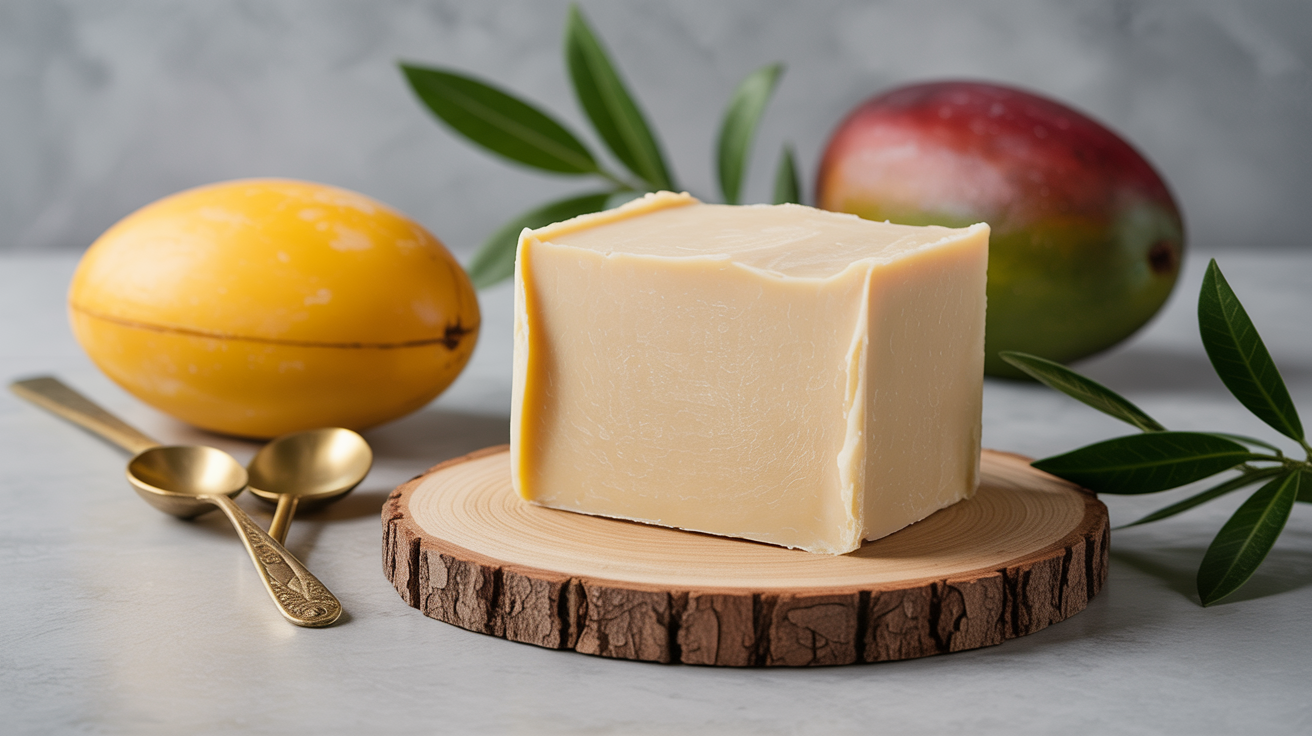
Hard butters are some of the most satisfying ingredients to add to a soap recipe. They melt slowly, smell faintly of their source material, and give finished bars a smooth, dense quality that liquid oils alone rarely achieve. Shea, cocoa, and mango are the three you will see in most beginner recipes, and for good reason: they are widely available, predictable, and each brings something different to a bar.
That said, butters are not interchangeable with liquid oils, and using too much of any one of them creates problems. A bar heavy in shea can stay soft for weeks. Too much cocoa butter makes a bar waxy and hard to lather. Mango butter is the most forgiving of the three but still needs a sensible ceiling. This guide covers what each butter contributes, how much to use, how to work them safely into a cold process recipe, and how to run your numbers through a lye calculator before you start.
What Hard Butters Actually Do in a Soap Bar
Butters are fats that are solid at room temperature. In soapmaking, that solidity matters because it influences two things: how quickly a bar hardens during cure, and what the lather and skin feel are like once it cures.
Every fat you use in cold process soap is a mix of fatty acids. Shea, cocoa, and mango all sit on the high end of unsaponifiable content, which means a portion of each butter does not react with lye at all. That fraction stays in the finished bar as a natural moisturizer, which is part of why butter-heavy recipes feel conditioning on skin.
Hard butters also raise a bar's hardness score, though the details vary by butter. You can check your recipe's expected hardness using any reputable lye calculator. SoapCalc and the Brambleberry Lye Calculator both show fatty acid breakdowns and hardness scores so you can see how your butter choice moves the numbers before you touch a single ingredient.
Before any recipe goes further than the planning stage, run it through a lye calculator. The amount of lye required changes with every fat you use, and butters are no exception. Always wear goggles and gloves, work in a ventilated space away from children and pets, and add lye to water, never the other way around. That sequence matters because it prevents a violent steam reaction.
For more on how individual oils and fats behave in a recipe, the guide to the best oils for soap making and what each one does is a useful starting point.
Shea Butter in Cold Process Soap
Shea butter is the most common butter in beginner recipes and the one with the widest margin for error. It is soft for a butter, closer in texture to room-temperature coconut oil than to solid cocoa butter, which makes it easy to melt and weigh.
In the finished bar, shea contributes conditioning and a creamy lather. It does not dramatically harden a bar the way cocoa butter does, but it adds a silky skin feel that beginners often notice right away when they start using a bar they made themselves.
Typical usage rate: 5 to 15 percent of your total oil weight is the range most recipes land in. At 5 percent you get a subtle conditioning effect. At 15 percent the bar stays softer during cure and may need a few extra weeks before it feels hard enough to unmold without denting.
Because shea stays soft during cure for longer than other butters, many soapmakers keep it at or below 10 percent when they are working with a recipe that already uses a high percentage of liquid oils. If you are trying shea for the first time, start at 5 to 8 percent, run your recipe through a calculator, and see how the bar behaves over a four-week cure.
Unrefined shea has a nutty, faint smell that usually disappears under fragrance. Refined shea is odorless. Either works in cold process soap.
Cocoa Butter and Mango Butter: What Each One Does
Cocoa butter is the hardest of the three. It is solid and brittle at room temperature and melts cleanly into oils once it reaches around 34 to 38 degrees Celsius. In a soap bar, it creates hardness and a tight, stable lather. It also adds a faint chocolate scent to unscented bars, though that fades significantly during cure.
The downside of cocoa butter is that it can make a bar feel waxy or draggy on skin if the percentage climbs too high. It also raises a bar's hardness score quickly, which sounds good until you realize that a bar with too much cocoa butter can develop white spots or a wax-like sheen. Keep cocoa butter between 5 and 15 percent of your oil weight, with most experienced makers landing between 5 and 10 percent for an everyday bar.
Cocoa butter also has one practical quirk: it accelerates trace in some recipes, particularly those with fragrance oils that already move quickly. If your recipe includes a known accelerator, keep your cocoa butter at the lower end of the range and have your mold ready before you add fragrance.
Mango butter sits between shea and cocoa in terms of hardness. It melts at a slightly lower temperature than cocoa butter and produces a bar that is firm but not brittle. On skin, mango butter has a reputation for a lighter, less occlusive feel than either shea or cocoa, which makes it a reasonable option for people who find shea too heavy.
Usage rates for mango butter track closely with shea: 5 to 15 percent is the working range, with most recipes sitting between 5 and 10. Mango butter is less widely available than shea or cocoa, and prices vary more by supplier, but it is not difficult to source online from soap supply companies.
For recipes built around a superfat that keeps conditioning fats unreacted in the final bar, see the overview of what is superfat in soap making for more detail on how that calculation works.
How to Melt, Measure, and Add Butters Without Seizing
The main issue beginners run into with hard butters is incomplete melting. A chunk of unmelted cocoa butter sitting in your oils will not cause harm, but it will give you an inaccurate weight when you measure, and it can show up as a soft or discolored spot in a finished bar.
The simplest approach is a double boiler or a microwave in short bursts. If you use a microwave, heat the butter in 30-second intervals, stirring between each pass. Cocoa butter especially tends to hold its shape even when most of it has melted, so stir it fully and look for any solid pieces before you assume it is done.
Weigh your oils and butters after they are fully liquid. Then let your oil blend cool to around 35 to 45 degrees Celsius before combining with your lye solution. Most soapmakers try to bring oils and lye solution to a similar temperature before combining, though the range matters more than hitting an exact number.
Add your lye solution to the oils slowly, stick blend to trace, and proceed with your recipe from there. Hard butters do not require any special sequencing beyond being fully melted and correctly weighed before you combine anything.
If you want to try a complete beginner recipe that uses a modest percentage of shea butter alongside other starter oils, a simple beginner cold process soap recipe walks through the full process step by step.
Frequently Asked Questions
Can I use all three butters in the same recipe? Yes. Many recipes combine shea and cocoa butter together, and adding a small percentage of mango butter works too. The main thing to watch is the combined percentage. If you have 10 percent shea and 10 percent cocoa butter in the same recipe, your bar may struggle to lather as well as you expect, and the texture could feel waxy. Keep the total butter percentage under 20 to 25 percent of your oil weight and run the recipe through a lye calculator to check the fatty acid breakdown before you commit.
Do I need to adjust my lye amount when I add butter? Yes. Every fat has its own saponification value, which is the amount of lye needed to convert it to soap. When you add or increase a butter in your recipe, the lye amount changes. This is exactly why a lye calculator is not optional; it recalculates everything automatically when you enter your percentages. Never use a lye amount from one recipe as an estimate for a different recipe.
Why is my bar still soft after three weeks? High shea butter percentages are a common cause of slow hardening. Shea has a lower hardness contribution than cocoa or mango butter, and recipes heavy in liquid oils plus shea can take six weeks or longer to cure to a firm bar. Give it time, keep it in a cool dry spot with good airflow, and test it before cutting if you are unsure.
Does refined versus unrefined butter affect the soap? The scent and color differ, but the saponification values are close enough that most lye calculators treat them identically. Unrefined shea has a faint nutty smell and an ivory or slightly yellow color; refined shea is white and odorless. For fragrance-heavy recipes, either works. For unscented or natural bars, unrefined butters add a faint botanical character that some soapmakers prefer.
Can I use these butters in melt and pour soap? You can add small amounts of shea or mango butter to a melt and pour base as an additive, but cocoa butter can cause separation or a greasy layer on the surface of finished bars. Keep butter additions in melt and pour under 1 teaspoon per pound of base and test with a small batch before committing to a full pour.