Ingredients & Recipes
How to Adapt and Resize a Soap Recipe
Learn how to resize a soap recipe safely: scale your oils by batch size, adjust fragrance and water, and always recalculate lye in a lye calculator.
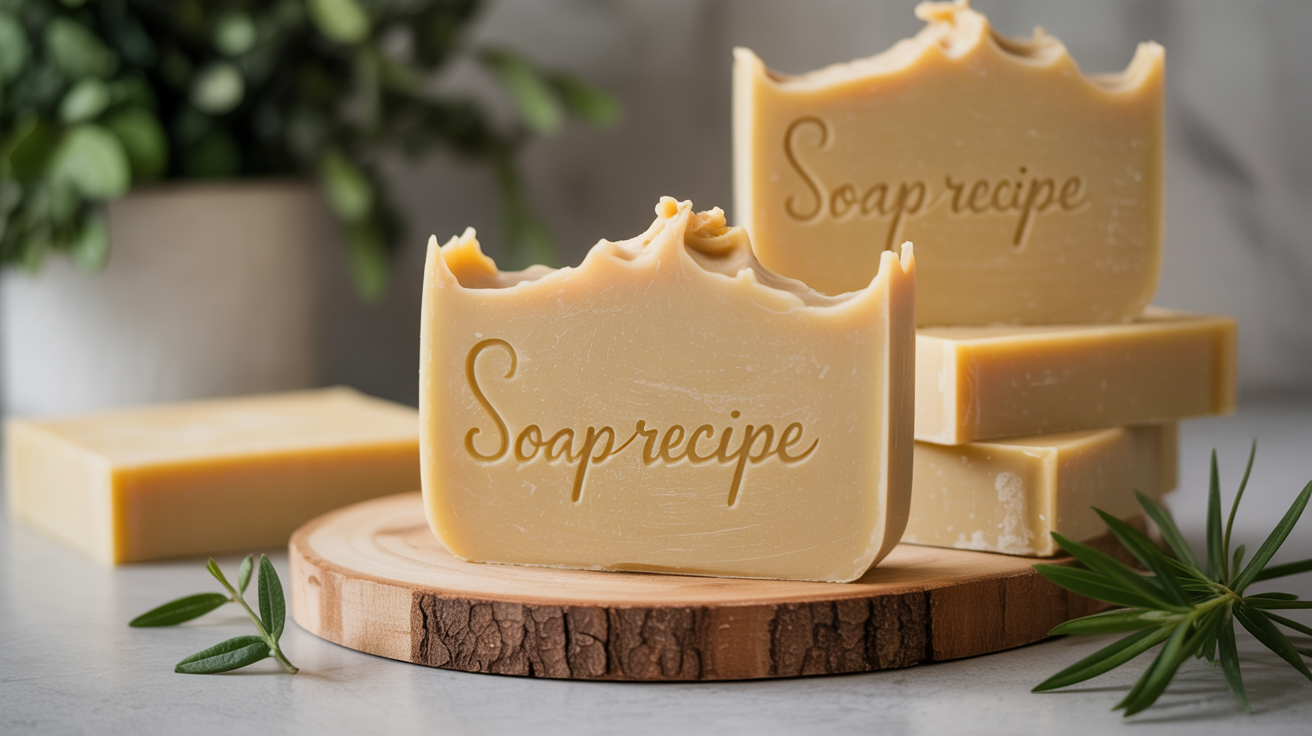
You found a cold-process recipe you want to try, but it makes ten bars and you only have a small loaf mold that holds six. Or the reverse: you want to double a batch for holiday gifts. Resizing sounds like simple multiplication, but there is one part you must never scale by hand: the lye. Because each oil reacts with sodium hydroxide at a different rate, lye is always calculated from the oil weights using a lye calculator, not by applying a multiplier to the original number. Get that rule right and the rest of the math is genuinely straightforward.
This guide walks through how soap recipe percentages work, how to find your new batch size, how to scale each ingredient correctly, and what to do when you want to swap or add an oil at the same time.
How Soap Recipes Are Actually Written
Most published soap recipes list two numbers side by side: the weight of each oil in grams or ounces, and its percentage of the total oil weight. That percentage column is the real recipe. It tells you what fraction of the total batch each oil makes up, and those fractions should always add up to 100%.
The lye and water amounts are calculated separately, based on the total oil weight and the saponification value (SAP value) of each oil. Olive oil, coconut oil, and castor oil all react with sodium hydroxide at different rates, so a recipe with 40% olive oil needs a different lye amount than one with 60% olive oil, even if the total oil weight is the same.
This is why a lye calculator exists. Tools like SoapCalc, the Brambleberry calculator, or Soap Making Friend take your oil weights, your desired superfat percentage, and your water ratio, then output the exact lye and water amounts. Running your resized recipe through one of these takes about two minutes and removes any chance of a lye error.
Step One: Decide on Your New Oil Total
Before you touch any numbers, figure out how much soap you actually need. A standard cold-process bar weighs about 3.5 to 4.5 oz (99 to 128 g) after cure. Multiply the number of bars by your target bar weight to get the rough total pour volume.
Total oils make up roughly 60 to 70% of the finished pour weight in most recipes, because water and lye add to the mass. A simple way to back-calculate:
- Target: 8 bars at 4 oz each = 32 oz total pour
- Oil portion: 32 oz x 0.65 = roughly 20.8 oz total oils
Round to a clean number (21 oz, or 595 g) for easier math. This is your new oil total.
If you are working with a specific mold, many suppliers list the mold's oil capacity in their product description. Use that number directly.
Step Two: Scale Each Oil Using the Percentage Column
Once you have your new oil total, multiply each oil's percentage by that number. Do not use the original gram or ounce amounts as your starting point. Use the percentages.
Example: A recipe calls for:
- Coconut oil: 30%
- Olive oil: 40%
- Lard or palm: 25%
- Castor oil: 5%
If your new oil total is 600 g:
- Coconut oil: 0.30 x 600 = 180 g
- Olive oil: 0.40 x 600 = 240 g
- Lard: 0.25 x 600 = 150 g
- Castor oil: 0.05 x 600 = 30 g
Check that the weights add up to 600 g. If they are off by a gram or two due to rounding, adjust the largest oil to compensate.
Do not touch the lye amount yet. The lye for this new batch must come from the lye calculator.
Step Three: Run Everything Through a Lye Calculator
Open your lye calculator of choice and enter the new oil weights one by one. Set your superfat to whatever the original recipe used (5% is common for an everyday bar; what is superfat in soap making explains how that number affects your finished bar). Set your water amount as a percentage of oil weight, typically 33 to 38%.
The calculator will output:
- The exact grams of sodium hydroxide needed
- The water weight to dissolve it in
- A brief quality assessment of the oil blend (hardness, lather, conditioning)
Write down the lye and water amounts and use those. Never scale the original lye number by a multiplier, even if you are confident the oil ratios stayed exactly the same. A small percentage error in lye can mean a bar that is lye-heavy and unsafe to use, or one that is too soft and full of unreacted oils.
Before you work with the lye solution: put on goggles and gloves, work in a ventilated space away from children and pets, and always add lye to the water (not water to lye). The reaction is exothermic and releases fumes briefly. Refer to lye safety for soap making if this is your first time handling sodium hydroxide.
Step Four: Scale Fragrance, Colorants, and Additives
Fragrance oils and essential oils are scaled to total oil weight, not total batch weight.
- Fragrance oils: typically 1 to 3% of the oil weight. Check the supplier's maximum usage rate for the specific fragrance, as some floral or citrus types are lower.
- Essential oils: usually 1 to 3% for most, with some exceptions (clove and cinnamon bark EOs are limited to 0.5 to 1% because they can irritate skin and accelerate trace).
- Skin-safe colorants such as micas, oxides, and clays: most makers use 1 teaspoon of colorant per pound (454 g) of oils as a starting point, adjusting for the shade they want.
- Additives like oatmeal, honey, or sodium lactate: these are also typically given as percentages of oil weight or as a fixed amount per pound of oils. Scale them proportionally to your new oil total.
Water and lye do not get scaled by the percentage column. They come from the calculator.
What Stays the Same When You Resize
Some things do not change with batch size, and it is worth knowing which they are so you do not second-guess yourself:
- Superfat percentage: This is built into the lye calculator. Keep the same percentage as the original recipe.
- Cure time: A larger batch does not need more or less time on the cure rack. Cold-process soap typically cures for four to six weeks regardless of batch size, because saponification and water evaporation work at the same rate through the bar.
- Temperature targets: Most recipes bring oils and lye solution to somewhere between 90 and 110°F (32 to 43°C) before combining. This range does not shift with batch size, though a larger batch retains heat longer and may reach gel phase more easily.
- Mold lining and technique: The process is the same. Larger batches just need proportionally larger molds or multiple smaller ones.
Swapping an Oil at the Same Time
If you want to change the recipe while resizing, treat it as a new recipe entirely. Swap one oil for another within the same percentage, keeping the total at 100%, then run the updated oil list through the lye calculator again. A change in oil composition means a change in the SAP values, which means a different lye amount.
For example, if the original recipe has 40% lard and you want to use tallow instead, the SAP values are close enough that the lye amount will barely change. But if you swap lard for shea butter, the SAP value is lower, so you need less lye. The calculator will catch that. You will not.
If you are building your first original recipe from scratch rather than resizing an existing one, the best oils for soap making covers how each oil contributes to hardness, lather, and conditioning so you can build a balanced blend. And if you want a tried-and-true starting point to scale from, a simple beginner cold-process soap recipe is a reliable base for your first attempts.
Frequently Asked Questions
Can I just multiply the whole recipe by two to double a batch?
You can multiply the oil weights by two, but you must run the new amounts through a lye calculator rather than doubling the original lye amount. Even though the oil percentages stay the same, entering the new weights into the calculator confirms the lye amount is correct and avoids any rounding error that crept into the original recipe.
What if I want to make a half-batch just to test a new fragrance?
Same process: take the percentage column, multiply by your smaller oil total, then run through a lye calculator for the new lye and water amounts. Half-batches work fine. Just note that a small batch generates less mass, retains less heat, and may not go through gel phase on its own. You can insulate the mold if you want to encourage gel.
How do I figure out the right oil total for my mold?
Many silicone mold listings include the oil capacity. If yours does not, fill the mold with water to its working depth, weigh the water in grams, and multiply by 0.65. That gives you a reasonable oil total for a typical recipe water-to-oil ratio. Round to the nearest 25 g for clean math.
Do I need to adjust the superfat when I resize?
No. The superfat is a percentage baked into the lye calculator calculation. As long as you keep the same superfat setting in the calculator when you enter your new oil weights, the lye amount will account for it automatically.
My resized batch came out soft or oily. Did I scale wrong?
Possibly, but the more likely culprits are too-high water content, oils that were too warm when combined, or not enough hard oils in the blend. Check that the lye amount matches what the calculator produced for your exact oil weights, then look at the oil blend itself. A recipe with a lot of soft oils (olive, sunflower, sweet almond) will always take longer to harden than one with more coconut or palm.