Troubleshooting & Safety
Lye Safety for Soap Making: A Beginner's Guide
Learn how to handle lye safely in soap making. Protective gear, the add-lye-to-water rule, ventilation tips, and what to do if lye contacts skin or eyes.
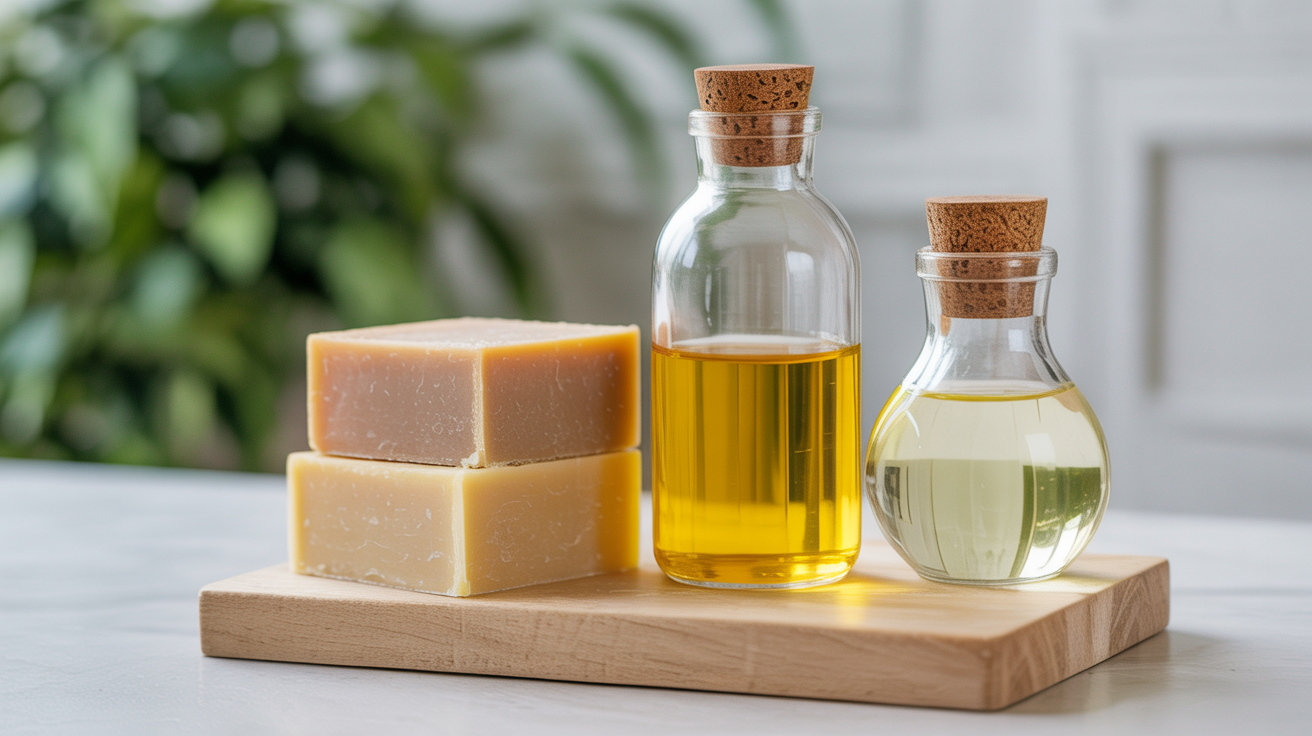
Lye is caustic. That's the plain truth, and there's no point softening it. Sodium hydroxide (NaOH), the lye used in cold-process and hot-process bar soap, will burn skin and damage eyes on contact. But hundreds of thousands of hobbyists work with it safely every week because the risks are manageable with straightforward precautions. Once you understand what lye does and why, the safety steps stop feeling like a chore and start making obvious sense.
Finished, fully cured soap contains no free lye. The saponification reaction converts every bit of sodium hydroxide into soap molecules. The caution is for the raw lye and the freshly mixed batter, not the bar you'll be using in six weeks.
What Lye Is and Why It Burns
Sodium hydroxide is a strongly alkaline compound with a pH near 14. When it dissolves in water, it releases heat and creates a solution corrosive enough to break down fats, proteins, and skin tissue. That's exactly what makes it useful for soap: it cleaves fatty-acid chains from glycerol and bonds with them to form soap. But your skin contains the same proteins and lipids, which is why exposure without protection causes chemical burns.
Lye also releases fumes when it hits water. The vapor isn't acutely toxic at the concentrations produced in a home kitchen, but it irritates mucous membranes, and breathing it for several minutes is unpleasant and unnecessary. Brief, ventilated exposure is the normal working condition.
Dry Lye vs. Lye Solution
Dry sodium hydroxide beads or flakes are highly hygroscopic, meaning they absorb moisture from the air. An open container left on a humid counter will start clumping and lose potency. Keep the lid on except when you're actively measuring, and store it in a cool, dry place away from children and pets. A clearly labeled, childproof container is non-negotiable.
Once dissolved, the lye solution is liquid and can splash. Handle it in a container larger than you need, move deliberately, and never rush.
Protective Gear: What to Wear Every Time
There is no "quick pour" that skips safety gear. Lye splashes happen in seconds and produce burns in seconds. Protective equipment is simple and inexpensive.
Goggles are the most critical item. Safety glasses leave gaps at the sides; goggles seal around your eyes. A lye splash to the eye can cause permanent damage. Chemical-splash goggles cost a few dollars and are reusable indefinitely.
Gloves should be nitrile, latex, or rubber. Thin vinyl gloves are not reliable. Wear gloves from the moment you open the lye container until your equipment is fully rinsed and drying.
Long sleeves and closed shoes protect your arms and feet from spills. Bare skin and lye are a bad combination, and the spill you don't expect is the one that matters.
A quick safety checklist before you start:
- Chemical-splash goggles on
- Gloves on (nitrile, latex, or rubber)
- Long sleeves covering both arms
- Closed-toe shoes
- Children and pets out of the workspace
- Ventilation open (window, fan, or range hood)
- Water source (sink or bucket of water) within reach
- Lye container clearly labeled
- Mixing vessel is heat-safe (stainless steel, heavy HDPE, or borosilicate glass)
- Nothing breakable or absorbent near the work area
The Golden Rule: Add Lye to Water, Never Water to Lye
This is the single most important procedural rule in soap making, repeated so often it can start to sound like a ritual. It isn't. There's a real chemical reason.
When you add water to a concentrated pile of lye, the exothermic reaction happens explosively in a confined space. The result is a violent steam eruption, sometimes called a "lye volcano," that can spray hot caustic liquid several feet. Adding lye to water spreads that same heat release across a much larger volume of liquid, and it dissipates safely.
The mnemonic: LYE to WATER, think of "lye" as the letter "L" coming before "W" for water, alphabetically. Or just: always pour into the larger, safer liquid.
Stir as you pour, slowly and steadily. The solution will heat significantly, often reaching 180–200°F (82–93°C). This is normal. Set it in a safe spot to cool before combining it with your oils, unless your method calls for hot-process work.
Choosing the Right Container
Not all containers handle the heat. Avoid thin plastic, ordinary glass, and aluminum (lye reacts violently with aluminum). Use heavy-duty HDPE (#2 plastic), stainless steel, or borosilicate glass pitchers. Many soapers keep a dedicated lye pitcher, clearly marked "LYE" with a permanent marker, that never gets used for food.
Ventilation and Fumes
Mix your lye solution somewhere with moving air. A window open with a cross-breeze, a range hood on high, or a box fan exhausting toward the outside all work. The fumes dissipate quickly; you don't need to leave the room, but you don't want your face directly over the container as you stir.
If you work in a small interior kitchen with no ventilation options, mix the lye solution outdoors or in a garage, let it cool to room temperature, then bring it inside. Some soapers do all their lye work outside as a standing habit, which eliminates the fume question entirely.
Avoid leaning in to check on things. Stir from the side, keep your face angled away, and let the vapor drift away from you naturally.
Setting Up a Safe Workspace
A clutter-free counter reduces accidents. Before you start:
Remove everything that doesn't belong in the workspace: food, drinks, dishcloths, cutting boards. Lye solution on a kitchen towel is an invisible hazard the next person who picks it up won't expect.
Keep kids and pets out of the room while you're working with raw lye. Not just out from underfoot, but out of the room. A toddler who grabs for a brightly colored pitcher while your back is turned is a medical emergency. Close the door if you can.
You may have read advice to keep a bowl of vinegar nearby to neutralize lye spills or burns. Current guidance from chemists and poison control centers does not support this. Vinegar is acidic, and using an acid to neutralize an alkaline burn creates an exothermic reaction on already-damaged skin. The correct response to lye contact, whether a spill on skin or a splash in the eye, is copious running water for a prolonged period.
Keep your sink clear and running water accessible. That's the actual emergency tool.
Mixing and Cleanup
Once your lye solution has cooled and you've combined it with your oils, the acute hazard decreases as saponification begins. Raw soap batter is still alkaline enough to irritate skin, so keep gloves on until cleanup is complete.
Soap your equipment (bowls, spatulas, stick blender) before washing. You can leave used soapmaking tools sitting for 24–48 hours; the residue will saponify and rinse off much more easily, and the residual lye will have reacted by then. This is a practical tip, not just convenience.
If you do rinse immediately, flush with plenty of water. Lye residue in a drain is fine, it's a component of some drain cleaners, but wipe up drips from counters and handles before they dry.
Never put lye containers or any strongly alkaline residue in recycling without rinsing thoroughly. A trace of lye solution inside an empty container is enough to burn the next person who handles it.
What to Do If Lye Contacts Skin or Eyes
Stay calm and act fast.
Skin contact: Remove any contaminated clothing immediately. Rinse the affected area under cool running water for at least 20 minutes. Do not apply vinegar, lemon juice, or any neutralizing agent. Water is the correct treatment. If redness, blistering, or significant pain persists after rinsing, seek medical attention.
Eye contact: This is a medical emergency. Flush the eye with cool running water for at least 20–30 minutes, holding the eyelid open if you can. Remove contact lenses immediately if present. Call poison control (in the US: 1-800-222-1222) or go to an emergency room. Do not try to neutralize the chemical in the eye with anything other than water. Lye exposure to eyes can cause vision loss; prompt treatment dramatically improves outcomes.
Lye ingestion: Call poison control immediately and follow their instructions. Do not induce vomiting.
Post the poison control number near your workspace before your first batch. It costs nothing and may matter a great deal.
Frequently Asked Questions
Is lye dangerous for beginners?
Lye is a serious chemical that requires respect, not fear. Beginners handle it safely all the time by following the same steps experienced soapers use: goggles, gloves, long sleeves, proper ventilation, and adding lye to water. The risk comes from complacency, not from being new. Start with a simple recipe, read through the entire process before touching anything, and work slowly.
Can I make soap without lye?
No true soap can be made without lye or another alkali. "Melt and pour" bases look like a workaround, but the saponification was done during manufacturing using lye. If you're using a true soap base from a craft store, the dangerous chemistry is already done. If you're making soap from scratch with oils and water, lye is required.
Does finished soap still contain lye?
A fully saponified, properly cured bar of soap contains no free lye. The sodium hydroxide is completely consumed during the chemical reaction with oils and water. This is why cured soap is gentle enough to use on your face. The cure period (typically 4–6 weeks for cold-process) allows residual water to evaporate and the reaction to finish completely.
What happens if I accidentally add water to lye instead of lye to water?
If you pour a small amount of water onto a pile of dry lye, move back immediately and don't lean over the container. The reaction may spatter or steam. Let it settle, then carefully (with goggles and gloves on) add more water slowly and stir from the side. If the container tips or the reaction is vigorous, step back and let it settle before approaching. Dispose of the mixture and start over if you're uncertain about what happened.
Can I use any container for mixing lye?
No. Safe options are heavy-duty HDPE plastic (#2), stainless steel, or borosilicate glass. Avoid aluminum (lye reacts with it and produces hydrogen gas), thin or soft plastics, ordinary tempered glass, and anything with a narrow opening that traps fumes. A wide-mouth, heat-resistant pitcher works well, and keeping a dedicated lye container eliminates any confusion.
If your soap batter behaves unexpectedly after mixing, why your soap seized and what to do about it covers the common causes. Oil separation after the pour is a different issue, explained in soap that separated or has oil pockets. And if you're seeing a chalky white coating on your finished bars, that's usually soda ash, a benign surface effect covered in what is soda ash on soap and how to prevent it.