Scents & Colors
How to Color Soap Naturally
A beginner's guide to coloring cold process soap with clays, plant powders, and other natural colorants — what colors to expect and how to add them.
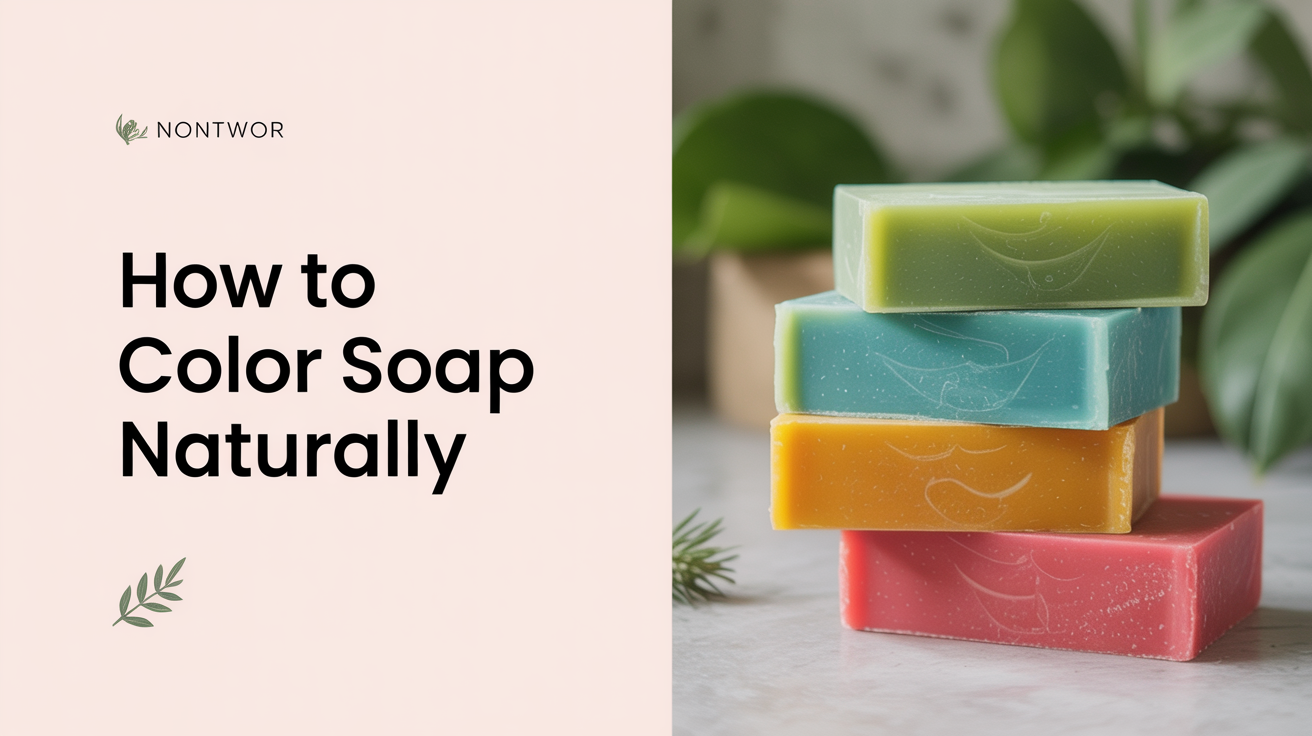
Synthetic micas give vivid, stable color. Natural colorants give something quieter: soft taupes, warm golds, dusty greens. If that's the palette you're after, or if you simply want to keep your ingredients close to the earth, natural options work well, as long as you go in with accurate expectations.
This guide covers the most reliable natural colorants, how to prepare and add them, and what actually happens to the color over time.
Where Natural Color Comes From
Natural soap colorants fall into a few broad categories. Each behaves differently in the high-pH environment of cold process soap, which is why some colors hold beautifully and others shift or fade.
Clays
Clays are among the most beginner-friendly natural colorants. They disperse smoothly, don't morph unpredictably, and add a subtle skin-feel benefit on top of color.
- Kaolin clay is white or off-white. It won't add much color on its own, but it gives a creamy base and is often blended with other colorants.
- Rose clay produces a soft dusty pink. It's one of the few naturals that holds its blush tone through cure without fading dramatically.
- French green clay gives a muted sage-green. The green can shift slightly toward gray as the bar cures, but it stays in the green family.
- Moroccan red clay yields a terracotta or brick-red tone.
Plant Powders
Plant-derived powders offer a wide range of starting colors, though many are sensitive to the alkaline environment of cold process soap.
- Spirulina starts as bright blue-green and produces a green soap, but expect it to fade toward olive or yellow-green during cure. It's worth using if you love the color fresh, knowing it will soften.
- Madder root is one of the better-performing plant colorants. It produces pink to soft red tones that hold reasonably well.
- Annatto seed powder gives a reliable golden orange. It's warm and earthy rather than vivid.
- Turmeric makes a clear gold when used at low rates. At higher amounts it can go orange-brown. The color tends to hold, though it may shift slightly.
- Cocoa powder produces a warm brown that's stable and easy to use.
- Activated charcoal gives gray to near-black. It's consistently one of the most stable natural colorants in soap.
Infused Oils
You can infuse a carrier oil with dried plant material and use the colored oil directly in your recipe. Alkanet root in olive oil produces a gray-purple (the pH shifts the naturally red pigment). Calendula petals give a pale golden oil. The resulting colors are subtle, think tints rather than bold shades.
What Colors You Can Realistically Expect
Natural colorants produce earthy, muted tones. They are not micas. If you're hoping for electric pink or neon green, naturals won't get you there. The palette leans toward:
- Soft pinks and dusty roses (rose clay, madder)
- Warm golds and oranges (annatto, turmeric)
- Greens that tend toward sage or olive (spirulina, French green clay)
- Browns and taupes (cocoa, some clays)
- Grays and near-blacks (activated charcoal)
That muted quality is part of the appeal. A bar colored with rose clay and scented with geranium looks genuinely handmade in a good way.
How to Add Natural Colorants
Getting an even color without speckles comes down to dispersion. Natural powders clump in water or raw batter if added dry.
Dispersing in Oil
The standard approach is to mix your colorant into a small amount of liquid oil (sweet almond, olive, or any oil in your recipe) before adding it to the batch. Use roughly 1 teaspoon of oil per teaspoon of powder, and stir or blend until smooth. Add this mixture to your batter at light trace and stick-blend briefly.
Dispersing in Water
Some colorants (like spirulina or madder) can be dispersed in a small amount of water instead. This works, but it means you're adding extra liquid to your batter, account for it or keep the amount small.
Usage Rates
A common starting point is 1 teaspoon of colorant per pound of oils (PPO). Clays often go up to 1–2 tablespoons PPO for deeper color. Activated charcoal is potent, start at 1 teaspoon PPO and work up. Turmeric can turn very dark at high rates, so start conservatively (½ teaspoon PPO) and test.
Color Shift and Fading in Cold Process Soap
This is the part beginners often don't expect: natural colors change.
The high pH of fresh soap affects many plant pigments. Spirulina greens can fade to yellow-green over weeks. Alkanet shifts from reddish to purple-gray. Some colors look their best on cut day and gradually soften through the 4–6 week cure.
A few things help. Titanium dioxide (technically a mineral, not a synthetic dye) can be blended in to brighten and stabilize other colors. Keeping finished bars away from direct light slows fading. Treating color shift as a natural characteristic rather than a failure makes the whole process easier.
If you want to compare natural colorants with synthetic options, the guide on using mica to color cold process soap covers how the two approaches differ in practice.
Quick Reference: Natural Colorants at a Glance
| Colorant | Color in Soap | How to Add |
|---|---|---|
| Kaolin clay | White / cream | Disperse in oil, 1–2 tbsp PPO |
| Rose clay | Dusty pink | Disperse in oil, 1–2 tbsp PPO |
| French green clay | Sage / muted green | Disperse in oil, 1–2 tbsp PPO |
| Moroccan red clay | Terracotta / brick | Disperse in oil, 1–2 tbsp PPO |
| Spirulina | Green (fades to olive) | Disperse in oil or water, 1 tsp PPO |
| Madder root | Pink to soft red | Disperse in oil, 1 tsp PPO |
| Annatto seed powder | Golden orange | Disperse in oil, 1 tsp PPO |
| Turmeric | Gold (can go orange-brown) | Disperse in oil, ½–1 tsp PPO |
| Cocoa powder | Warm brown | Disperse in oil, 1–2 tsp PPO |
| Activated charcoal | Gray to near-black | Disperse in oil, 1 tsp PPO |
Pairing Color with Scent
Color and scent work together as part of a bar's identity. A bar colored with spirulina pairs naturally with mint or eucalyptus; cocoa-brown suits vanilla or coffee fragrance. Some fragrances also affect color, certain essential oils and fragrance blends can accelerate trace or cause ricing, which in turn affects how evenly your colorant distributes. For more on choosing between essential oils and fragrance oils, see fragrance oils vs essential oils in soap, and for usage rates, how much fragrance to add to soap.
Frequently Asked Questions
Will natural soap colorants bleed or stain skin?
Most won't. Clays and plant powders are too coarse or too diluted to stain. Activated charcoal can leave a faint gray residue on the lather that rinses off completely. Alkanet (the infused-oil version) is generally fine, though very high usage rates in very light skin have occasionally caused temporary, superficial tinting, keep rates modest.
Can I use food coloring to color soap?
Food coloring is water-soluble dye and typically fades to nothing, or morphs to an unappealing brown, in cold process soap. It's not recommended as a reliable colorant.
Do natural colorants affect how the soap lathers?
Clays slightly reduce lather volume but can improve the feel of the lather. Most plant powders at typical usage rates have no meaningful effect on lather. Activated charcoal doesn't affect lather much at all.
How do I get a deeper color with naturals?
Increase the usage rate gradually, and test in small batches first. You can also layer techniques, a clay base with a small amount of madder or cocoa stirred in creates more complex tones than any single colorant alone. Accept that naturals have a ceiling; part of working with them is embracing the softer palette.
Is it safe to use botanicals like lavender buds or rose petals in soap?
Whole plant material (petals, herbs, buds) embedded in soap generally turns brown from the lye and moisture. They can look lovely on the day of pour and darken significantly by the time the bar cures. As a topping on a bar that won't get wet during storage, dried botanicals can last longer, but inside the bar, color change is almost certain.