Scents & Colors
Using Mica to Color Cold Process Soap
Learn how to use mica in cold process soap safely: choosing CP-stable pigments, dispersing in oil, usage rates, and techniques for swirls and painted tops.
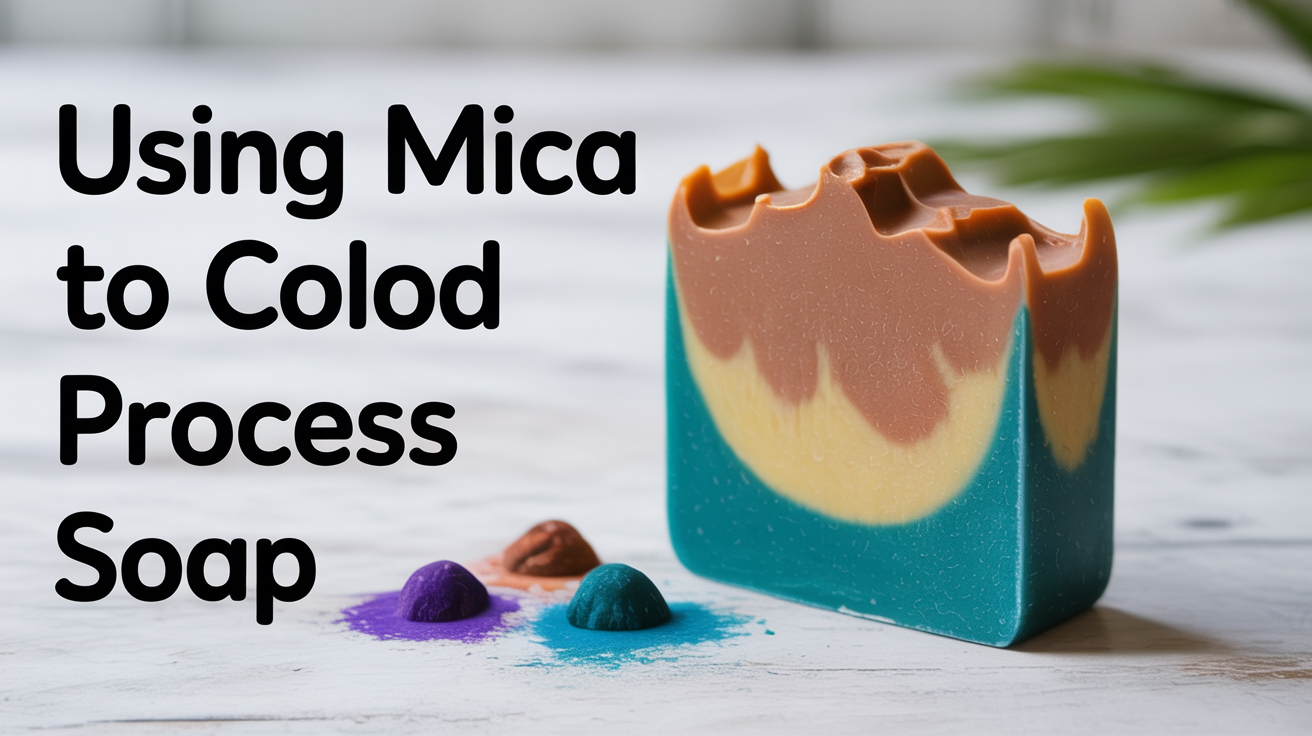
Micas are one of the most reliable colorants for cold process soap. They produce vivid, consistent color, they don't bleed between layers, and they're available in hundreds of shades. The catch is that not every mica behaves the same at high pH. Some colors shift or fade in lye-heavy environments, and loose powder dropped straight into batter creates specks instead of smooth color. The fix is simple: disperse your mica in a carrier oil before it ever touches your soap, and stick to pigments labeled cold-process safe.
What Mica Actually Is
Mica is a naturally occurring mineral. The shimmery, flaky stuff you see in cosmetics is usually synthetic fluorphlogopite or natural muscovite mica coated with iron oxides, titanium dioxide, or other colorants to produce specific hues. That coating is what gives each shade its character, and it's also what determines whether the color survives a cold process batch.
In its pure form, mica is pH-neutral and very stable. The problem comes from the added coatings. Some colorants, particularly carmine (a red derived from insects) and certain ultramarines, can react with the high-alkalinity environment of fresh soap batter. The result is a color that shifts during saponification or fades over cure. Suppliers who test specifically for cold process compatibility will flag which shades are safe and which are not.
Reading Supplier Labels
Look for phrases like "cold process stable," "high pH stable," or "soap safe." Reputable cosmetic colorant suppliers test their micas across soap formats. If a listing only says "cosmetic grade" without specifying soap compatibility, email the supplier before ordering. A mica that works beautifully in lotion may turn brown or gray in soap.
Shimmers vs. Mattes
Shimmery micas tend to be more stable than heavily dyed mattes because the shimmer comes from the mica flake itself, not solely from a coating. Matte shades often carry more colorant to compensate for the lack of reflectivity, which can make them more prone to morphing. This isn't a hard rule, but it's worth keeping in mind when you're testing new colors.
Dispersing Mica in Carrier Oil
This step is not optional. Dry mica powder added directly to soap batter clumps. Even when you stir vigorously, fine particles hide in pockets of unsaponified oil or batter and appear as specks in the finished bar.
The standard ratio is 1 teaspoon of mica per 1 tablespoon of lightweight carrier oil. Fractionated coconut oil, sweet almond oil, or sunflower oil all work well. Avoid olive oil for dispersion, as it's thicker and can make mixing harder.
Add the mica to a small dish or ramekin, pour in the oil, and stir with a spoon or mini spatula until the mixture is completely smooth. No dry clumps, no streaks. This takes about 30 seconds of actual stirring. The result should look like a glossy, pigmented paste or liquid depending on how much oil you used.
How Much to Prepare
For a standard 2-pound batch of soap, you'll typically use 1 to 3 teaspoons of dispersed mica per pound of oils — so roughly 2 to 6 teaspoons total. Start at the lower end with bright, saturated colors. Deep blacks, rich reds, and jewel tones often need more; pastel shades less.
Mix more dispersed mica than you think you'll need. Running short midway through a pour is frustrating, and a little leftover paste is easy to store in a sealed container.
Adding Mica at Trace
Cold process soap is colored at trace, which is the point when your soap batter has thickened enough to resemble pudding. Adding colorant before trace risks it separating in the oils. Adding it too late, when batter is thick, makes it hard to blend smoothly.
Light trace (thin pudding consistency) is ideal for most mica techniques. Stick blend to trace, then add your dispersed mica and stir or blend briefly until the color is fully incorporated.
Usage Rate
Most micas work well at 1 to 3 teaspoons per pound of oils. Some highly pigmented shades (jet black, certain ultramarines) need only 1 teaspoon per pound. Always check the supplier's recommended usage rate, as this is tested formulation data.
Going over the recommended rate doesn't give you deeper color. Above a certain concentration, excess mica sits unbound and can cause the bar surface to feel powdery or leave color on a wet washcloth. More is not better.
Techniques for Coloring with Mica
Once your mica is dispersed and your batter is at trace, you have several options for how to use it.
| Technique | How to Do It |
|---|---|
| Single color | Add all dispersed mica to the full batch at light trace. Stir or briefly stick blend to incorporate. Pour into mold. |
| Two-tone split | Divide batter into two containers at trace. Add a different mica to each. Pour back and forth into mold in layers or side by side. |
| Mica swirl | Pour plain or lightly colored batter into the mold. Drizzle lines of contrasting dispersed mica (thinned slightly with extra oil) across the top. Drag a skewer or chopstick through to create swirls. |
| Mica lines (in-the-pot swirl) | Pour one colored portion into the mold, follow with another color poured in a thin stream. Repeat and skewer for a layered marble effect. |
| Painted tops | After unmolding and cutting, mix mica with 91% isopropyl alcohol to a thin paste. Brush or rub onto the cut top of each bar with a soft brush or fingertip. |
The painted-tops technique is worth a longer note. Mica mixed with alcohol sits on the surface of the finished, cured bar rather than being incorporated into the soap itself. It gives a metallic or pearlescent finish to tops and can highlight embossed details. Use 91% (or higher) isopropyl alcohol, not rubbing alcohol with additives. The alcohol evaporates and leaves the mica behind. This is purely cosmetic and has no effect on cleansing performance.
Storing Unused Mica
Keep dry mica in airtight containers away from humidity. Moisture causes clumping that's hard to break up later. Dispersed mica (already mixed with oil) can be stored in a small jar with a lid for several months; the oil doesn't go rancid quickly at room temperature if you've used a stable carrier like fractionated coconut oil.
Label everything. A dozen small containers of shimmer powder all look the same after two weeks.
Frequently Asked Questions
Will mica bleed between layers in cold process soap?
No, mica does not migrate between layers the way liquid colorants can. This makes it a reliable choice for striped or layered designs. Once the soap sets, the color stays exactly where you placed it.
Can I use eye shadow or craft glitter mica in soap?
Eye shadow pigments are often cosmetic grade and may be soap safe, but you'd need to verify with the manufacturer that they're stable at high pH. Craft glitter is not a mica and should not be used in rinse-off products. Cosmetic-grade micas from soap suppliers are the safest starting point.
My mica batter is accelerating trace. What's happening?
Some fragrance oils accelerate trace, not mica. If your batter seized, check your fragrance oil versus essential oil choice and the fragrance's behavior rating. Mica itself doesn't accelerate saponification.
How do I know if I'm using too much mica?
Signs of overuse: the bar surface looks dusty or powdery when dry, or the cut face of the bar shows a slightly chalky texture. Also, if the bar deposits visible color on a wet hand during use, you're over the recommended rate. Back off to 1 teaspoon per pound and increase gradually.
Is mica safe for sensitive skin?
Micas labeled cosmetic grade and soap safe are tested for skin contact. The usage rates for soap (typically 1 to 3 teaspoons per pound) fall well within cosmetic safety limits. If a customer has a known sensitivity to mineral pigments, they should check the specific colorant's ingredient list. For guidance on choosing skin-safe fragrance additions alongside your colorants, see how much fragrance to add to soap.
If you're drawn to color but prefer plant-based options, how to color soap naturally covers clays, botanical powders, and other alternatives that work without synthetic pigments. Mica and natural colorants aren't mutually exclusive — many soapmakers use both depending on the look they want.