Scents & Colors
Which Essential Oils Survive in Cold Process Soap?
Not all essential oils hold up through saponification. Learn which ones last, which ones fade, and how to use them at the right rates.
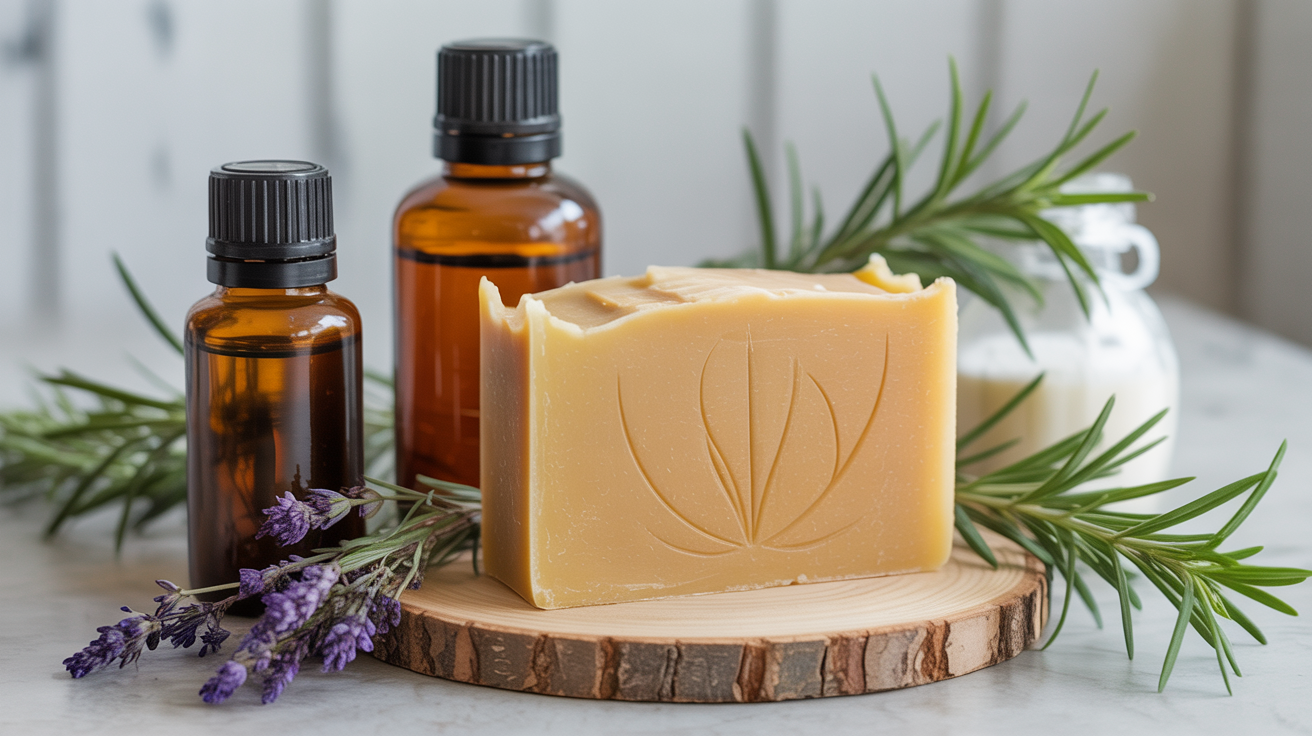
Cold process soap is hard on delicate scents. The lye solution reaches temperatures around 200°F (93°C) when freshly mixed, the saponification reaction generates its own heat during the first 24 hours in the mold, and the finished bars then cure for four to six weeks in open air. All of that is rough on volatile aromatic compounds, and some essential oils simply don't make it through in any recognizable form.
The good news is that plenty of them do hold up, and knowing which ones to reach for saves a lot of frustration. This guide covers the reliable performers, the ones that tend to disappear, how to work out the right usage rate, and a few practical tricks for getting more scent to survive into the cured bar.
Why Some Essential Oils Fade in Cold Process Soap
Essential oils are made up of hundreds of chemical compounds, and those compounds behave differently under heat and high pH. The lye solution in cold process soap sits at roughly pH 12 to 14 during saponification. Some aromatic molecules are stable at that alkalinity; others break apart or convert into something that no longer smells the same.
Volatility plays a role too. Top-note essential oils, the ones you smell first in a blend, tend to be small, light molecules that evaporate quickly. In an open mold or on a cure rack, a lot of that scent off-gasses before the bar even hardens. Base notes are larger, heavier molecules that hold on longer and tend to survive saponification better.
Heat matters most in the first few hours. If you add your essential oil at light trace when the batter is around 90 to 100°F (32 to 38°C), the oil has less heat to contend with than if you poured at trace and let the batter sit warm for an hour. This is why adding scent at a cooler, thinner trace is the standard advice for preserving delicate aromatics.
Essential Oils That Hold Up Well
These are the oils that soap makers return to again and again because they actually survive cure and still scent the bar at the drain:
Lavender (Lavandula angustifolia): One of the most reliable options. True lavender holds reasonably well at 1% to 3% of total oil weight, though it softens through cure. Lavender 40/42, a standardized blended version, tends to smell stronger and hold better than fine lavender.
Peppermint: A strong performer. The high menthol content anchors well, and a 2% to 3% usage rate gives a lasting, clean scent in the cured bar. Note that peppermint can accelerate trace in some recipes.
Eucalyptus: Similar behavior to peppermint, holds reliably at 1% to 2%. Globe eucalyptus (Eucalyptus globulus) is the most common and holds better than some of the more delicate species.
Tea tree: Very stable through saponification. Used at 1% to 2%, tea tree is one of the few essential oils where the scent profile in the bar closely matches what you put in.
Cedarwood (Virginian or Atlas): A woody base note that anchors blends. Cedarwood is slow to volatilize and tends to give cured bars a clean, mild wood scent that lasts.
Patchouli: One of the best soap fixatives that also happens to be an essential oil. Used at 0.5% to 1%, it adds a depth that also helps other oils in the blend hold on longer.
Clove and clove bud: Very stable, but use sparingly (0.5% or less) because clove will accelerate trace noticeably and can irritate skin at high rates.
Lemongrass: Unlike most citrus-adjacent oils, lemongrass (which is technically a grass oil, not a citrus peel oil) holds reasonably well and gives a clean, grassy-citrus note in the bar. Use at 1% to 2%.
Rosemary: A mid-note that holds better than most herbs. At 1% to 2%, it gives a herbal, slightly medicinal scent that survives cure.
Essential Oils That Fade or Disappear
These essential oils are worth knowing about so you go in with realistic expectations:
Citrus peel oils (lemon, sweet orange, lime, grapefruit, bergamot): These are the biggest disappointment for new soap makers. Citrus peel oils are almost entirely top-note compounds (limonene, in most cases) that either volatilize quickly or get degraded by lye. A bar scented with lemon or orange essential oil will often smell of nothing by week two of cure. If you want citrus in your soap, a phthalate-free fragrance oil designed for cold process will hold far better. See fragrance oils vs essential oils in soap for a fuller comparison.
Delicate florals (rose, jasmine, ylang-ylang): Rose otto and jasmine absolute are expensive and fragile. They rarely survive saponification at any useful rate. Ylang-ylang holds slightly better, but even at 3% it fades significantly through cure.
Chamomile: Both Roman and German chamomile fade quickly and become muted or hay-like in the bar.
Grapefruit: Along with other citrus peel oils, grapefruit basically disappears. Some soap makers blend it with a small amount of cedarwood or patchouli as an anchor, but the citrus character still fades.
Sweet orange: A very common beginner purchase and a very common disappointment. If you love orange-scented soap, a quality fragrance oil is the practical path.
How to Use Essential Oils in Cold Process Soap
Usage rates for essential oils in cold process soap are usually expressed as a percentage of total oil weight, or as an amount per pound of oils (PPO). A starting range for most essential oils is 0.5% to 3% of total oil weight. That translates to roughly 0.3 oz to 0.5 oz PPO (8 to 14 g per 453 g of oils) depending on the specific oil.
Before you commit to a full batch, check your essential oil supplier's recommended soap usage rate. Some oils have skin-safe maximums that are lower than 3%, particularly spice oils and oils high in specific compounds like eugenol (clove) or methyl chavicol (basil, tarragon). The International Fragrance Association (IFRA) publishes guidelines, and your supplier should reference them.
When to add your essential oil matters as much as how much you use. Add it at light trace, when the batter has just started to thicken and is still pourable. At that stage, the batter temperature is usually around 90 to 105°F (32 to 41°C), which is easier on volatile aromatics than a warm, thick batter. For usage rate guidance and calculating how much scent to add across different batch sizes, the how much fragrance to add to soap guide covers the math in full.
Boosting Scent Retention in Cold Process Soap
A few techniques help more of your essential oil survive into the cured bar:
Use a fixative. Patchouli, cedarwood, and benzoin resinoid all act as fixatives that slow the evaporation of lighter notes. Adding even 0.25% to 0.5% patchouli to a lavender or rosemary blend gives the lighter notes something to anchor to.
Add kaolin or white clay. A tablespoon of kaolin clay per pound of oils helps soap makers in two ways: it slightly accelerates trace (useful for control) and some soap makers report that clay helps scent molecules bind to the bar and stick around longer through cure. Whether the clay effect is chemistry or placebo is debated, but it won't hurt the bar either way.
Cure in a closed room or low-draft space. Curing on a rack in a drafty area speeds up off-gassing. A shelf in a spare room with relatively still air lets more scent stay in the bar.
Soap at cooler temperatures. If your recipe allows it, soaping at 80 to 90°F (27 to 32°C) rather than 100 to 110°F (38 to 43°C) reduces initial heat exposure for the essential oil. Not all recipes are forgiving at cooler temps, so check trace behavior before committing.
If you're pairing essential oils with natural colorants like madder root, indigo, or paprika, keep in mind that some colorants can interact with certain oils. The how to color soap naturally guide covers which combinations work well together.
Frequently Asked Questions
Do essential oils survive saponification at all? Yes, many do. The saponification reaction converts oils and lye into soap and glycerin, and most aromatic essential oil compounds are not saponifiable themselves. What they're fighting is heat and the highly alkaline environment during the first 24 to 48 hours. Hardy aromatics, like peppermint, eucalyptus, and cedarwood, come through mostly intact. Delicate ones, especially citrus peel oils, often don't.
Can I use more essential oil to compensate for scent loss? Up to a point, but there are practical limits. Pushing past 3% of total oil weight can irritate skin, cause ricing or acceleration in the batter, or make the bar too soft. If the essential oil you love just doesn't hold in soap, a fragrance oil formulated for cold process is the more reliable route.
Which essential oil is best for a beginner's first scented soap? Lavender is the classic starting point. It's forgiving, widely liked, and tends to hold reasonably well through cure. Peppermint is another good option because it's strong and stable. Both are widely available and inexpensive enough that learning with them doesn't feel costly.
Why does my soap smell great at unmold but fade completely by cure? Top-note compounds volatilize through the four to six week cure. What smells wonderful when you cut the bar can be mostly gone by week four if it's a high-top-note oil like citrus or a light floral. This is normal with those oil types. Using base-note fixatives and curing in a still space helps, but for some oils the fade is unavoidable.
Is it safe to add essential oils directly to the lye solution? No. Add essential oils to the traced batter, never to the lye solution. The lye solution is around 180 to 200°F (82 to 93°C) immediately after mixing and is aggressively caustic. Adding volatile aromatic compounds to it risks a rapid, uncontrolled reaction and fumes. Always add scent at trace.