Cold Process
Curing Cold Process Soap: Why and How Long
Learn how to cure cold process soap properly: why 4–6 weeks matters, what happens during curing, and how to set up your rack for the best bars.
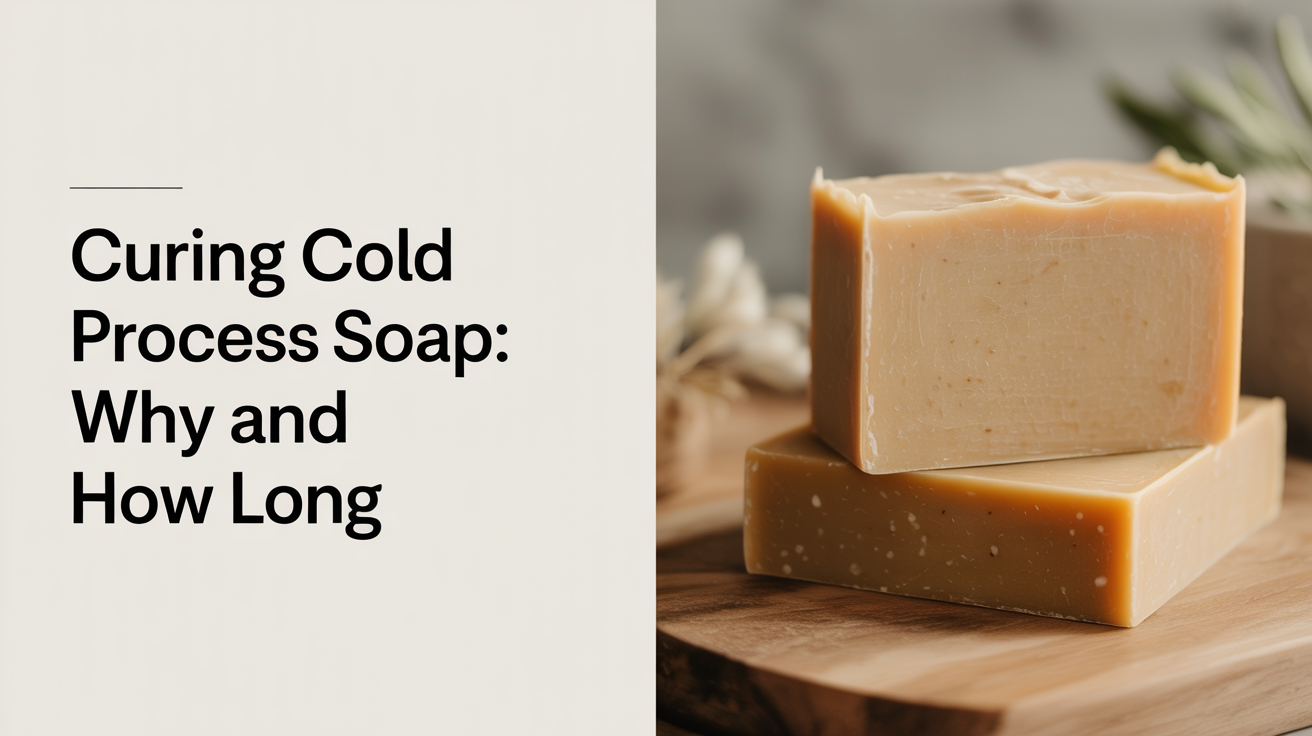
You unmold your first batch, slice it into bars, and feel proud. Then you read that you have to wait four to six weeks before using it. That wait is curing, and it genuinely matters.
The short version: curing is a rest period where water evaporates out of the bar, the crystalline structure of the soap solidifies, and any lingering harshness mellows. The result is a harder, milder bar that lasts longer in the shower. Skip it, and the soap works — but it dissolves fast, can feel draggy on skin, and may be slightly irritating.
What Actually Happens During Curing
People sometimes confuse curing with saponification, and they are two different processes.
Saponification is the chemical reaction between lye and oils. It starts the moment you combine them and is essentially complete within 24 to 48 hours. By the time you unmold (usually at 24–48 hours), the lye is gone. The soap is safe to handle.
Curing is everything that comes after. Two things are happening simultaneously.
Water Evaporation
Cold process recipes use water to dissolve the lye before mixing. That water does its job during saponification, then it just sits in the bar. A fresh bar can be 30% water by weight. Over weeks of open-air rest, that water slowly migrates out. As it leaves, the bar contracts and gets denser. A denser bar is a harder bar, and harder bars last noticeably longer in use.
You can actually track this with a kitchen scale. Weigh a test bar the day you cut it, then weigh it weekly. Early on it loses weight quickly; later the numbers plateau. When the weight stabilizes week over week, most of the evaporable water is gone. That plateau is a more objective signal than the calendar, though four weeks is a reasonable minimum for most recipes.
Crystalline Structure Development
Soap is a salt (sodium stearate, sodium oleate, and so on depending on your oils). Like many salts, it forms a crystalline structure as it cures. This structural change is gradual and contributes to the final feel of the bar: how smooth it lathers, how mild it is on skin, how cleanly it holds its shape.
High-oleic oils like olive take longer to build this structure, which is why castile soap (100% olive oil) gets a much longer cure recommendation.
How Long to Cure Soap
Four to six weeks covers the majority of cold process recipes. That said, the optimal time varies by formula.
| Soap Type | Typical Cure Time |
|---|---|
| Standard cold process (coconut/palm/olive blend) | 4–6 weeks |
| High-olive (50–70% olive oil) | 6–8 weeks |
| Pure castile (100% olive oil) | 6–12 months |
| High-coconut (e.g., shampoo bars) | 4–6 weeks |
| Lard or tallow bars | 4–6 weeks |
| Bastille (70–85% olive) | 8–12 weeks |
Castile soap is the extreme case. It comes out of the mold soft and almost jelly-like. A year-old castile bar is genuinely a different product: creamy, long-lasting, and mild. Many soapmakers make a big castile batch in winter specifically so it's ready by the following winter.
If you are eager to test your recipe sooner, weigh the bars regularly. Once weight loss drops to near zero, the bar is as cured as it will get on the water side — though the crystalline changes continue more slowly.
How to Set Up a Soap Curing Space
Curing requires nothing fancy. The goal is steady airflow around each bar so moisture can leave without pooling anywhere.
The Basic Setup
A wooden or wire rack works well. Keep bars in a single layer; stacking traps moisture between them. Leave a finger-width of space on all sides. Put the rack somewhere with reasonable air circulation, out of direct sunlight (UV fades color and can accelerate rancidity in oils).
Avoid curing in a humid room like a bathroom or unventilated basement. High humidity slows evaporation and can encourage dreaded orange spots (DOS, or "dreaded orange spots") from rancid oils. A bedroom shelf, pantry, or spare room works well.
Labeling and Flipping
Label every bar the day you cut it. Write the recipe name and the cut date somewhere on the rack or on a card under the bars. Memory is unreliable when you have multiple batches going.
Flip bars once a week or so. This exposes the bottom face to air instead of letting it sit on the rack and cure unevenly. It takes two minutes per batch and makes a real difference in how evenly the bar dries.
Temperature
Room temperature is fine. You do not need warmth to cure soap. Cold does slow the process slightly, so an unheated garage in winter is not ideal. Consistent indoor temperatures in the 60–75°F range are perfectly suitable.
Is the Soap Safe Before It Is Fully Cured?
Yes, with one caveat: if saponification completed properly, the lye is consumed. The bar will not burn you. What you get from an under-cured bar is a softer, harsher-feeling, shorter-lived soap, not a dangerous one.
The Zap Test
The zap test is a quick check for active lye. Touch the tip of your tongue briefly to the soap. If you feel a sharp electrical "zap," there is still active lye present and the soap needs more time. If it tastes like soap (unpleasant, but mild and soapy), saponification is complete.
The zap test tells you nothing about cure progress. A bar can pass the zap test on day two and still benefit from six more weeks of curing. Use the zap test to confirm safety; use the calendar (and the scale, if you like) to track cure time.
For more on the lye side of things and how saponification works in practice, see How to Make Cold Process Soap: A Beginner's Step-by-Step Guide and How to Use a Lye Calculator for Soap.
Common Curing Mistakes to Avoid
Beginners run into a few recurring issues:
Cutting bars too thick. Thick bars take longer to cure because the water has farther to travel. Around 1 inch (2.5 cm) is a practical thickness for most recipes.
Stacking or wrapping too soon. Some soapmakers wrap bars in paper for gifting. That is fine after a full cure, but wrapping during curing traps moisture and dramatically extends the time needed.
Crowding bars together. Air needs to circulate. If bars touch, the surfaces between them stay damp.
Curing in a sealed container. Even a cardboard box with the lid closed traps humidity. Open racks only.
If you notice a powdery white coating on the surface of your bars, that is soda ash — a cosmetic issue caused by exposed soap reacting with carbon dioxide in the air. It does not affect the cure or the final bar. You can plane it off with a vegetable peeler, rinse it away with water (it dissolves on contact), or simply leave it. More information on troubleshooting batch issues is in the What Is Trace in Soap Making and How to Reach It guide.
Frequently Asked Questions
Can I use cold process soap after just one week?
You can, but the experience will be noticeably different. The bar will be softer, lather more profusely at first then dissolve quickly, and may feel slightly drying. It will not harm you if the lye is consumed (confirm with the zap test), but it will not perform the way a fully cured bar does.
Does curing soap in the refrigerator or freezer speed things up?
No. Cold temperatures slow evaporation, which is the opposite of what you need. Keep your curing rack at normal indoor temperatures with good airflow.
Why is my castile soap still soft after six weeks?
Pure olive oil soap takes much longer than blended recipes. Six weeks is barely a start for castile. Give it at least six months; a full year produces a noticeably superior bar. This is not a batch failure. It is the nature of olive oil soap.
Do I need to do anything special to the bars during curing?
Flip them once a week for even airflow, check for any signs of rancidity (orange dots, off smell), and keep them away from direct sun. Otherwise, leave them alone. Curing is largely passive.
How do I know when my soap is fully cured?
Four to six weeks is the practical answer for most recipes. For more precision, weigh a test bar weekly; when the weight stops dropping, the water loss has leveled off. The bar will feel noticeably harder than it did fresh off the mold, and the lather will be creamy rather than bubbly and dissolving.