Cold Process
Hot Process vs. Cold Process Soap: What's the Difference?
Hot process and cold process soap both use lye. Here's how the two methods differ, which one suits beginners, and what to expect from each batch.
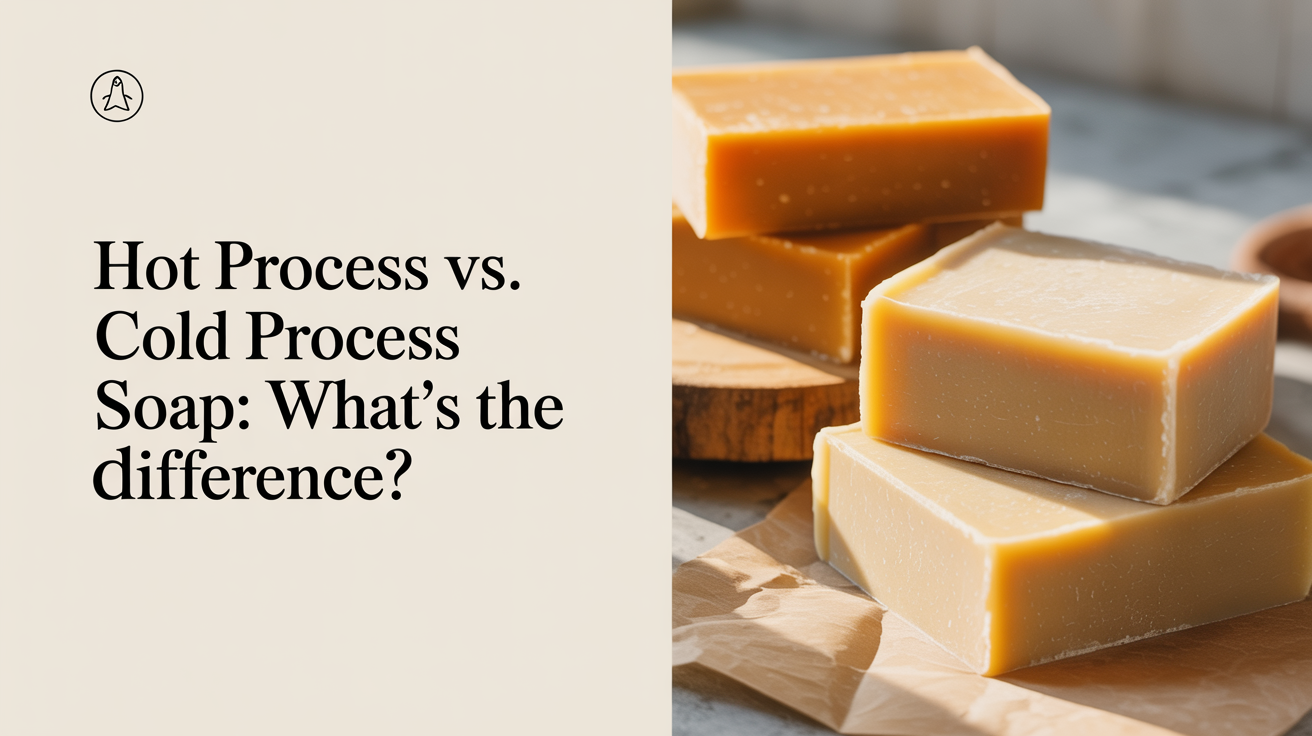
Both hot process and cold process soap start from the same place: oils, water, and sodium hydroxide (lye). The difference is what happens after you combine them. Cold process soap lets saponification finish slowly in the mold over the following days. Hot process soap uses external heat to drive that same chemical reaction to completion in the pot, before the soap is ever poured. The result from each method is real, effective bar soap, but the two routes feel quite different to work with and produce bars with noticeably different textures.
Before going further, one note that applies to both methods: lye is sodium hydroxide, a caustic alkali that causes severe chemical burns and releases fumes when it contacts water. Wear goggles and chemical-resistant gloves, work in a ventilated space away from children and pets, and always add lye to water, never the reverse. Run every recipe through a lye calculator before you begin. These safety rules are the same whether you are cooking your batch or cold-processing it.
How Cold Process Soap Works
In cold process soap making, you combine your melted oils with a lye solution at the right temperatures, usually somewhere between 90 and 110 degrees Fahrenheit (32 to 43 degrees Celsius) for both, then mix until you reach trace. Trace is the point where the oils and lye water have emulsified enough that the mixture holds a faint pattern on the surface when you drizzle some across it.
Once you hit trace, you add your fragrance, colorants, or botanicals, pour into a mold, and insulate the mold so the heat of saponification can do its work. Over the next 24 to 48 hours, the soap goes through gel phase, a translucent, pudding-like stage where the center heats up and saponification is actively happening. After unmolding and cutting, the bars need to cure on a rack for at least four to six weeks. During that time, the remaining water evaporates and saponification completes, producing a harder, milder bar.
The cold process method gives you a lot of creative latitude. Because the batter is still fluid and relatively workable at the pour stage, you can swirl colors, layer shades, and achieve smooth, detailed tops. Learning to read trace is one of the core skills here, since pouring at the right consistency makes the difference between a successful design and a seized or overworked batch.
How Hot Process Soap Works
Hot process soap making follows the same first steps: combine lye solution with oils, mix to trace. The difference is that instead of pouring into a mold at trace, you transfer the batter to a slow cooker or put a covered pot in the oven and apply heat, typically around 160 to 180 degrees Fahrenheit (71 to 82 degrees Celsius), for roughly 45 minutes to an hour.
During cooking, the soap goes through a series of visible stages. It will bubble around the edges, turn applesauce-like in texture, and gradually transform into a thick, glossy, mashed-potato consistency. At that stage, saponification is essentially complete. You can do a quick zap test: touch a small cooled piece to the tip of your tongue. A lye-heavy batch zaps like a 9-volt battery. A finished hot process batch has no zap at all.
Because the cook drives saponification to completion, the soap can technically be used within a few days. Most soapers still recommend a two-to-four-week cure to let water evaporate and the bar harden up, but the chemical process itself is done before the soap ever hits the mold. This is different from cold process, where that process continues in the mold and on the rack.
The trade-off is texture. Cooked soap is thick and sticky, more like thick hummus than a pourable batter. It gets spooned, pressed, or plopped into molds rather than poured, and smooth, detailed designs are difficult to achieve. Most hot process bars have a rustic, textured top, which many people find appealing in its own way.
Key Differences at a Glance
| Cold Process | Hot Process | |
|---|---|---|
| Heat during making | No external heat | Slow cooker or oven |
| Cure time needed | 4 to 6 weeks minimum | 2 to 4 weeks (for hardness) |
| Time from batch to usable bar | 4 to 6 weeks | 2 to 4 weeks |
| Finished bar texture | Smooth, hard | Rustic, sometimes porous |
| Design possibilities | Swirls, layers, detailed tops | Limited; textured/rustic |
| Fragrance behavior | Some fragrance is lost during cure | Less fragrance loss; add at end |
| Difficulty level | Moderate | Moderate; patience during cook |
One practical note on fragrance: in hot process, you stir in fragrance oil or essential oil after the cook is done and the soap has cooled slightly, usually below 180 degrees Fahrenheit (82 degrees Celsius). Because saponification is already complete, the harsh alkaline environment is no longer present, and more of the scent survives into the finished bar. In cold process, fragrance goes through the alkaline saponification period in the mold, and some volatile notes fade during cure.
Which Method Works Better for Beginners?
Cold process is the more widely taught starting point, and for good reason. The batter is fluid and forgiving enough to work with, and a straightforward beginner batch using a simple oil blend is genuinely manageable on a first try. The long cure time can feel like a wait, but it also means you have six weeks to learn what went right or wrong before you cut into the bars.
Hot process suits people who want a usable bar sooner or who prefer a more hands-on, watch-it-transform process. It can also be a good rescue method for a batch that seized at trace: a seized batch can sometimes be saved by cooking it through as hot process rather than losing it entirely.
Neither method is strictly harder than the other. Both require accurate measurement, temperature awareness, and lye safety habits. The main practical difference is timing: cold process makes you wait, and hot process makes you pay attention during the cook.
What the Finished Bars Are Actually Like
Cold process bars, cured for six weeks, are typically dense, hard, and smooth. A well-formulated recipe with a good balance of oils produces a bar that lathers well, feels comfortable on skin, and lasts a long time in the shower. The surface can be polished, painted, or stamped, and the colors from micas and clays stay vibrant.
Hot process bars tend to have a coarser grain from the pressing process. They may have small air pockets or a slightly uneven texture internally. That said, they clean just as well and many people find the rustic look appealing, especially for a handmade gift aesthetic. Because the bars are fully saponified before molding, they are sometimes considered a safer choice for people who want to minimize any uncertainty about lye traces, though a properly made cold process bar that has fully cured is also safe.
Frequently Asked Questions
Can I use the same recipe for both hot and cold process? Yes. A recipe that works in cold process will work in hot process because the oils and lye amounts are the same. The only adjustment is timing and the point at which you add fragrance. Run the recipe through a lye calculator either way, as the chemistry does not change between methods.
Do I need different equipment for hot process? A slow cooker (crockpot) is the most common tool for hot process. You can also use a Dutch oven in the oven at a low setting around 170 degrees Fahrenheit (77 degrees Celsius). Otherwise the tools are the same: a stick blender, stainless steel or silicone spatulas, a thermometer, a digital scale, and your molds.
Is hot process soap gentler on skin than cold process? There is no meaningful difference in gentleness between the two methods if both are made from the same recipe and have fully cured. The saponification process is what creates the soap, and either method completes it. The finished bar from either route contains no active lye.
What happens if I add fragrance too early in hot process? Adding fragrance while the soap is still very hot or before saponification is fully complete can cause the scent to flash off or behave unpredictably. Wait until the cook is done, the soap passes a zap test, and the temperature has dropped to around 140 to 160 degrees Fahrenheit (60 to 71 degrees Celsius) before stirring in your fragrance.
Why does my hot process soap look lumpy when I pour it? That is normal. Fully cooked hot process batter is thick and does not pour smoothly. Use a spatula to press and push it into the mold, smooth the top as best you can, and tap the mold on the counter a few times to settle it. A textured top is part of the character of the method, not a sign that something went wrong.