Melt & Pour
How to Color Melt and Pour Soap
How to color melt and pour soap with micas, dyes, oxides, and natural colorants, plus dispersing color, avoiding bleeding, and getting even results.
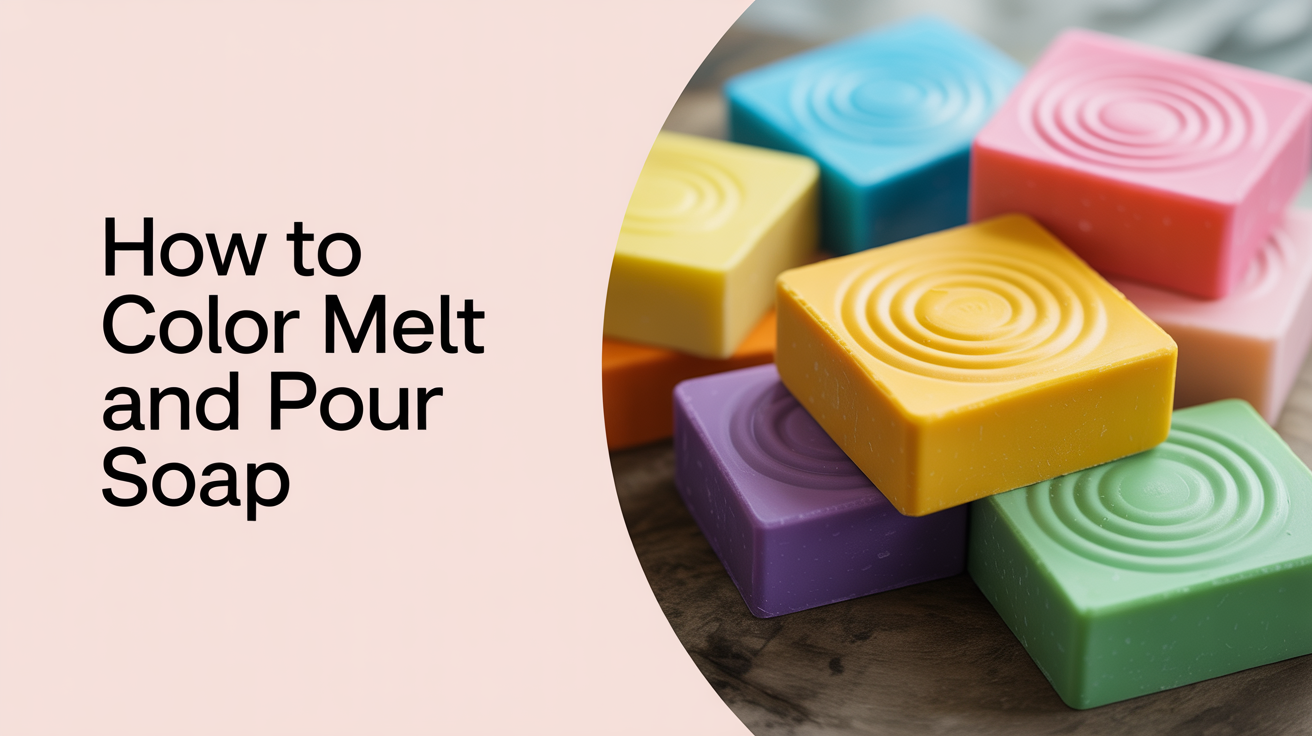
Coloring melt and pour soap is one of the most satisfying parts of the whole process. You melt a clear or white base, stir in a colorant, and watch plain glycerin turn into something that looks like a jewel or a creamy pastel. But the results depend almost entirely on what colorant you use and how you add it. This guide covers the main options and the technique behind each one.
If you are new to the process itself, start with How to Make Melt and Pour Soap: A Step-by-Step Guide before coming back here.
At a Glance
- Micas, oxides, and lab-certified liquid dyes are the reliable choices; food coloring and craft glitter both perform poorly in soap.
- Always disperse mica and oxide powders in glycerin or alcohol first. Dry powder added straight to base causes speckling.
- Add color between 125 and 135°F (52 to 57°C), after the base is off direct heat but still fluid.
- Clear base amplifies transparent colorants (dyes, translucent micas); white base is the canvas for opaque color (oxides, pastel micas).
- Oxides and micas don't bleed between layers; some liquid dyes do, check the label for "non-bleeding" or "non-migrating."
- Every color additive allowed in U.S. cosmetics, including the mica and iron oxide used in soap, is on an FDA-regulated list with specific use restrictions.
Types of Colorants for Melt and Pour Soap
Not every colorant works in soap. Crayons bleed, food coloring fades, and some cosmetic pigments clump on contact with the hot base. The colorants below are reliably safe and predictable, and every one of them, mica, oxides, ultramarines, and FD&C dyes alike, has to appear on FDA's list of color additives permitted for use in cosmetics before a supplier can legally sell it for soap or skincare. That list specifies exactly which additives are approved and under what conditions, which is part of why reputable soap-supply retailers label their colorants as "cosmetic grade" or "lab certified" rather than just selling raw pigment.
Micas
Micas are finely ground mineral powders coated with pigment. They produce a pearlescent or metallic sheen and come in hundreds of shades. They are the most popular choice for melt and pour because they are stable, skin-safe, and do not fade quickly.
The main challenge with mica is clumping. If you pour dry mica powder straight into hot soap base, you will get dark specks scattered through the bar. The fix is simple: disperse the mica in a small amount of glycerin or 99% isopropyl alcohol first (about half a teaspoon of liquid per teaspoon of mica). Stir until you have a smooth paste with no dry powder visible, then add that paste to your melted base and stir well.
A good starting amount is about 1 teaspoon of mica per pound of soap base. You can go up to 2 teaspoons for a more saturated look, but more than that rarely adds depth and can cause a sticky or powdery bar.
Liquid Soap Dyes
Liquid soap dyes (also called lab-certified colorants or FD&C dyes) are pre-dissolved pigments made specifically for soap. They mix into melted base instantly with no clumping. A few drops per pound is usually enough.
Liquid dyes produce vivid, transparent color in a clear base. The drawback is that some liquid dyes bleed or migrate over time, meaning the color can spread into an adjacent layer or leave a faint ring on the soap dish. If you are making layered or swirled designs, look for dyes labeled "non-bleeding" or "non-migrating."
Oxides and Ultramarines
Iron oxides and ultramarines are lab-synthesized pigments approved for cosmetic use under specific FDA restrictions, iron oxides are cleared for use around the eye area with no percentage cap, for instance, while some other cosmetic colorants are capped or restricted to certain product types. They are completely opaque and produce earthy tones (brown, red, yellow, black) and cooler tones (blue, violet, pink). Because they are opaque, they work better in a white base than a clear one.
Like micas, oxides need to be dispersed before use. Mix them into a small amount of glycerin or lightweight oil until smooth. Use them sparingly (around 1/4 to 1/2 teaspoon per pound) since they are intensely pigmented.
Natural Colorants
Botanicals like spirulina, turmeric, paprika, and cocoa powder can tint soap, but the results in melt and pour are modest and unpredictable. Most natural colorants fade within weeks under light and do not hold up as well as synthetic options. Turmeric gives a yellow-orange tint. Spirulina adds a green tone. Cocoa powder produces a warm brown.
If you want to experiment with natural colorants, add them dispersed in glycerin and expect the shade to shift or mellow over time, often visibly lighter within 4 to 6 weeks under normal room light. They are better suited to rustic or unscented bars where slight variation is part of the appeal. For consistent results in a retail or gift context, stick to micas and lab-certified dyes.
How to Add Color to Melted Soap Base
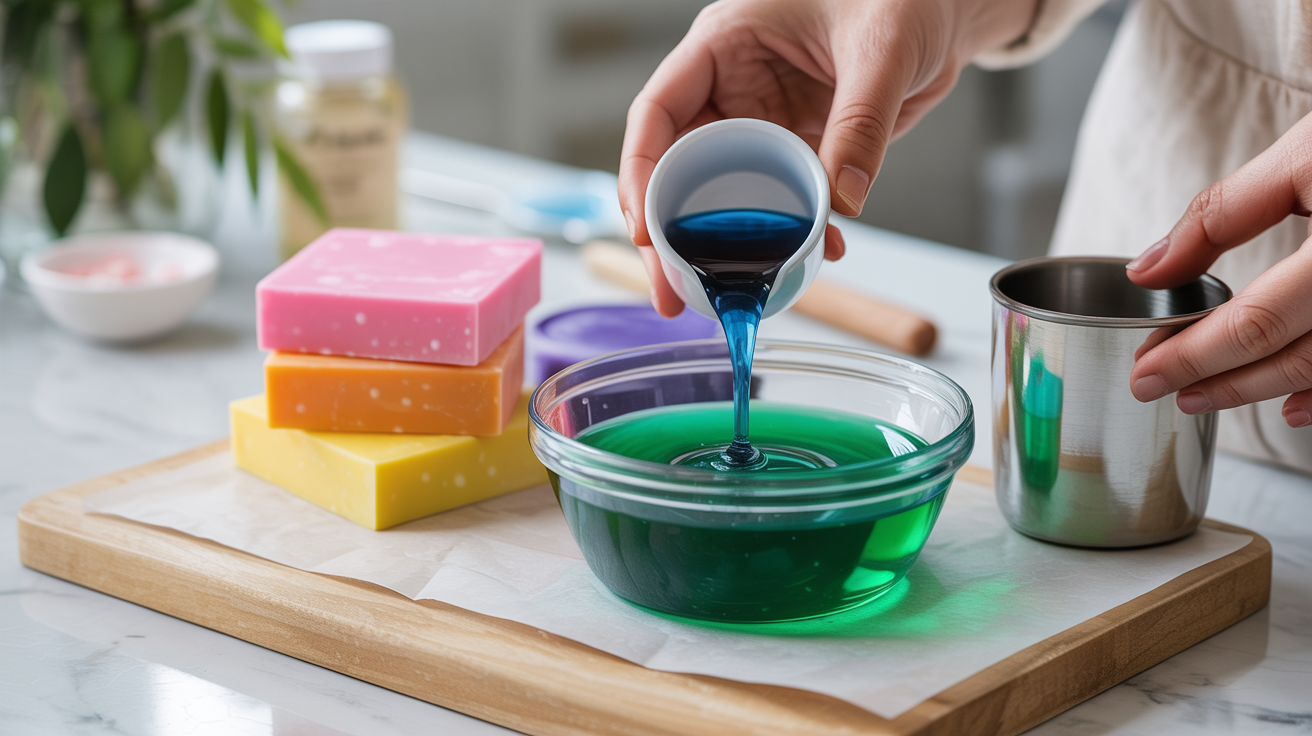
Temperature and timing matter. Add color after the base is fully melted and you have pulled it off direct heat. The ideal range is 125 to 135°F (52 to 57°C). At this temperature the base is still fluid enough to blend easily, but it is not hot enough to burn off fragrance or scorch delicate pigments.
Here is the basic sequence:
- Melt your base fully, then remove from heat.
- Let it cool to 125 to 135°F, checking with a thermometer.
- Add your pre-dispersed colorant (mica paste, a few drops of liquid dye, or an oxide slurry).
- Stir gently but thoroughly for at least 30 seconds.
- Add fragrance if using, stir again, then pour.
Stir rather than whisk. Whisking introduces air bubbles that rise to the surface and can leave a pitted top on your finished bar. A slow, steady stir covers the base evenly without aerating it.
For more on choosing a base that suits your colorant goals, see The Best Melt and Pour Soap Bases for Beginners.
Clear Base vs. White Base
The base you start with changes how the final color looks.
Clear base amplifies transparent colorants. Liquid dyes in a clear base look like colored glass. Micas in a clear base stay jewel-toned and slightly translucent. This is the base to choose for jewel colors, gemstone effects, or any design where transparency is part of the look.
White base acts like a canvas for opaque color. Oxides read true and clean against it. Micas in a white base lose their translucency but gain a creamy, opaque quality that some people prefer. If you want soft, milky pastels, a white base and a small amount of mica (half a teaspoon per pound or less) gets you there.
You can also blend the two bases. A mix of roughly 70% white to 30% clear gives you a slightly translucent base with softer colors than a clear base alone.
| Base blend | Look | Best colorant match |
|---|---|---|
| 100% clear | Jewel-toned, glassy, high transparency | Liquid dyes, translucent micas |
| 70% white / 30% clear | Soft, slightly translucent | Micas, light oxide dilutions |
| 100% white | Fully opaque, creamy, pastel-capable | Oxides, ultramarines, saturated micas |
Colorant Quick Reference
| Colorant | How to Use | Notes |
|---|---|---|
| Mica powder | Disperse in glycerin or alcohol; add to melted base at 125-135°F | Pearlescent finish; use 1-2 tsp per pound; best in clear base |
| Liquid soap dye | Add drops directly to melted base; stir well | Fast-blending; vivid; some types bleed in layers |
| Iron oxide / ultramarine | Disperse in glycerin; add sparingly (1/4-1/2 tsp per pound) | Opaque, intense; best in white base; does not bleed |
| Natural colorant (turmeric, spirulina, cocoa) | Disperse in glycerin; add to melted base | Fades with light exposure; rustic, variable results |
Avoiding Bleeding and Layering Problems
Bleeding happens when a colorant is soluble in the soap base and migrates out of the layer it was poured into. This is most common with liquid dyes in layered bars. The color seeps from the first layer into the second, or leaves a shadow on the soap dish.
This is actually a distinction FDA draws for cosmetic colorants generally: some pigments are formulated as "lakes," insoluble forms of a dye bonded to a substrate specifically so they won't bleed the way a soluble dye can, which is the same reason lipstick manufacturers favor lake pigments over loose dye. Micas and oxides behave like lakes in this respect, insoluble and stable in place, which is part of why they're the safer default for layered soap.
To avoid it:
- Use oxides or micas for layered designs. Neither bleeds.
- If you use liquid dyes, look for ones specifically labeled non-bleeding or non-migrating.
- Let each layer set completely before pouring the next. A thin skin should be visible before adding the next pour, usually 10 to 20 minutes at room temperature.
- Spritz 99% isopropyl alcohol between layers to help them bond. This also removes any surface film that might prevent adhesion.
Fragrance can sometimes affect color stability too. Some fragrance oils accelerate the separation of colorant or cause a color shift in certain pigments. When you try a new fragrance and colorant combination for the first time, make a small test batch before committing to a full pour.
For guidance on adding fragrance alongside your colorant, see How to Scent Melt and Pour Soap.
Frequently Asked Questions
Can I use food coloring to color melt and pour soap?
You can, but it is not a great choice. Food coloring is water-soluble and tends to bleed, fade, and leave color on skin. It may also seep out of the bar onto surfaces. Lab-certified soap dyes are made from similar colorant families but are formulated to stay in soap. Use those instead.
How much colorant should I use?
Less is almost always better to start. For micas, begin with half a teaspoon per pound of base and add more if needed. For liquid dyes, start with 3 to 5 drops per pound. You can always add more, but you cannot take it back once it is stirred in.
Why does my mica look spotty or speckled?
Mica was added dry, directly to the base. Disperse the mica in a small amount of glycerin or isopropyl alcohol first, stir into a smooth paste, then add that to the melted base. The pre-dispersing step is the single most important mica technique.
Will color change over time?
Some shift is normal. Natural colorants fade noticeably within a few weeks of light exposure. Some liquid dyes mellow slightly. Micas and oxides are the most stable and hold their color for the typical shelf life of a bar (1 to 2 years when stored away from heat and direct light).
Can I mix colorants together?
Yes. Mixing micas is the most reliable approach since they blend predictably. You can layer two colors in a single bar, swirl them before they set, or mix them in the cup before pouring. Mixing a liquid dye with a mica is also fine. Avoid mixing oxides with liquid dyes if you are making layers, since the two behave differently in terms of bleeding.
Is it safe to use cosmetic-grade mica that isn't specifically labeled "for soap"?
If it's labeled cosmetic-grade or skin-safe and appears on your supplier's soap-making colorant list, it's almost always fine, cosmetic mica and soap mica are typically the same material. What you want to avoid is craft or industrial mica sold for resin, nail art, or general craft use without a cosmetic-safety label, since that grade isn't necessarily screened to the same purity standard.
How should I store leftover colorants between batches?
Keep dry mica and oxide powders in airtight containers away from direct sunlight and humidity; both fade or clump faster once moisture gets in. Liquid dyes should stay capped tightly and out of direct light, since UV exposure is what degrades most of them over time. Stored this way, dry pigments hold their strength for a couple of years, while opened liquid dyes are best used within about a year for the most reliable color payoff.