Melt & Pour
The Best Melt and Pour Soap Bases for Beginners
A plain-English guide to choosing the best melt and pour soap base for beginners — clear, white, shea butter, goat milk, and more.
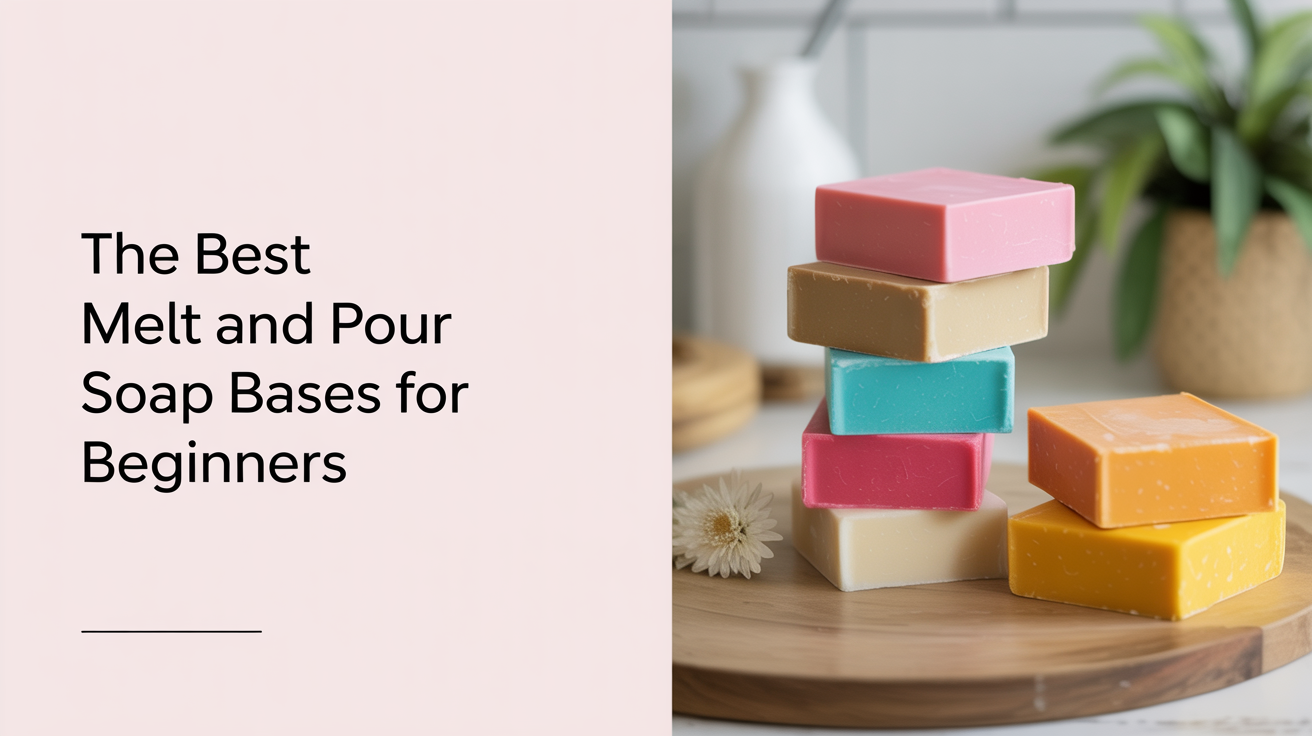
Picking the right base is the first real decision in melt and pour soapmaking, and it controls more than you'd think. The base determines clarity, skin feel, how well color shows up, and whether your bars sweat on a humid shelf. This guide covers the most common bases, what each one actually does, and which to start with if you're new.
At a Glance
- Clear glycerin base is the most instructive first base: colorants read true, and you can see air bubbles and layering mistakes before they set.
- White opaque base hides bubbles and streaking better, making pastel colors and gift soaps look cleaner with less technique required.
- Shea butter and goat milk bases add real (if subtle) skin-feel benefits and are worth the small price premium for gift or sensitive-skin bars.
- "Glycerin dew," those tiny water beads that form on a bar's surface, is caused by glycerin pulling moisture from humid air; it's harmless and preventable by wrapping bars promptly.
- Detergent-free bases (built on saponified oils) and SLS-based bases (built on synthetic surfactants) melt and pour identically, but they don't feel the same on skin, check the label before you buy.
- Buy a small 2-5 lb block first. M&P base has a shelf life, and you won't know which base you prefer until you've worked with it.
What Melt and Pour Base Is (and What It Isn't)
A melt and pour (M&P) base is pre-made soap, someone else handled the lye. You melt it, add color and fragrance, pour it into a mold, and unmold it once solid. No lye handling, no cure time, bars are ready in hours.
The core ingredient is still saponified oils (sodium hydroxide reacted with fats), but the formulation also includes humectants like glycerin and sometimes additional conditioning agents. What you want to avoid are bases built around synthetic detergents (sodium lauryl sulfate, or SLS). Detergent-based M&P is cheap and melts cleanly, but it lathers differently and can be drying. Quality bases are listed as "detergent-free" and the first ingredients are saponified oils rather than surfactants. Under the FDA's definition of soap, a product only counts as true soap when the bulk of it is an alkali salt of fatty acids, which is exactly what a detergent-free base is; an SLS-based base is closer to a syndet (synthetic detergent) bar and is regulated more like a cosmetic cleanser.
How to Read a Base Label
Look at the ingredient list before you buy. A solid detergent-free base typically leads with something like: sodium cocoate, sodium olivate, propylene glycol, glycerin, sorbitol, water. If you see sodium laureth sulfate or sodium lauryl sulfate near the top, that's a detergent base. Neither is fraudulent, they behave differently, and knowing which you have matters for results.
Propylene glycol and sorbitol are humectants that keep the base fluid at lower temperatures and help the bar feel less draggy. Both are normal in quality bases.
Why Skin Feel Actually Differs
The distinction isn't just marketing. Controlled patch-test research on sodium lauryl sulfate consistently shows it as a reliable, reproducible skin irritant, which is exactly why dermatology labs use it as a standard test substance to provoke measurable irritation in clinical irritation studies. That doesn't mean every SLS-based M&P base will bother every user; short contact time in a rinse-off product matters. But if you're formulating for a customer with sensitive skin, or for a baby gift set, the detergent-free bases give you a real margin of safety that the ingredient list alone hints at.
The Main Types of Melt and Pour Base
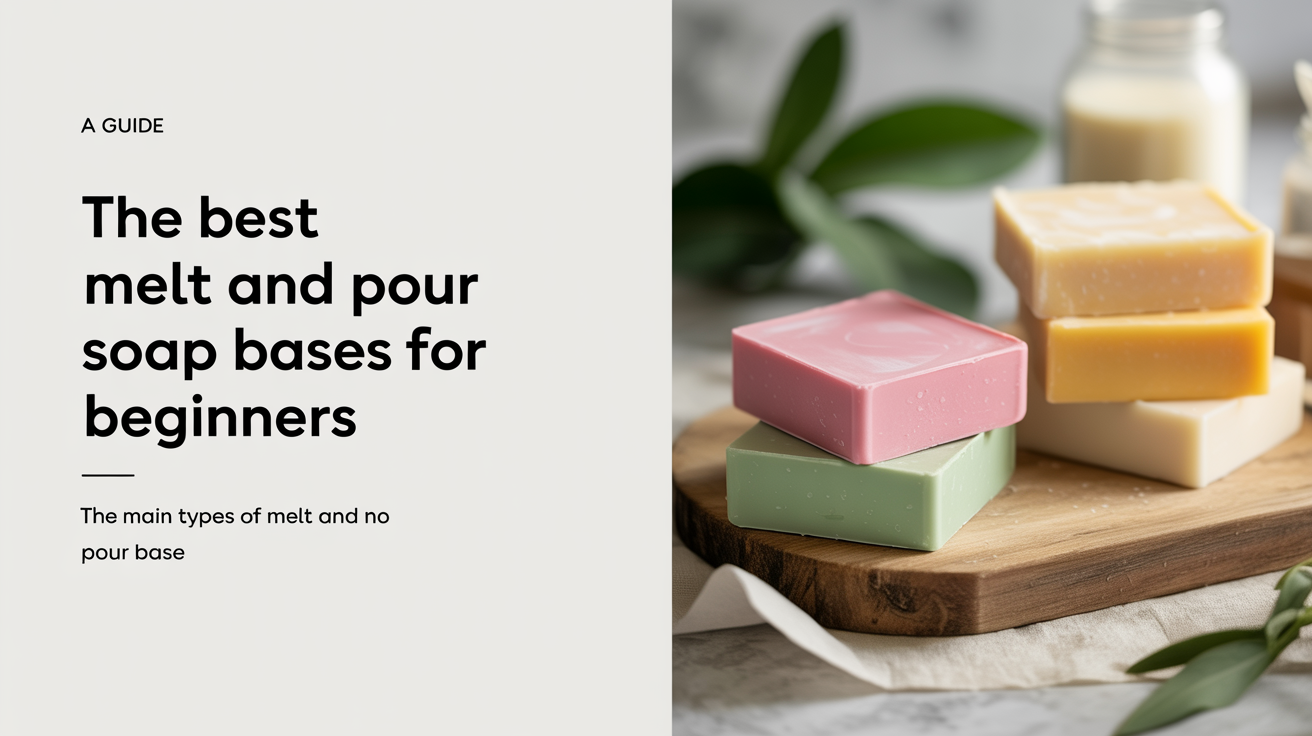
Clear (Glycerin) Base
Clear base is transparent amber-gold when melted, and it sets to glass-like clarity. It's the most popular starting base for a reason: embedded objects (dried flowers, small figures, toys) stay visible, and soap colorants read true to what you mixed. Add a yellow dye and you get yellow. Add nothing and you get a nearly clear bar.
The trade-off is that clear base contains more humectants to achieve that transparency, which makes it prone to "glycerin dew", tiny water droplets that form on the surface in humid conditions. Glycerol is hygroscopic, meaning its molecular structure actively pulls moisture out of the surrounding air, so the more of it a base contains, the more visible dew becomes in a humid bathroom. Wrapping bars promptly in plastic wrap prevents this almost entirely.
Clear base is ideal for: layered soaps, embed projects, bright or jewel-tone colorants, and anyone who wants to see what's inside the bar.
White (Opaque) Base
White base has titanium dioxide or another opacifier blended in. It sets to a solid, matte white. The practical difference from clear base is significant: pastels look clean rather than muddy, and the bar photographs well without showing every bubble.
White base is somewhat less prone to glycerin dew than clear because the opacifiers shift the humectant balance slightly. It's a better choice for soaps you'll leave unwrapped for display.
White base is ideal for: pastel colorways, gift soaps, swirled designs where you want contrast, and beginner projects where muted colors are fine.
Shea Butter Base
Shea butter base is an opaque base with shea butter added at the formulation stage, typically 5-15% by weight. The shea adds slip and a slightly richer skin feel. The bar will have a slightly creamier, off-white appearance rather than bright white.
The skin-feel difference is real but subtle. Shea butter base lathers similarly to plain white base; the conditioning effect is what changes. If you're making soap for someone with dry skin or eczema, shea base is worth the small price premium.
Shea butter base is ideal for: body bars, gift sets marketed toward dry skin, and projects where skin feel matters more than brilliant color.
Goat Milk Base
Goat milk base replaces some of the water content with goat milk solids. The result is a creamy, off-white bar with a reputation for being gentle on sensitive skin. The milk proteins add a slight tan color to the base that you can't fully cover with colorants, plan your palette accordingly.
One note: goat milk base has a slightly lower melt point than plain glycerin bases and can scorch if overheated. Keep your microwave intervals short (15-20 seconds) and stir between rounds.
Goat milk base is ideal for: sensitive or baby skin, natural-looking bars, and soapmakers who want a recognizable "specialty" base to list on labels.
Oatmeal Base
Oatmeal base has finely milled oats (colloidal oatmeal) blended in. The texture is speckled and rustic-looking, which can be an asset or a drawback depending on the aesthetic you're after. The oats add a mild exfoliating quality.
One limitation: the oat particles can settle slightly as the base cools, so gentle stirring just before pouring helps keep distribution even. Oatmeal base is opaque and a warm beige color.
Oatmeal base is ideal for: exfoliating bars, rustic or natural aesthetics, spa gift sets.
Low-Sweat Base
Low-sweat base is a formulation specifically engineered to resist glycerin dew. The humectant levels are adjusted so the bar stays dry on the surface even in high humidity. The trade-off is usually slightly reduced transparency (even in the "clear" low-sweat versions) and sometimes a softer lather.
If you're selling at farmers markets in summer or live somewhere humid, low-sweat base saves you from wrapping every bar individually and dealing with damp packaging. For home use where bars go straight into a shower, it's less necessary.
Low-sweat base is ideal for: craft fair vendors, displayed soaps, humid climates, gift boxes that ship in summer.
Base Comparison Table
| Base | Appearance | Skin Feel | Best For | Sweating Risk |
|---|---|---|---|---|
| Clear glycerin | Transparent | Standard | Embeds, bright colors, layers | Higher |
| White opaque | Matte white | Standard | Pastels, display soaps | Moderate |
| Shea butter | Creamy off-white | Conditioning | Dry skin, gift bars | Moderate |
| Goat milk | Warm off-white | Gentle/creamy | Sensitive skin, natural look | Moderate |
| Oatmeal | Beige, speckled | Mild exfoliant | Spa bars, rustic aesthetic | Moderate |
| Low-sweat | Clear or opaque | Standard | Vendors, humid display | Low |
Worked Example: Pricing a Batch Across Bases
Base cost per pound varies more than most beginners expect, and it changes the math on what to charge for finished bars. Using a typical 10-bar batch at roughly 3.5 oz per bar (about 2.2 lb of base total):
| Base | Typical cost per lb | Cost for a 10-bar batch | Notes |
|---|---|---|---|
| Clear or white glycerin | $5-7 | $11-15 | Cheapest entry point |
| Shea butter | $7-9 | $15-20 | Small premium for conditioning |
| Goat milk | $8-10 | $18-22 | Premium for specialty label appeal |
| Oatmeal | $7-9 | $15-20 | Similar to shea, plus exfoliant texture |
| Low-sweat | $8-11 | $18-24 | Premium for display stability |
Add $1-3 per batch for fragrance and colorant, and the all-in cost per bar for most bases lands between $1.20 and $2.50 before packaging, well under typical retail or gift value.
Which Base Should You Start With?
For a first project, clear glycerin base is the most instructive choice. You'll see exactly what your colorant does, spot air bubbles before they set, and understand how the base behaves when melted and poured. Most beginner techniques, the basic melt and pour process, adding color, and adding fragrance, are easiest to learn in a forgiving, transparent base where you can see what's happening.
Once you've made two or three batches in clear base, pick up a white or shea base and compare. The tactile and visual difference will mean more once you have a reference point.
Buy a small block (2-5 lbs) from a reputable supplier rather than a large quantity. M&P base has a shelf life, and until you know you like working with a specific base, smaller purchases make sense.
Frequently Asked Questions
Is melt and pour base the same as glycerin soap?
Mostly yes. "Glycerin soap" is a common name for transparent M&P base because glycerin is a primary humectant in the formulation. But opaque M&P bases also contain glycerin, it's just less visible (and less prone to sweating) because opacifiers shift the formula. The terms are often used interchangeably even though technically all M&P bases are glycerin-containing.
Can I add extra shea butter or oils to a melt and pour base?
You can add a small amount of extra oils or butters, generally no more than 1 teaspoon per pound of base. Adding too much causes a "free oil" problem: the oils don't incorporate into the soap structure, so the bar feels greasy and may not unmold cleanly. If skin feel is your main concern, start with a shea butter or goat milk base rather than trying to heavily modify a plain base.
What's the difference between detergent-free and SLS base?
Detergent-free bases use saponified oils (sodium cocoate, sodium olivate, etc.) as the primary cleansing agent, the same chemistry as cold-process soap. SLS-based formulations use synthetic surfactants. SLS bases often melt more cleanly and are cheaper, but some people find them drying, and SLS is one of the standard substances dermatology researchers use precisely because it produces consistent, measurable skin irritation in test settings. For a quality bar you'd give as a gift or feel comfortable recommending to someone with sensitive skin, detergent-free is worth the extra cost.
Why does my soap sweat after I unmold it?
Glycerin is hygroscopic, meaning it draws moisture from the air. On a humid day, that moisture condenses on the surface of the bar as small droplets, commonly called "glycerin dew." It's harmless and the bar is still usable, but it looks unpolished. The fix is to wrap bars in plastic wrap immediately after unmolding, before they cool completely. Low-sweat base is the other option if you're making bars for display or sale.
How long does melt and pour soap last on a shelf?
Most quality M&P bases have a two-year shelf life unopened. Finished bars are best used within one year. The limiting factor is usually fragrance fade and surface appearance rather than the soap itself going bad. Wrapping bars tightly and storing them away from direct sunlight extends their presentation life considerably.
Can I blend two different bases together?
Yes, and it's a common way to get a middle-ground result. Melting equal parts clear and white base, for example, gives you a translucent, milky look that's more forgiving of small bubbles than pure clear but still shows some depth. Melt bases separately first to confirm they're both fully liquid, then combine and stir gently. Avoid blending a detergent-free base with an SLS base if skin feel matters to you, the resulting bar's behavior becomes harder to predict.