Cold Process
How to Mix Lye Solution Safely
Learn how to mix lye for soap the safe way: gear up, add lye to water, manage the heat, and understand lye-to-water ratios for cold process soap.
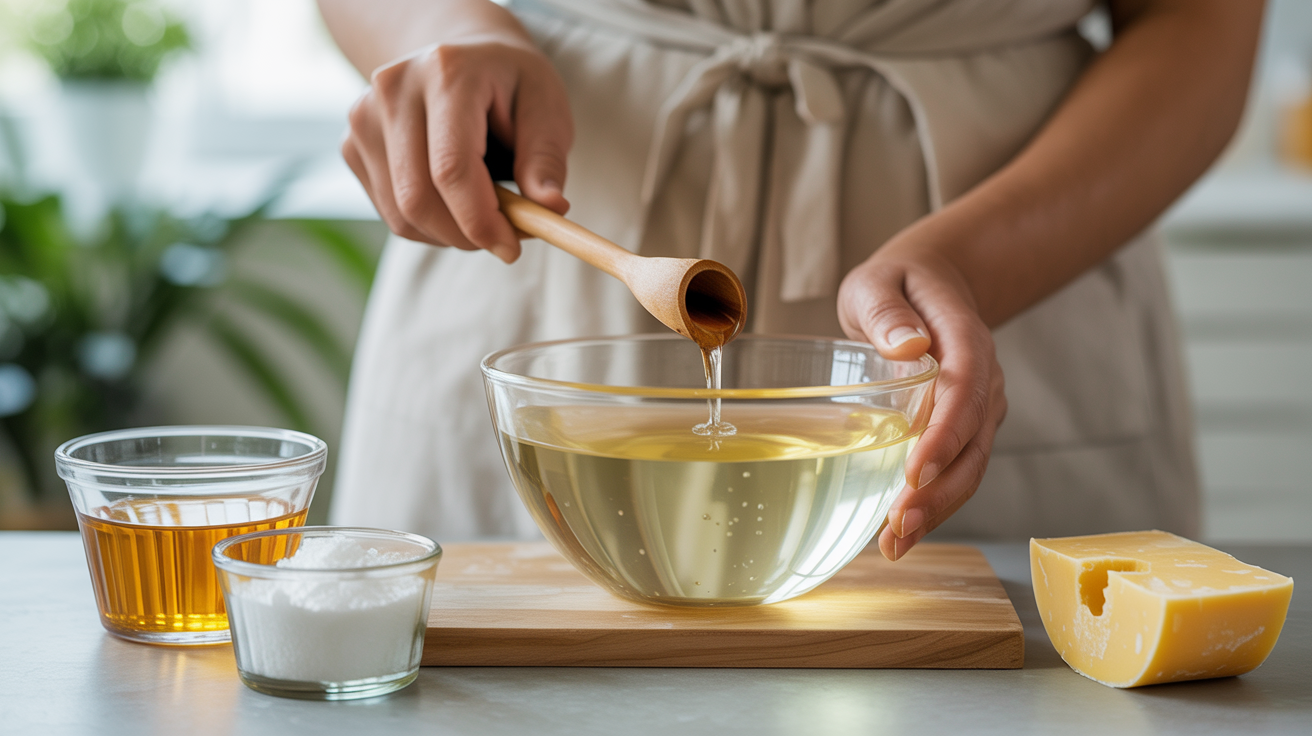
Mixing lye solution is the step that makes many beginners nervous, and honestly that caution is appropriate. Sodium hydroxide is a strong alkali that can cause chemical burns on contact and releases heat and fumes when it hits water. But with the right gear, a calm workspace, and a simple sequence of steps, it is a task you can do safely every single time.
This guide walks through everything you need: the safety gear, the correct mixing order, how lye-to-water ratios work, what to expect while the solution cools, and how to store any leftovers. Before you start, make sure you have already run your recipe through a lye calculator so you know exactly how many grams of lye and water to use. Everything here is meant to complement that step, not replace it.
Safety Gear and Workspace Setup
Put your protective gear on before you open the lye container. This is not optional.
What you need:
- Safety goggles or a face shield (not just glasses)
- Nitrile or rubber gloves
- Long sleeves and closed-toe shoes
- A well-ventilated space: an open window, a fan pointing outward, or working outdoors
Lye splashes can happen faster than you can react, so the gear needs to be on your face and hands before you measure. Keep a pitcher of water or a spray bottle of white vinegar nearby to rinse skin quickly if a splash occurs (water is fine for immediate rinsing; vinegar can help neutralize after the rinse). Keep children and pets out of the room entirely.
Choose your mixing vessel carefully. Use heat-safe, lye-compatible containers: high-density polyethylene (HDPE), polypropylene, or stainless steel. Avoid aluminum (it reacts with lye and produces hydrogen gas) and thin plastic containers that can warp from the heat. A quart-sized HDPE pitcher works well for most beginner batches.
Have a dedicated long-handled silicone or stainless spoon just for lye work. Do not use it for food afterward.
How to Mix Lye Solution: Step by Step
The cardinal rule of lye mixing is simple: always add lye to water, never water to lye. Adding water to a dry pile of lye can cause a violent, spattering reaction. The safe direction is lye into water, always.
- Weigh your water first. Pour your measured distilled or purified water into your heat-safe mixing container. Room-temperature or cold water from the refrigerator both work; cold water slows the initial heat spike slightly.
- Weigh your lye into a separate dry container. Use a digital scale accurate to 1 gram. Lye is hygroscopic, meaning it pulls moisture from the air and can clump or become less effective if left exposed. Measure it right before you need it.
- Put on your goggles and gloves if you have not already.
- In a ventilated area, slowly pour the lye into the water in a thin, steady stream while stirring gently. The solution will heat up quickly, sometimes reaching 170-200 F (77-93 C), and will release a sharp, fumy smell. Do not lean over the container and breathe the fumes directly.
- Stir until the lye is fully dissolved and the solution looks clear. Any cloudiness is usually fine and will clear as it dissolves; undissolved lye crystals at the bottom need more stirring.
- Set the container somewhere heat-safe to cool. A sink, a trivet, or a folded towel works. Some soapers rest it in a cold-water bath to speed things up. Let it cool to around 90-130 F (32-54 C) before combining with your oils, which is the range most cold-process recipes target.
Do not cover the container while the lye solution is still very hot, as pressure can build. Once it has cooled to near room temperature you can loosely cover it if needed.
Lye-to-Water Ratios Explained
The amount of water you use relative to lye affects how your soap behaves during mixing and curing. The relationship is usually expressed as a water-to-lye ratio or as a percentage of the total oil weight (called water as a percent of oils, or "water discount").
| Approach | Common Range | Effect |
|---|---|---|
| Full water (38-40% of oils) | Water:lye ratio around 2.4:1 | Longer working time, slower trace, longer cure |
| Standard water (33-38% of oils) | Water:lye ratio around 2:1 | Balanced working time for most recipes |
| Water discount (25-30% of oils) | Water:lye ratio around 1.5:1 | Faster trace, firmer bars sooner, less risk of soda ash |
Beginners often do best with a standard water amount, which gives a comfortable amount of time to mix and pour before trace sets up. Fragrance oils and certain oils like cocoa butter can accelerate trace, so if your recipe includes them, do not go with a heavier water discount on your first try.
Your lye calculator will output both the lye amount and a suggested water amount. Trust those numbers, and do not estimate by eye.
Cooling the Lye Solution and Timing
Once mixed, the lye solution needs to cool before you combine it with your oils. Most cold-process soap recipes bring both the oils and the lye solution to a similar temperature, typically 90-120 F (32-49 C), before mixing them together. This helps the batch come to trace evenly.
There are a few ways to cool the solution:
- Room-temperature cool: Set it on a heat-safe surface and check every 10-15 minutes with a thermometer.
- Cold-water bath: Place the mixing container in a sink or bowl of cold water. Stir occasionally so it cools evenly.
- Mix lye solution in advance: Some soapers mix their lye solution the night before and let it cool fully. A room-temperature lye solution is safe to use and just needs to be brought close to your oil temperature before combining.
Use a digital thermometer rather than guessing. Two batches that look the same can behave very differently if one is 20 degrees hotter than the other.
Once you have mixed the lye solution into your oils and the batch comes to trace, you can pour into your mold. For the full sequence from there, see the beginner cold-process walkthrough.
Storing Leftover Lye Solution
You may occasionally have more lye solution than you need, or you may mix it ahead and not use it right away. A few things to know:
- Lye solution stays caustic until it is fully saponified in a soap batch. Leftover solution is still dangerous and needs to be handled with the same care as fresh lye.
- Store it in a labeled, sealed HDPE container in a place children and pets cannot reach. Label it clearly: "LYE SOLUTION - CAUSTIC - DO NOT TOUCH."
- Use it within a day or two for best results. Over time, lye solution can absorb carbon dioxide from the air and form sodium carbonate, which reduces its effectiveness.
- Do not pour lye solution down a plastic drain. Neutralize it by slowly stirring in a small amount of vinegar or citric acid solution until it tests pH-neutral (around 7), then rinse down a metal drain with plenty of water. Or use it in your next batch.
Frequently Asked Questions
Can I use tap water instead of distilled water? Distilled water is recommended because tap water contains minerals and chlorine that can interfere with saponification or leave spots on the finished bar. It is not dangerous to use tap water, but distilled gives more consistent results and is inexpensive enough that it is worth using.
What happens if I accidentally add water to lye instead of lye to water? The mixture can spatter violently as the water instantly superheats. If this happens, step back immediately, do not lean over the container, and let it settle before approaching it cautiously. This is why the correct order, lye into water, needs to be automatic every time you soap.
How do I know when the lye is fully dissolved? The solution will look clear rather than milky or grainy. Run your spoon along the bottom of the container; if you feel grit, keep stirring. Undissolved lye in your soap batch can create caustic pockets that do not saponify properly.
My lye solution turned slightly yellow. Is that normal? A faint yellow or amber tint can happen with some lye brands, especially if the lye has some trace impurities or has absorbed moisture. It is generally fine to use. A bright orange color or heavy discoloration would be unusual and worth investigating before proceeding.
Can I mix lye solution in my kitchen sink? Many soapers do, and it is convenient for the cold-water bath. Just make sure you are not doing it while food is being prepared nearby, and rinse the sink thoroughly afterward. Keep the space clear of anything that could splash lye accidentally, and ventilate the kitchen well during mixing.