Cold Process
How to Unmold and Cut Cold Process Soap
Learn when to unmold cold process soap, how to get bars out cleanly, and how to cut them evenly. Includes timing cues, tool tips, and safety notes.
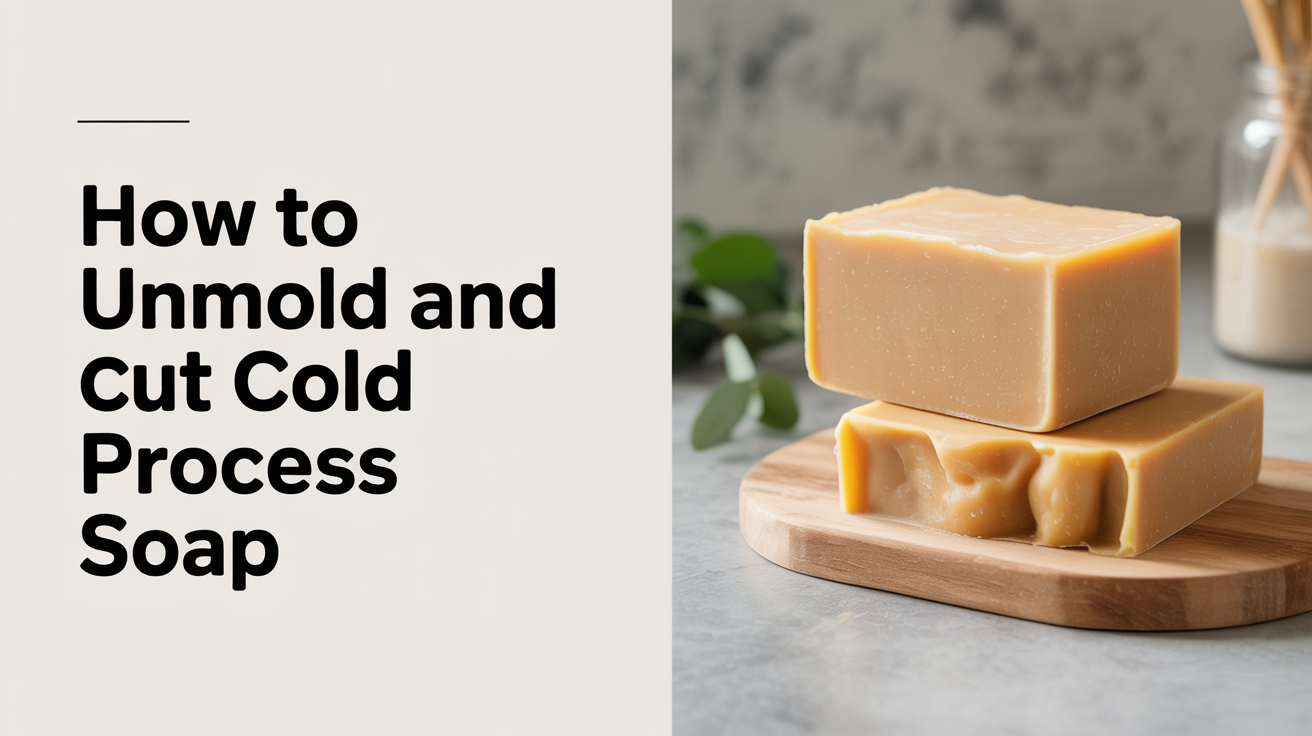
The waiting is often the hardest part of cold process soap making. You've poured a careful batch, tucked it in to gel, and now it's sitting on the counter looking almost solid. The question everyone asks at this point is the same: when is it actually safe to take it out of the mold?
Most cold process soap is ready to unmold somewhere between 24 and 48 hours after pouring, but that window can stretch to 72 hours or longer depending on your recipe and where you live. If you pull it too soon you'll end up with dented, crumbly bars. Wait too long and some batches stick or develop a thick layer of soda ash that gets pressed into the cut faces. This guide covers the signs to look for, how to get soap out of different mold types without damaging it, and how to cut bars cleanly once they're out.
How to Tell When Your Soap Is Ready to Unmold
The firmness test is the most reliable check. Press gently on the top center of your soap with one gloved finger. If it bounces back without leaving a dent, the bar is ready. If your finger sinks in even a little, give it more time.
A few factors push that window in either direction:
High-water recipes take longer. A 38% water-to-oils ratio can leave the inside soft long after the surface feels firm. If you used a higher water amount, err on the side of 48 hours before testing.
Soft-oil-heavy recipes stay soft longer. Recipes built around olive oil, sunflower oil, or other liquid oils need more time than recipes with a solid backbone of coconut oil, lard, or tallow. A pure olive oil castile can take three to seven days in the mold before it's firm enough to cut without bending.
Cold rooms slow things down. Soap firms up faster in a warm room. In a kitchen that stays below 65°F (18°C) in winter, add at least a day.
Trace matters too. A thin trace at pour time means the saponification reaction was still early, and the soap needs longer to set. Medium or thicker trace usually means bars are ready on the shorter end of the range.
A helpful general reference for unmold timing:
| Recipe type | Typical unmold window |
|---|---|
| Coconut oil heavy (50%+) | 18 to 24 hours |
| Balanced recipe (coconut + olive + other oils) | 24 to 48 hours |
| Soft-oil heavy (olive, sunflower, rice bran) | 48 to 72 hours |
| High-water or high-superfat | 48 to 96 hours |
| 100% olive oil castile | 3 to 7 days |
How to Unmold Cold Process Soap
Always wear gloves when unmolding. Freshly made cold process soap is still actively completing saponification for the first week or two and contains lye at a pH high enough to irritate skin. Gloves protect you during this phase. Once bars are fully cured (4 to 6 weeks), they're safe to handle bare-handed.
Silicone loaf or individual molds are the simplest. Turn the mold upside down onto a clean, flat surface covered with parchment or freezer paper. Press the bottom of the silicone gently and peel it away. If the soap doesn't drop out easily, flex the mold from several angles.
Wooden loaf molds with a removable liner usually have a liner of freezer paper or a pre-made silicone insert. Lift the liner out of the box first, then peel the freezer paper away from the sides. Work slowly, especially at the corners, to avoid tearing soft spots.
Wooden molds without a liner can stick. Run a thin, flexible spatula or a butter knife along each inner wall to break the seal, then turn it over. If it still won't release, refrigerate the whole mold for 30 to 60 minutes. The temperature drop causes the soap to contract slightly and usually frees it.
Plastic or acrylic tube molds often need a dowel rod and a mallet. Place the tube upright, insert a dowel into the open end, and tap firmly with a rubber mallet. Keep the dowel centered to avoid cracking the log.
Once unmolded, let the log sit uncovered for 15 to 30 minutes. The surface dries slightly, which makes cutting cleaner and reduces the chance of the wire or knife dragging soft soap.
How to Cut Cold Process Soap
You have a few options, and the right one depends on what you have available.
Soap cutters and wire cutters
A wire soap cutter or an acrylic-guided soap cutter gives you the most consistent bar thickness. Set your guides to your target weight (most home soapers aim for bars that are about 1 inch / 2.5 cm thick, which weighs roughly 4 oz / 113 g depending on the recipe). Pull the wire through in one smooth motion; sawing back and forth leaves drag marks.
A chef's knife and a ruler
This works well if you don't make soap often enough to justify a dedicated cutter. Mark your cuts on the top of the log with a toothpick or skewer, lay the knife at your first mark, and press straight down rather than rocking. A quick, firm downward stroke is cleaner than a slow one. Use a mitre box or a cutting guide if you want the bars to stand straight.
Crinkle cutters
A handheld crinkle cutter (like those used for pastry) adds a wavy edge to your bars. Press straight down rather than dragging, and make sure the soap is firm enough not to smear.
If the soap bends instead of cutting cleanly, it's still too soft. Wrap it loosely in a piece of parchment and give it another 12 to 24 hours before trying again.
What to Do After Cutting
Place the cut bars on edge on a wire rack or wooden boards so air can circulate around all sides. Set them somewhere with low humidity and good airflow, away from direct sunlight, which can fade natural colorants and accelerate rancidity in oils.
Cold process soap needs a minimum of 4 weeks to cure before use. During curing, excess water evaporates and the saponification reaction fully completes. A bar cut at 48 hours is not done; it's just firm enough to handle. A 6-week cure produces a harder, longer-lasting bar that rinses cleaner.
Before using or gifting any bar, do a zap test: touch the tip of your tongue to a corner of the bar for less than a second. A "zap" or tingle, like touching a battery to your tongue, means active lye is still present. Let the bar cure longer and test again. No zap means saponification is complete. If you want to go further, a pH strip reading of 9 to 10 is typical for finished cold process soap.
For guidance on building a recipe that firms up reliably, including how to use a lye calculator to get your sodium hydroxide amount right, see the linked guides. A recipe that's correctly lye-calculated and balanced for hard oils will unmold and cut much more predictably than one with loose numbers.
Frequently Asked Questions
My soap is still soft after 48 hours. What went wrong?
Soft soap at 48 hours is usually a recipe issue rather than a process issue. A high percentage of liquid oils, a high superfat, or too much water will all produce a soft bar that needs more time. Recipes that are heavy in olive, sunflower, or high-oleic oils often need 5 to 7 days in the mold. Check your recipe's hard-to-soft oil ratio and consider running it through a lye calculator to confirm your water amount. See how to make cold process soap step by step for recipe construction basics.
Can I put the soap in the freezer to firm it up faster?
Yes, with one caution: freezing can cause the soap to crack as it contracts, especially in a rigid mold. If you need to speed things up, the refrigerator is a gentler option. Put the whole mold in the fridge for 2 to 3 hours, not the freezer, and check firmness before trying to unmold.
My bars have white powder on the outside after cutting. Is that normal?
That's soda ash, a harmless reaction between unsaponified soap and carbon dioxide in the air. It doesn't affect the finished bar at all and washes off the first time someone uses the soap. If you want cleaner cut faces, cover the cut ends loosely with a cloth for the first few days of curing to slow the reaction.
How thick should I cut my bars?
Most soapers cut bars between 3/4 inch and 1 1/4 inches (2 to 3 cm) thick. Thinner bars dry faster but wear out quickly in use; thicker bars last longer but take more time to cure fully. A 1-inch bar is a practical middle ground for most recipes.
Do I need gloves while cutting?
Yes, for the first few weeks. Freshly unmolded soap is still high-pH and can irritate skin, especially around cuts or sensitive areas. Nitrile or rubber gloves are fine. After a full 4-to-6-week cure, bars are safe to handle without protection.