Troubleshooting & Safety
What Is Soda Ash on Soap (and How to Prevent It)?
Soda ash is a harmless white powder that forms on handmade soap. Learn what causes it, how to prevent it with simple steps, and how to remove it easily.
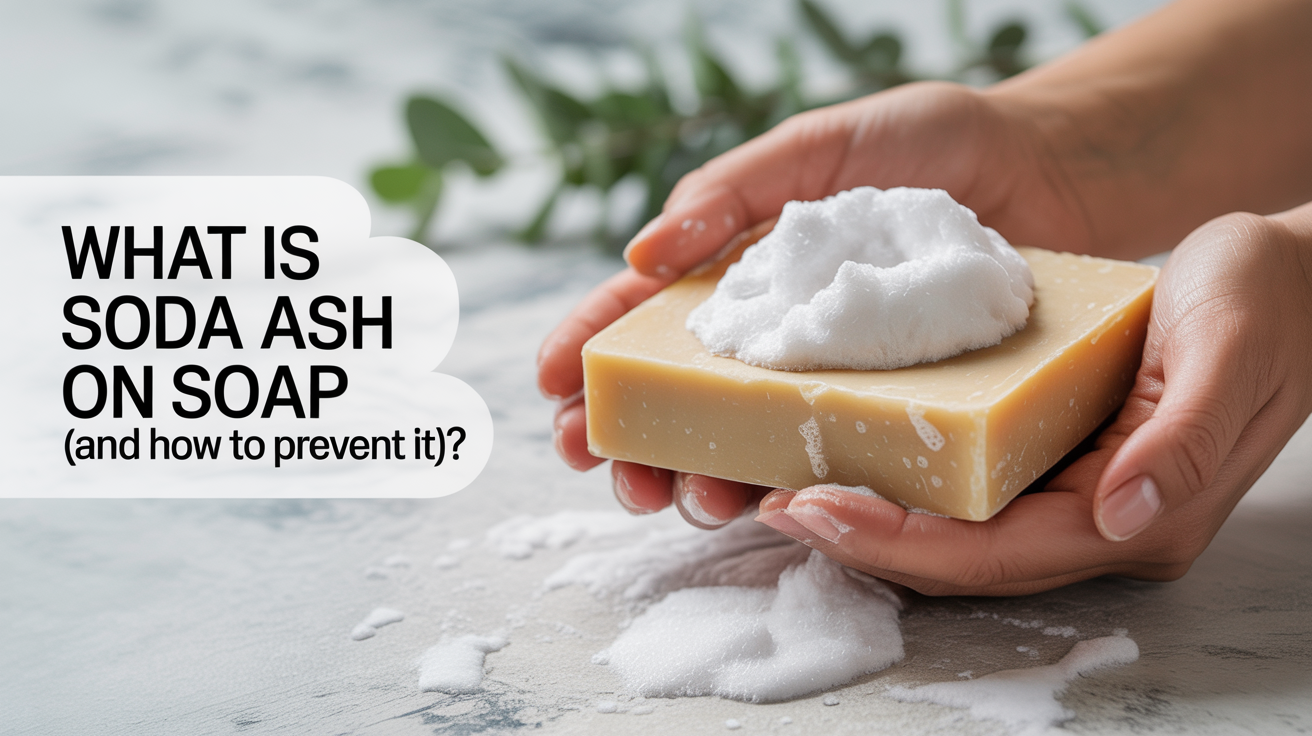
You pulled your bars out of the mold after a long overnight wait, and the tops are covered in a white, powdery film. Take a breath. That film is soda ash, and it means absolutely nothing is wrong with your soap. It is cosmetic only, the bars are safe to use, they lather fine, and the ash does not affect the recipe in any way. This guide explains what causes it, how to keep it from forming in the first place, and a few easy ways to remove it if it shows up anyway.
What Is Soda Ash, Exactly?
Soda ash is sodium carbonate. It forms when unsaponified (not-yet-reacted) lye on the surface of fresh soap is exposed to carbon dioxide in the air. The lye molecules that haven't finished turning into soap react with CO₂ instead, producing that chalky white layer.
It looks alarming if you haven't seen it before. New soapers sometimes worry the batch failed, or that the ash means extra lye is sitting on the surface. Neither is true. By the time the ash has appeared, the bulk of the soap has already saponified. The ash sits only on the outermost surface, and it washes off with the first use.
You are more likely to see soda ash on cold-process soap than hot-process soap, because cold-process soap spends more time in an "unfinished" state while it cures. Some batches get it; some don't. Humidity, room temperature, your recipe's water content, and a few other factors all play a role.
Why Soda Ash Forms: The Main Causes
Understanding the causes makes the prevention steps obvious.
Cool soaping temperatures. Lye water and oils that are on the cooler side (below roughly 90°F / 32°C) slow down saponification. The slower the reaction, the longer unsaponified lye sits exposed on the surface. Ash loves a slow, cool batch.
High-water recipes. More water means a thinner, wetter batter that takes longer to firm up and finish saponifying. The surface stays reactive for longer, giving air more time to form ash.
Exposed mold tops. An uncovered mold is the single biggest variable. Air circulating over the fresh soap surface drives ash formation. Cover the mold and most of the problem disappears.
Low-gel-phase batches. Gel phase is the warm, translucent stage some soap goes through in the mold. Soap that fully gels tends to have fewer ash problems, because the heat speeds saponification and finishes the reaction faster.
Fragrance or additive interference. Certain fragrance oils or additives (clays, some botanicals) can affect how quickly the batter thickens and how evenly it reacts, which can contribute to ash on specific batches even when your usual routine produces none.
How to Prevent Soda Ash
None of these steps is complicated. A couple of habit changes handle most cases.
Spray the Top with Isopropyl Alcohol
This is the most reliable single prevention step. As soon as you pour the batter into the mold, spritz the top lightly with 91% isopropyl alcohol (rubbing alcohol). The alcohol creates a barrier that slows CO₂ contact with the surface. It evaporates quickly and doesn't affect the soap. Keep a small spray bottle next to your soaping station.
Cover the Mold
Lay a piece of cardboard, a sheet of plastic wrap, or a silicone lid over the top of the mold right after pouring. You do not need an airtight seal; you just need to reduce airflow across the surface. Many soapers combine the alcohol spray with a cover for extra insurance.
Soap a Touch Warmer
If your recipe allows, soap with your lye water and oils at 100–110°F (38–43°C) rather than at room temperature. Warmer batter saponifies faster and leaves less unsaponified lye sitting on the surface. This is a modest change, you are not trying to soap hot, just not cold.
Encourage Gel Phase
You can push your soap into gel phase by insulating the mold (wrap it in a towel, or put it in a warm oven set to 170°F / 75°C for an hour, then turn the oven off). Full gel phase speeds up saponification across the whole loaf, which tends to reduce ash significantly. Note that gel phase changes the final appearance of the soap (it produces a slightly translucent, more vibrant color), so decide whether that look suits your recipe before using this method every time.
Try a Water Discount
Reducing the water in your recipe (commonly called a water discount) produces a firmer, faster-reacting batter with less free water sitting on the surface. A 5–10% reduction from your lye calculator's default is a gentle starting point. Check your lye safety for soap making basics before adjusting water, since a concentrated lye solution is hotter and requires careful handling.
Prevention at a Glance
| Cause | Prevention |
|---|---|
| Air exposure on the mold surface | Spritz with 91% isopropyl alcohol; cover the mold |
| Cool soaping temperatures | Soap at 100–110°F (38–43°C) |
| High water content | Use a 5–10% water discount |
| Slow or no gel phase | Insulate the mold to encourage gel |
| Thin, slow-moving batter | Soap slightly warmer; reduce water |
How to Remove Soda Ash
If ash forms despite your best efforts, removing it is simple. You have several options depending on how much effort you want to put in.
Steam
Hold each bar over a pot of boiling water (or use a handheld clothing steamer) for a few seconds. The steam dissolves the ash instantly and leaves a smooth, glossy surface. This is the fastest method and works on fully cured bars or bars that have been out of the mold for at least a day or two.
Rinse or Wash Under Warm Water
Run the bar under warm water and rub the surface gently with your fingers or a soft cloth. The ash rinses away in seconds. The bar will feel slightly slimy at first (that's normal for fresh soap), just set it aside to dry.
Buff or Plane
For bars that have cured for a few weeks, you can use a soap beveler or a simple vegetable peeler to shave off the ashy layer. This gives you clean, sharp edges and a fresh-looking bar. The thin shavings can be saved and added to future soap batches.
Cutting the Loaf Early
Some soapers cut their loaf at 24 hours, before ash has a chance to build up significantly. Cutting exposes fresh interior soap and removes the ashy top layer in one step. This works well for loaf molds where the top is the main problem.
Ash on individual bars that have already been cut can be addressed with steam or a quick rinse before packaging or gifting.
Frequently Asked Questions
Is soda ash on soap dangerous?
No. Soda ash is sodium carbonate, related to washing soda, and chemically far milder than the sodium hydroxide (lye) used to make the soap. By the time ash forms, saponification is essentially complete. The ash is not uncured lye, and it is not harmful to skin.
Does soda ash mean my recipe has too much lye?
Not at all. A properly calculated recipe (run through a lye calculator with a standard 5% superfat) can still develop ash. The ash is a surface phenomenon caused by air exposure, not a sign of a lye-heavy formula. If you are uncertain about your lye calculation, double-check it in a reputable calculator, but ash alone is not a warning sign.
Will soda ash go away on its own?
Sometimes. Light ash can fade during the cure as the soap dries out and the surface settles. Heavy ash tends to stay visible until you remove it. Since removal takes about thirty seconds, there is no reason to wait and hope.
Why do some batches get ash and others don't?
Small changes in room temperature, humidity, fragrance oil behavior, or how quickly you moved from mixing to molding can all shift whether ash forms. Many soapers find certain fragrance oils or colorants trigger it reliably in their studio. Keeping notes on what you did differently helps you spot the pattern.
Does soda ash affect how the soap lathers or feels on skin?
No. The lather, conditioning feel, and performance of the bar are unchanged. The ash is only on the surface. A customer or gift recipient who uses the bar without knowing about the ash will not notice anything different once they start washing with it.
Soda ash is one of those soap-making quirks that looks alarming and turns out to be a non-issue. If it shows up, you now know exactly what to do. For other things that can surprise you in the first batches, see why soap sometimes seizes in the pot and what to do if your soap has separated or oily pockets. Most problems in cold-process soap making have straightforward explanations, and ash is about as mild as they get.