Troubleshooting & Safety
What Are DOS (Dreaded Orange Spots) on Soap?
DOS (dreaded orange spots) are rancid patches on cured soap bars. Learn what causes them, which oils trigger them, and how to prevent them.
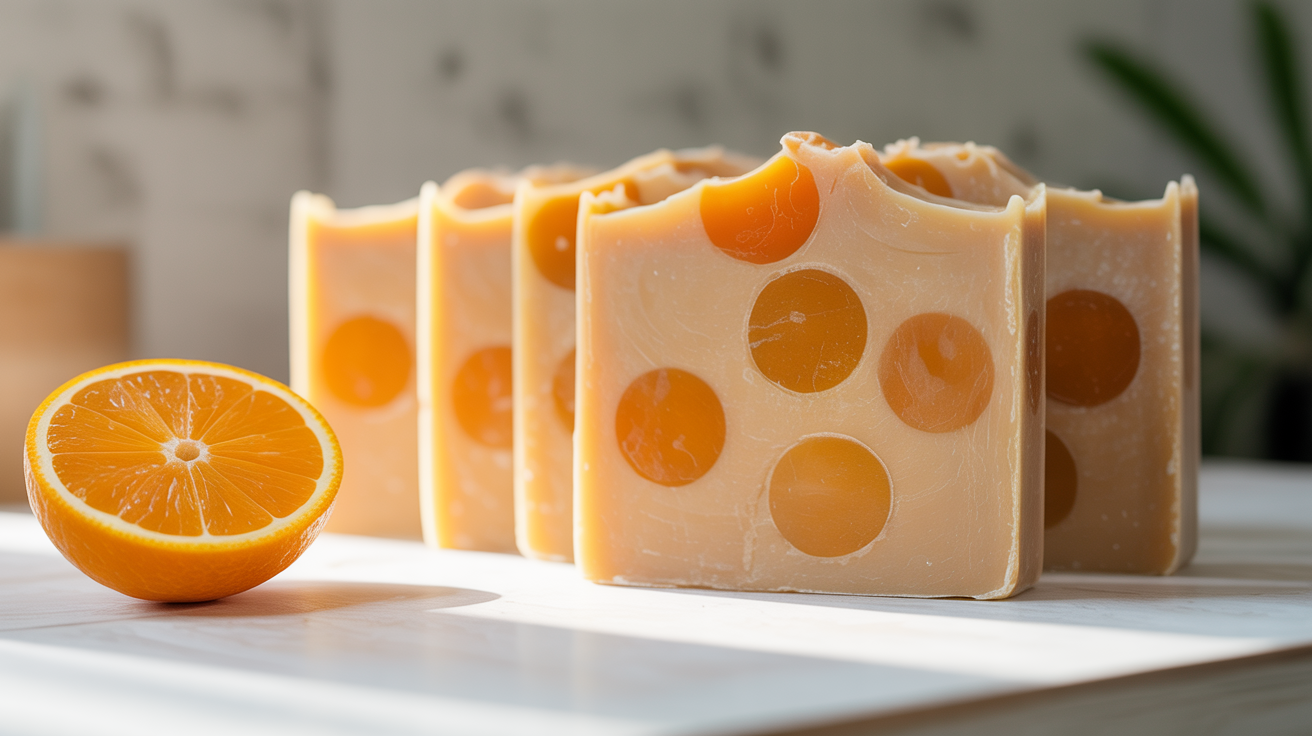
You spend weeks carefully curing your cold-process bars, then unwrap one to find small orange or brown dots freckled across the surface or cutting through the center. Those spots have a name in the soap-making world: DOS, short for "dreaded orange spots." They are a sign that the oils in your soap have begun to go rancid, and while they are not dangerous, they are a real nuisance. Understanding what causes them goes a long way toward keeping your batches spot-free.
DOS can show up as early as a few days into cure or as late as several months after your bars looked perfect. The spots range from pale peach pinpoints to deep amber or rust-colored patches, and they often carry a faint crayon-like or stale-cooking-oil smell. Once oxidation takes hold in a bar, it tends to spread, so catching the root cause early helps protect future batches.
What DOS Actually Is
At its core, DOS is rancidity. Oils are made of fatty acids, and those fatty acids can oxidize when they come into contact with air, water, metal ions, or certain fragrance compounds over time. In a cured bar of soap, the saponification process converts most of the oil into soap molecules, but your superfat percentage leaves a portion of free oil unreacted. That free oil is what oxidizes and turns into the visible orange spots you see.
The oxidation happens at the molecular level and produces aldehydes and ketones, which are the compounds responsible for that characteristic off smell. The reaction accelerates with heat, light, and humidity, which is why bars stored in a hot bathroom or left in a sunny spot tend to show DOS faster than bars kept in a cool, dark place.
Which Oils Cause the Most Problems
Not all oils oxidize at the same rate. The culprit in most DOS cases is a high concentration of polyunsaturated fatty acids, particularly linoleic acid and linolenic acid. These fatty acids are far more reactive with oxygen than saturated fats or monounsaturated oleic acid.
Oils high in linoleic and linolenic acid include:
- Sunflower oil (high-linoleic variety): roughly 65-75% linoleic acid
- Grapeseed oil: around 70% linoleic acid
- Hemp seed oil: high in both linoleic and linolenic acid
- Flaxseed oil: very high in linolenic acid, one of the fastest to go rancid in soap
- Walnut oil: significant linolenic content
Oils dominated by saturated fats, like coconut oil (roughly 90% saturated), palm oil, or lard, are far more stable and rarely trigger DOS on their own. Oleic-heavy oils like olive oil, avocado oil, and high-oleic sunflower oil fall in the middle. They are more stable than the high-linoleic versions but still benefit from antioxidant support at higher percentages.
This does not mean you should avoid skin-conditioning linoleic oils entirely. Many soap makers use them at 5-15% of the oil weight and keep DOS well controlled. Problems tend to appear when linoleic or linolenic oils make up a large portion of a recipe without any protective measures in place.
What Else Triggers DOS
Oil choice is only part of the picture. Several other factors speed up oxidation in finished bars:
Excess water. A higher water-to-lye ratio leaves more residual moisture in the bar during cure. That extra water creates a more hospitable environment for rancidity to develop. Experienced makers often use a water discount of 25-33% below the full water amount for this reason, though you should always run any adjusted recipe through a lye calculator before mixing. For a safe introduction to working with lye, the guide on lye safety for soap making covers the foundational steps.
High superfat percentage. Superfat (also called lye discount) is the percentage of oil you leave unsaponified to add conditioning properties to the bar. Most recipes run a superfat of 5-8%. Pushing above 10% leaves a meaningful amount of free oil sitting in the bar, and that extra free oil has more surface area for oxidation to work on. High-linoleic oils at a high superfat are a particularly risky combination.
Fragrance and essential oils with certain components. Some fragrance oils contain components that act as pro-oxidants, meaning they actively encourage rancidity rather than just sitting passively. Citrus fragrance oils and those heavy in aldehydes are frequent offenders. Fragrance oils can also cause acceleration at trace (the mixture thickening rapidly), and a soap that seizes and cannot be mixed smoothly may trap air pockets that speed up oxidation. If you have dealt with a batch that seized, the article on why soap seizes and how to fix it walks through what happens and what you can do.
Metal contamination. Trace metals, especially iron and copper, act as catalysts for oxidation. This is why many soap makers avoid using metal bowls or spoons made of reactive metals. Stainless steel, high-density polyethylene (HDPE) plastic, or silicone equipment keeps your oils away from reactive surfaces.
Storage conditions. Heat, humidity, and light all accelerate rancidity. Bars left in a humid bathroom, stored in plastic wrap that traps moisture, or kept near a sunny window will show DOS sooner than bars cured on an open rack in a cool, dark space.
How to Prevent DOS
A few targeted habits cover most of the risk:
-
Add an antioxidant. Rosemary extract (ROE) is the most commonly used option among soap makers. Add it to your oils before mixing at the supplier's recommended usage rate, typically around 0.1-0.5% of your oil weight. Vitamin E (tocopherol) is another option. Both work by interrupting the oxidation chain reaction.
-
Use a water discount. Reducing your water amount by 25-33% from the full water ratio shortens the time the bar stays wet during cure and leaves less free water in the finished bar. Always recalculate lye amounts in a lye calculator when you change water ratios.
-
Keep your superfat moderate. A superfat of 5-7% gives a conditioning bar without leaving an excess of free, unprotected oil.
-
Cap linoleic-heavy oils at 15% or less. They contribute real skin-feel benefits at lower percentages without dramatically increasing oxidation risk.
-
Store bars properly. Let bars cure on open racks away from heat and direct light. Avoid wrapping bars in airtight plastic before they are fully cured. After curing, a breathable wrapper like paper or kraft wrap works better than plastic for long-term storage.
-
Use fresh oils. Check the expiration dates on your oils before you soap. Old or improperly stored oils may already be partially oxidized before they go into the pot, giving DOS a head start.
Is DOS Soap Safe to Use?
The orange spots themselves are rancid oil, not a microbial growth or a lye problem. A bar with minor DOS will not harm your skin the way bacteria would, but it may smell unpleasant and the spots often spread over time. Most soap makers consider DOS bars a cosmetic failure and either use them up quickly at home or discard them.
If you are giving bars as gifts or selling them, DOS is a problem because affected bars may continue to deteriorate and smell rancid by the time the recipient uses them. Bars with significant DOS are not suitable for gifting or sale.
DOS is not the same issue as a soap that separated or has oily pockets, which usually points to a mixing or formulation problem. If your bar has puddles of liquid oil rather than spots, the article on soap that separated or has oil pockets covers that diagnosis.
Frequently Asked Questions
Can DOS develop in melt-and-pour soap? Yes. Melt-and-pour bases contain oils too, and those oils can oxidize over time. High-linoleic additive oils, like hemp seed or rosehip, are common triggers in melt-and-pour projects. Sticking to stable oils for add-ins, keeping fragrance loads within the supplier's guidelines, and storing finished bars away from heat and light all help.
Will DOS soap make me break out or irritate my skin? Rancid oils are not ideal for skin, and some people with sensitive skin may find DOS bars irritating. The risk is low for a bar with minor spotting, but a heavily rancid bar that smells strongly is worth discarding rather than using.
Can I rebatch a DOS bar to fix it? Rebatching (melting the soap down and re-forming it) does not reverse oxidation. The rancid fatty acids are still there once the oils have oxidized. Rebatching may temporarily blend the spots, but DOS typically returns. Prevention before the batch is mixed is the only reliable fix.
How long does it take for DOS to appear? It varies. Some batches show spots within a week or two, particularly if they contain high-linoleic oils without antioxidants and were stored in warm conditions. Other batches look fine for months before spots appear. That variability is one reason soap makers add rosemary extract as a standard step rather than waiting to see if a batch needs it.
Does using a lye calculator help prevent DOS? Running every recipe through a lye calculator ensures your lye and water amounts are accurate, which is essential for safety and for consistent saponification. While the calculator itself does not directly prevent DOS, accurate saponification means fewer unsaponified oil pockets that could oxidize unevenly. Always use a lye calculator before mixing any batch.