Getting Started
How to Store and Package Homemade Soap
Learn how to store homemade soap so bars stay hard, fragrant, and long-lasting. Covers airflow, humidity, wrapping, and gift packaging tips.
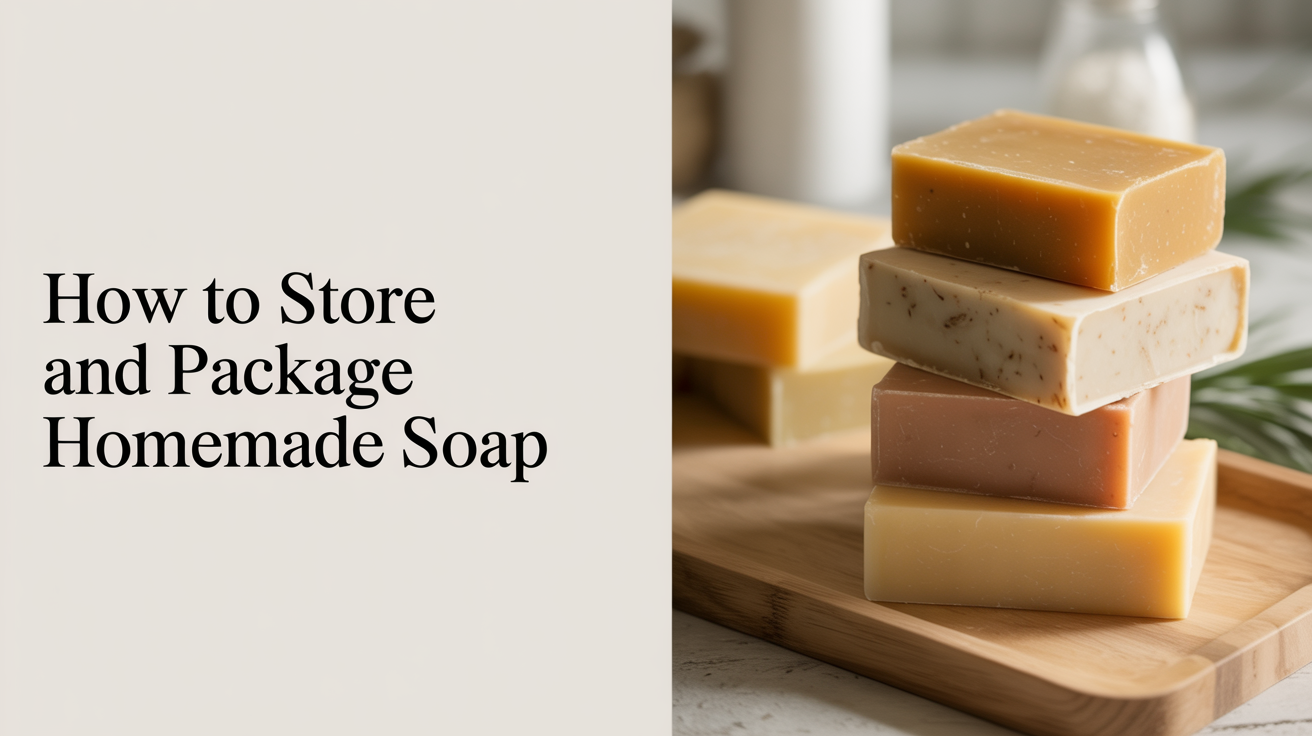
You spent a week sourcing your oils, ran the recipe through a lye calculator, suited up with goggles and gloves, mixed lye carefully into water (never the other way around), and waited out a full cure. The bars feel hard, the zap test is clean, and you are finally ready to use or share them. What happens next matters more than most beginners expect.
How you store soap after the cure determines whether it holds its scent, stays firm, and lasts for months, or turns soft and sticky within a few weeks. Good storage is simple once you understand what soap actually needs, and the same principles that keep a bar in good shape also help you wrap and present it when you want to give one as a gift.
Why the Curing Rack Is Not the Final Step
During the cure, the goal is evaporation. Water leaves the bar, the pH drops, the bar firms up, and the lather becomes milder. You want air moving freely around each bar the whole time. That part most beginners handle well.
What often gets less attention is what comes after. Once the cure period is done, you still need to think about two things: how to keep the bars in good condition until they are used, and how to present them if you plan to give them away. A fully cured bar is not fragile, but it can still absorb moisture, pick up odors from its surroundings, or fade its scent if left in the wrong spot.
If you are still in the curing stage, our guide to curing cold-process soap covers how long to wait and how to tell when a bar is ready.
The Case for Airflow Over Airtight
A common mistake is sealing finished soap in an airtight container to "protect" it. For short periods this is fine, but for anything longer than a few days, trapped air and any residual moisture create conditions that lead to sweating bars, soft spots, and off smells.
Finished soap breathes. The saponification process slows to a stop well before a full cure, but bars continue to release small amounts of moisture for weeks after. An airtight container traps that moisture and gives it nowhere to go.
For bars you plan to use or give away within one to two months, a simple open shelf or a lined wooden box with a loosely fitting lid works well. Arrange bars with a little space between them so air can circulate. A small drawer lined with parchment or craft paper is another low-effort option that keeps dust off without sealing the bars in.
For longer storage, a cardboard box in a cool, dry closet is one of the most reliable choices around. Cardboard lets air in and out slowly while protecting bars from light and temperature swings. Tissue paper or plain kraft paper between layers prevents bars from touching and picking up any impressions from each other.
Humidity, Heat, and Light
Three things do the most damage to stored soap: humidity, heat, and direct light.
Humidity causes bars to sweat. You will notice tiny beads of moisture on the surface, and over time a bar left in a damp environment can soften significantly. Bathrooms are often the worst place to store extra bars, even though it feels convenient. If you live somewhere humid, a desiccant packet tucked into your storage box helps absorb excess moisture without touching the soap.
Heat accelerates rancidity in the oils. This shows up first as an unpleasant smell and then as orange or brown spots called dreaded orange spots (DOS). Any storage spot that gets warm, like a shelf near a sunny window, the top of a refrigerator, or a closed car during summer, increases the risk of early rancidity, especially in bars made with high-oleic oils like olive or sunflower. A cool, stable temperature is better than a warm one.
Direct light fades color and breaks down fragrance over time. Natural colorants like spirulina, turmeric, or madder root are especially sensitive. Bars in direct sunlight for even a few weeks can look noticeably different from the ones you cut. A drawer, box, or any dark storage spot preserves color far better than an open shelf in a bright room.
How to Wrap Soap for Long-Term Storage
If you want to wrap bars for storage rather than leaving them bare, the wrapper you choose should breathe rather than seal.
Kraft paper is a reliable standard. Cut a strip long enough to wrap around the bar and overlap slightly, fold the ends in neatly, and secure with a piece of twine or a strip of washi tape. The paper protects the bar from dust and light while still allowing air movement.
Tissue paper works similarly and is softer against textured surfaces, which makes it a good choice for bars with swirls, embeds, or carved tops you want to protect.
Plastic wrap and cellophane bags are fine for a display table or a quick gift, but avoid using them for storage over weeks or months. They trap moisture and can cause sweating even in bars that felt perfectly dry. If you do wrap in plastic for a gift, give the bar a few hours of open air first to make sure no surface moisture is trapped inside.
Labels and bands should sit on top of the outer wrapper, not directly against the soap, so adhesive does not transfer. A paper band around the middle with the soap name, date made, and ingredients is all you need for personal use. For gifts or markets, adding a list of oils and whether the bar contains fragrance or essential oils is considerate for anyone with sensitive skin.
Packaging Soap as a Gift
A handmade bar of soap is a thoughtful gift, and a little care in how you present it goes a long way. You do not need expensive packaging materials to make a bar look finished and intentional.
A strip of kraft paper wrapped around the center of the bar, secured with a length of natural twine and a small sprig of dried lavender or rosemary tucked underneath, takes about two minutes and looks clean. A simple cardstock tag listing the ingredients and any scent notes adds a practical detail that recipients appreciate.
For a set of bars, a small wooden crate lined with shredded kraft paper holds four to six bars neatly and gives the gift a bit more presence. Cardboard drawer-style boxes in natural tones are another option that stacks well and stores easily before you are ready to give them.
Whatever you use, keep the wrapping breathable if there is any chance the bars will sit for more than a week or two before they are used. A gift that has been in a sealed plastic bag for a month may arrive with a slightly musty smell even if the soap itself is fine.
If you are still setting up your workspace and supply list, our soap-making supplies guide covers what equipment you actually need to get started. And if you are new to the process itself, our complete beginner's guide to making soap at home walks through the full process from measuring oils to unmolding.
Frequently Asked Questions
Can I store soap in the refrigerator? You can, but most finished bars do not need it. The fridge slows rancidity in oils, so it is sometimes used for bars with a high proportion of soft oils that go rancid faster. If you do refrigerate soap, wrap it well in kraft paper or wax paper first to prevent it from absorbing food odors, and let it come fully to room temperature before using it to avoid condensation on the surface.
How long does homemade soap last in storage? A well-made bar stored in a cool, dry, dark spot typically stays usable for one to two years. Bars with a high percentage of soft oils, like a castile soap made mostly from olive oil, tend to last longer than those with a high percentage of oils that go rancid more quickly. The best indicator is smell: a bar that smells off or shows orange spots has gone rancid and should not be used.
My stored bars are sweating. What went wrong? Sweating usually means humidity or an airtight container. Move the bars to a drier spot with more airflow, pat off any surface moisture with a clean cloth, and switch to breathable storage like an open box or paper wrapping. Bars made with a high water content or honey also tend to sweat more than others.
Do I need to label homemade soap? For personal use, labeling is optional but helpful for keeping track of which batch is which, especially if you make multiple recipes. For gifts or anything you sell or share outside your household, a list of ingredients is important for anyone with allergies or sensitivities. In many places, soap sold commercially has specific labeling requirements, so check local rules before selling.
Can I vacuum-seal soap for long-term storage? It works for extending shelf life if the bar is completely cured and dry, but it is generally overkill for most home soapmakers. Vacuum sealing is better suited to bars you are making to age for six months or longer, or shipping in conditions where moisture is a real concern. For everyday storage, a cardboard box in a cool closet does the same job without any special equipment.