Getting Started
Soap Making Supplies Every Beginner Needs
A complete, brand-neutral checklist of soap making supplies for beginners covering melt-and-pour and cold-process kits, safety gear, and dedicated tools.
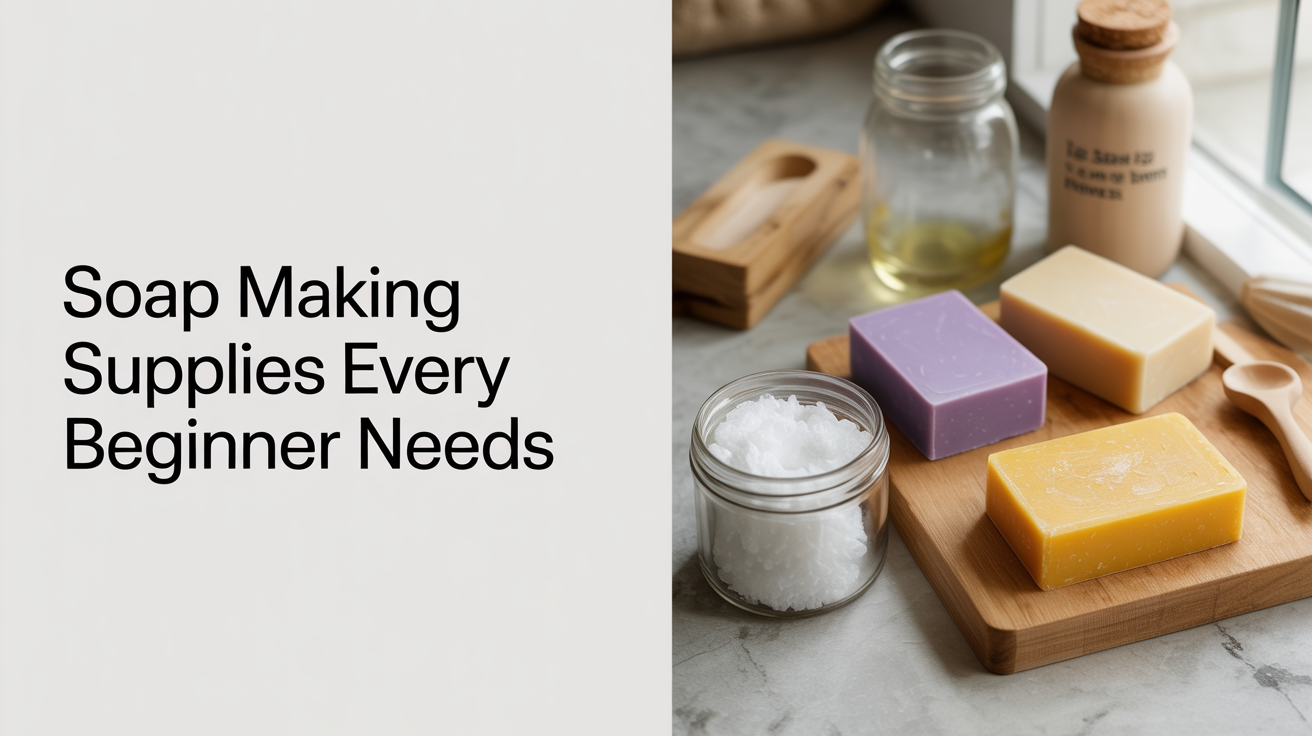
You can make your first bar of soap with fewer tools than you probably think. The list looks different depending on which method you choose, though. Melt-and-pour skips lye handling entirely and needs only a handful of items. Cold-process gives you full control over ingredients but requires proper safety equipment and dedicated tools you'll never use for food again. This guide covers both.
If you're still deciding which method fits you, The Different Methods of Making Soap Explained lays out the trade-offs clearly before you spend anything. Either method produces genuine handcrafted soap; the Handcrafted Soap & Cosmetic Guild, the industry's main trade association, recognizes soap made from scratch by cold or hot process and soap made from a ready-made melt-and-pour base as equally legitimate, so there's no wrong door in here.
At a Glance
- Melt-and-pour needs no lye handling and no dedicated safety gear beyond basic kitchen sense: a base, a mold, colorant, and fragrance get you started.
- Cold-process is non-negotiable on three items: an accurate digital scale, chemical splash goggles, and chemical-resistant gloves.
- Never use aluminum for anything that touches lye. It reacts with sodium hydroxide and releases hydrogen gas.
- Once a tool touches lye batter, it's a soap tool permanently. Don't bring it back into the kitchen.
- A basic cold-process starter kit runs roughly $60 to $120 if you're buying everything new; melt-and-pour starts closer to $25 to $40.
- A digital thermometer is cheap insurance: it catches the temperature mismatches that cause seizing and separation before they happen.
Melt-and-Pour Starter Kit
Melt-and-pour (M&P) soap starts with a pre-made soap base, glycerin, shea, goat milk, or another variety, that you melt, customize, and pour. No lye, no curing time, no dedicated safety gear beyond basic kitchen caution. It's a legitimate entry point that produces real, usable soap.
Soap Base
Buy a 2-lb or 5-lb block of M&P base rather than small cubes; bulk is cheaper per ounce (often 30 to 40% less per pound at 5 lb versus 1 lb) and you'll go through it fast. Clear base shows colorants brightly; white base gives softer, more pastel results. Start with one type so you learn how it behaves before mixing.
Molds
Silicone loaf molds are the most forgiving option for beginners: soap releases cleanly, they're easy to clean, and a standard loaf mold produces 8-10 bars per pour. Individual cavity molds let you make shaped bars but require a little more precision with volume calculations. Avoid intricate cavities until you've done a few pours.
Colorants
Soap-safe lab-certified micas are the easiest starting colorants. Start with a small sampler set of 5-10 colors. Avoid craft-store glitter (it doesn't disperse well and is often plastic). Oxides, clays, and botanicals are worth exploring once you've got the basics down. Whichever type you pick, disperse it in a little glycerin or alcohol before adding it to melted base; dry powder poured straight in tends to clump and speckle.
Fragrance or Essential Oils
Use fragrance oils or essential oils rated for soap use (usually listed in fluid ounces per pound of base on the supplier's page). A standard starting rate is 1% to 3% by weight of the base. More isn't better; over-fragrance can cause sweating or ricing.
91% Isopropyl Alcohol in a Spray Bottle
Spritz the top of the poured soap immediately after pouring to pop air bubbles. Also use it between layers if you're doing multi-pour projects. A small spray bottle works better than a full-size one, a 2-oz fine-mist bottle is plenty for most home batches.
Cold-Process Starter Kit
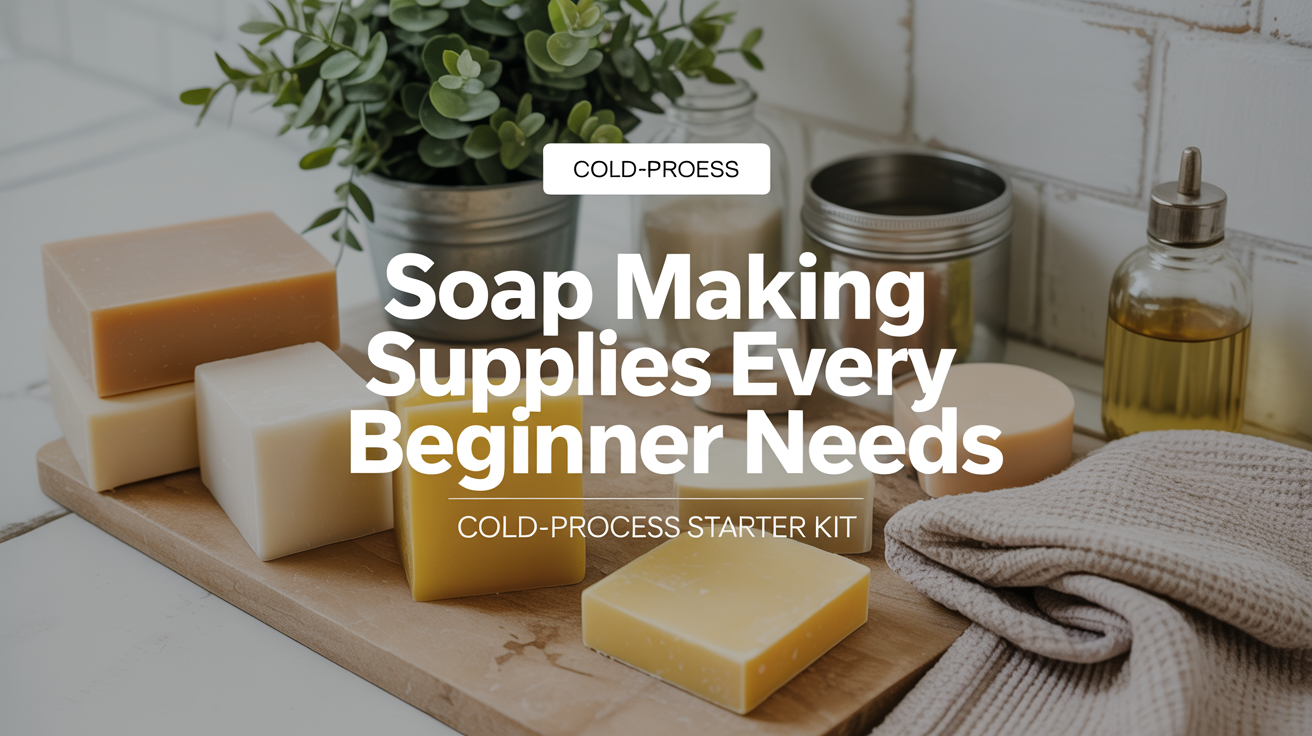
Cold-process (CP) soap involves mixing lye (sodium hydroxide) with water, then combining that lye solution with oils. The chemical reaction, saponification, creates soap. It's safe to do at home, but lye is caustic and requires protective equipment before saponification is complete, so you need proper equipment and you must dedicate it to soap permanently. This is also the reason true bar soap sits outside FDA's cosmetic rules in the first place: under federal law, a product only counts as true "soap" when it's made from an alkali (lye) reacting with fatty acids and sold solely as soap, and products meeting that definition fall under the Consumer Product Safety Commission instead. It's a legal technicality, but it's the same chemistry that makes the safety gear below mandatory.
If you want the full method walkthrough before buying anything, read How to Make Soap at Home: A Complete Beginner's Guide.
Digital Scale
This is non-negotiable. Soap making is chemistry, and you measure by weight, not volume. A scale accurate to 0.1 g is ideal; 1 g increments are workable for most home batches. Get one that can handle at least 11 lbs (5 kg) to weigh oils in the pot.
Safety Goggles and Chemical-Resistant Gloves
Also non-negotiable for cold process. Lye solution can cause severe burns on contact with skin or eyes. Safety glasses aren't enough, you need goggles that seal around the eyes. Nitrile gloves rated for chemical splash protection work for most home batchers; avoid thin latex gloves, which are too thin to reliably stop a splash.
Lye Container (Heat-Safe, Non-Aluminum)
When lye hits water, the solution heats up fast (often to 200°F or above within seconds). You need a container that handles that heat. Use heavy-duty HDPE plastic pitchers (check the recycling symbol, #2 HDPE is safe), borosilicate glass, or stainless steel. Never use aluminum: lye reacts with aluminum and releases hydrogen gas, which is a serious hazard.
Stainless Steel or Enamel Pot
Your main soap pot needs to handle heat and lye-soap batter without reacting. Stainless steel is the standard choice. Enamel-coated pots work if the enamel is fully intact. Avoid aluminum (same reason as above), non-stick coatings, and cast iron (reacts with lye over time).
A 6-quart pot handles most beginner batch sizes (2-3 lbs of oils) comfortably.
Stick Blender (Dedicated)
An immersion blender gets batter to trace in minutes instead of the hour-plus it would take by hand. Use a stainless steel or heavy-duty plastic model. Once it touches soap batter, it stays a soap tool permanently. Lye residue is difficult to remove completely, and you don't want trace amounts of caustic material in food.
Thermometer
You need to know the temperature of your lye solution and your oils before combining them. A basic digital instant-read thermometer works. Some soapers use an infrared thermometer for convenience (no contact needed), though they read surface temperature only. Either works.
Oils
The base oils determine how your soap performs: its lather quality, hardness, conditioning properties, and shelf life. A reliable beginner recipe uses a simple combination like coconut oil (for lather and hardness) and olive oil (for conditioning). A lye calculator, a free web tool, tells you exactly how much sodium hydroxide you need for any oil combination.
Sodium Hydroxide (Lye)
Pure sodium hydroxide with no additives is what you need for bar soap. Check the label for purity (99%+ is standard for soap making). Store it in an airtight container away from moisture; it absorbs water from the air and that changes the weight, sometimes enough to throw off a small batch by several percent within a few months of poor storage. Buy only what you plan to use in the near term, a resealed one-pound container is enough for four to six beginner batches.
Mold
Cold-process soap is typically poured into a loaf mold and then sliced into bars after 24-48 hours. Silicone loaf molds work well and release cleanly. You can also line a wooden mold with freezer paper (shiny side toward the soap). Avoid unlined cardboard; it gets soggy.
Shared Basics and What Goes Both Ways
Several supplies serve either method and are worth having regardless of which path you take.
| Item | What It's For | Method |
|---|---|---|
| Digital kitchen scale | Accurate measurement of all ingredients | Both |
| Silicone spatulas (2-3) | Mixing, scraping batter, pouring | Both |
| Stainless steel or silicone mixing bowls | Holding melted base or pre-measured oils | Both |
| Soap cutter or sharp knife | Cutting loaves into bars | Both |
| Safety goggles + chemical-resistant gloves | Lye handling protection | Cold process |
| Heat-safe non-aluminum lye pitcher | Mixing lye solution safely | Cold process |
| Stainless steel pot (6 qt) | Combining oils and lye batter | Cold process |
| Stick blender | Reaching trace quickly | Cold process |
| Digital thermometer | Monitoring lye solution + oil temps | Cold process |
| Silicone loaf mold | Pouring and unmolding bars | Both |
| Isopropyl alcohol spray bottle | Popping surface bubbles | Melt-and-pour |
| Mica colorants | Adding color | Both |
| Fragrance or essential oils | Adding scent | Both |
Rough Starter Budget
Prices vary by supplier and region, but here's a realistic range for a first kit bought new, not counting oils or base, which are consumable and get repurchased every batch.
| Kit | Core items | Approximate cost |
|---|---|---|
| Melt-and-pour | Base (2 lb), mold, 3 micas, 1 fragrance, alcohol spray bottle | $25-$40 |
| Cold-process, budget | Scale, goggles, gloves, HDPE pitcher, thrifted stainless pot, thermometer | $60-$85 |
| Cold-process, standard | Scale, goggles, gloves, dedicated pitcher, new 6-qt stainless pot, stick blender, thermometer, silicone mold | $100-$150 |
The scale, goggles, and gloves are the one place not to shop bargain-bin. A scale that drifts by a gram or two, or gloves that split under a splash, undermines the entire safety case for doing cold process at home.
Keep Your Soap Tools Separate from Your Kitchen Tools
This point matters more than it might seem. Lye and raw soap batter are caustic. Even after washing, residue can remain in porous surfaces (wooden spoons, plastic pitchers with scratches). Using a soap pot for pasta or a lye pitcher for lemonade is genuinely risky.
Label your soap tools clearly, or store them somewhere other than your kitchen. Silicone and stainless steel are easy to clean thoroughly, but they still deserve their own designated spot. Once a tool touches lye batter, that's its job from then on.
What Can You Skip at First?
The complete list above can feel overwhelming. For melt-and-pour, you can start with a base, a mold, one colorant, and a fragrance oil. Add the alcohol spray bottle once you see the bubble problem firsthand.
For cold process, don't skip the scale, goggles, or gloves. Those aren't optional. The stick blender isn't strictly required (hand stirring works, though it takes 30-60 minutes instead of a few), but it makes the process much more practical.
A thermometer, dedicated spatulas, and a good pot matter more than any specialty item. Start basic, see what gaps come up after your first batch, then fill them in.
Before committing to a full cold-process setup, Is Making Soap at Home Worth It? Cost and Time breaks down the real numbers.
Frequently Asked Questions
Can I use regular kitchen tools for soap making?
For melt-and-pour, yes, with caution. You can use heat-safe bowls and silicone spatulas that you wash thoroughly afterward. For cold process, no. Lye batter contaminates tools in ways that are difficult to reverse. Designate separate tools for cold-process work and don't bring them back into the kitchen.
Do I need a stick blender, or can I stir by hand?
You can stir by hand, but expect 30-60 minutes of mixing to reach trace (the point where oils and lye batter have emulsified enough to pour). A stick blender gets you there in 2-5 minutes. For a first batch, either works. Most people buy a stick blender after trying it by hand once.
What kind of mold should I start with?
A silicone loaf mold is the lowest-friction option for either method. Soap releases cleanly from silicone without lining, and most loaf molds produce a batch size that's practical for beginners (around 8 bars). Individual cavity molds are fine too, but measure your volumes carefully to avoid overfilling.
Is a thermometer necessary for cold process?
Yes, practically speaking. You want your lye solution and your oils to be within roughly 10°F of each other before combining. Getting this wrong doesn't ruin the batch in most cases, but it can cause issues like seizing (batter thickening too fast to pour) or separation. A $10-15 digital thermometer solves the problem.
Where do I buy soap making supplies?
Most of what you need is available through craft suppliers and online soapmaking retailers. Pure sodium hydroxide can sometimes be found at hardware stores (drain cleaner, but check that it's 100% sodium hydroxide with no additives). Oils, micas, fragrance oils, and molds are widely available through soapmaking-specific retailers with detailed usage guides and formulation resources.
Do I need liability insurance or any kind of certification to sell soap I make at home?
That's a separate question from what's covered here, but it's worth knowing that trade groups like the Handcrafted Soap & Cosmetic Guild offer member insurance programs specifically for small soap businesses, and most U.S. states have their own cottage-food or handmade-cosmetics labeling rules. If you're planning to sell rather than just make soap for yourself, check your state's requirements before your first sale, not after.
How long does a basic supply kit actually last?
A cold-process starter kit (scale, goggles, gloves, pitcher, pot, blender, thermometer) is a one-time purchase that lasts for years with basic care; only the gloves wear out with regular use. Consumables, oils, lye, fragrance, colorant, get repurchased every batch, so budget for those separately from the equipment above.