Scents & Colors
Kaolin, Bentonite, and French Green Clay for Coloring Soap
How kaolin, bentonite, and French green clay color cold-process soap naturally, plus usage rates, mixing tips, and how each affects trace.
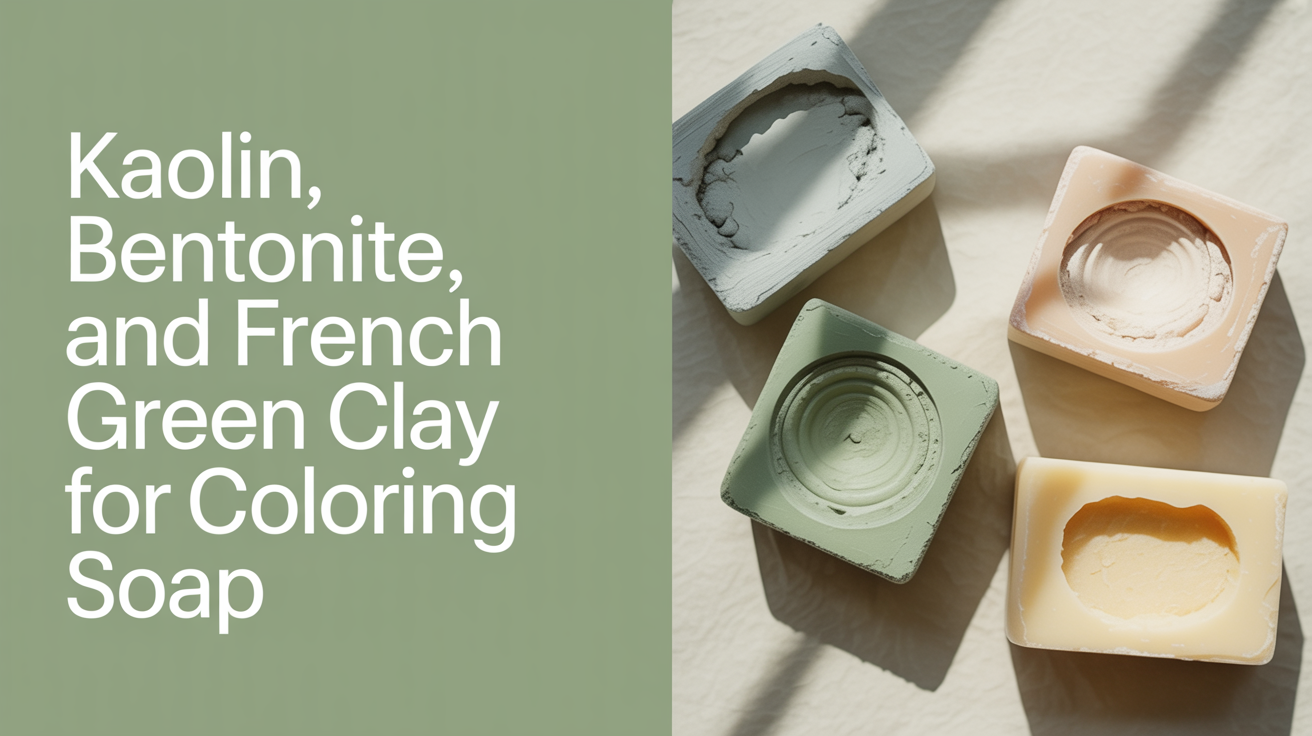
If you want color in your bars without reaching for mica, clay for soap color is one of the easiest places to start. Clays give you soft, believable tones rather than the saturated shades mica produces, and they change how the bar feels on skin, adding a bit of slip you notice in shaving soaps and facial bars. The tradeoff is that clay colors are muted. You won't get a bright teal or a hot pink out of a clay. You'll get cream, gray, and sage, colors that read as natural because they are.
This guide covers the three clays soap makers reach for most: white kaolin, bentonite, and French green clay. Each behaves differently in the pot, tints the bar its own way, and suits a different kind of soap.
Why Soap Makers Reach for Clay
Clay is mined mineral matter, ground fine enough to disperse in oil or water. In soap, it does three things at once: tints the bar toward cream, gray, or green; adds slip, a slick, cushiony feel in the lather; and absorbs a small amount of excess oil on skin, which is part of why clay bars are popular for facial and shaving soap.
None of that makes clay a substitute for fragrance or essential oil. It's a colorant and a texture ingredient first. Keep that in mind as you read marketing around individual clays, because some of it drifts into territory a bar of soap can't deliver on.
Kaolin Clay: A Gentle Cream Tint and Slip
Kaolin (sometimes labeled white cosmetic clay) is the mildest of the three and the one most soap makers reach for first. It's a fine, soft powder that tints a batter to a pale cream or ivory rather than white-white, and it's gentle enough for most facial bar recipes.
On its own, kaolin won't give you drama. Think of it as a base tone: it warms plain white soap into something closer to unbleached linen. It's often layered with titanium dioxide for a cleaner white, or blended with a pigment for a pastel, rather than used for standalone color impact.
Where kaolin earns its keep is texture. It adds a noticeably silky, almost powdery slip to the lather, which is why it shows up so often in shaving soap and bars marketed for sensitive skin. A little kaolin also firms up a bar's texture slightly, so some makers include a small percentage even when coloring with something else entirely, just for the feel.
Bentonite Clay: A Grayish Tone with More Slickness
Bentonite is a heavier-feeling clay with a wider reputation than kaolin, most of it built on skincare marketing rather than soap specifically. In a cold-process bar, it tints the batter toward gray, sometimes a soft taupe-gray depending on how much you use and what other colorants share the pot.
The texture effect is stronger than kaolin's. Bentonite is famous for swelling in water (it's used as a thickener and even a sealant elsewhere), and that same swelling gives soap a distinctly slick lather. Makers building a shaving soap often lean on bentonite for that slip more than for the color.
Because bentonite swells, premix it into liquid before it goes anywhere near your batter. Dry clay dropped straight into thick trace sits in little unhydrated clumps that never fully smooth out, and once soap sets up, you're stuck with them.
French Green Clay: Earthy Sage, Often Paired with Oily-Skin Bars
French green clay gets its color from a mix of iron oxides and decomposed plant matter, and it's the most visually distinct of the three. Where kaolin and bentonite land in the cream-to-gray range, French green clay tints a batter a genuine sage or olive green, with the exact shade shifting depending on how much you use and the base color of your oils.
It's also the clay you'll see marketed most aggressively toward oily and acne-prone skin, often with language like "detoxifying" or "purifying." Treat that as marketing copy, not a claim your soap can back up. A bar of soap on skin for a minute or two before rinsing doesn't detoxify anything, and there's no reliable evidence that clay in soap treats acne. What French green clay reliably does is tint the bar green and add the same absorbent, slightly matte finish other clays bring. That's a good enough reason to use it on its own.
Usage Rates and How to Mix Clay Into Your Batch
All three clays are used the same basic way, and the amounts are closer than you'd expect.
| Clay | Typical color result | Starting usage rate | Feel added to lather |
|---|---|---|---|
| Kaolin | Pale cream to ivory | Roughly 0.5 to 1 tablespoon per pound of oils | Silky, powdery slip |
| Bentonite | Soft gray to taupe-gray | Roughly 0.5 to 1 teaspoon per pound of oils | Strong, slick lather |
| French green clay | Sage to olive green | Roughly 1 to 2 teaspoons per pound of oils | Slight absorbency, light slip |
Those ranges are starting points, not fixed rules. Clay intensity depends on your base oils, water discount, and how finely milled a particular batch is, so test small before committing a full recipe to a color you haven't seen cured. Cured soap almost always looks lighter and more muted than the raw batter.
The mixing method matters more than the exact amount. Never sprinkle dry clay powder straight into your pot at trace; it clumps almost instantly, and clumps set in a bar don't dissolve back out. Instead, mix your clay into a small amount of water, milk, or a liquid oil from your recipe, breaking up every lump with a fork until you have a smooth, pourable paste. Add it at light trace, then blend through with a stick blender for a few seconds to distribute it evenly.
If you're coloring only part of your batch, say for one layer or a swirl, split the batter first and stir the premixed clay in by hand rather than running the stick blender again. It disperses fast, and clay batters can seize if overworked.
How Clay Affects Trace
All three clays nudge a batch to trace a little faster than the same recipe without them. Clay particles give the batter something to grab onto as the oils and lye solution emulsify, so a batch that normally takes several minutes of stick-blender pulses might reach trace noticeably sooner.
Bentonite has the strongest effect, thanks to how much it swells with liquid. If your design needs a thin, pourable trace, such as a swirl, add the bentonite paste as late as you can and work in short pulses, checking texture each time. Kaolin and French green clay speed things up more gently, but the same caution applies: mix in the clay, pulse briefly, and check your batter before you pour.
A Note on Skin-Benefit Claims
You'll see all three clays, bentonite and French green clay especially, described as detoxifying, purifying, or pore-clearing. That language comes from skincare marketing built around clay masks, where clay sits on skin for ten or twenty minutes as the main ingredient. Soap is different: it's diluted, lathered, and rinsed off within a minute or two, and there's no established evidence that a clay-colored bar delivers a detox effect just because clay is in it.
None of that is a reason to avoid clay. It's a genuinely useful natural colorant with a texture benefit you can feel the first time you use a clay bar. Describe it honestly on your label: it tints the soap, adds slip, and may add a touch of absorbency. Leave "detoxifying" out of your own copy, even if a supplier's page uses it.
If you'd rather explore other natural options first, how to color soap naturally covers the broader category, and if you want to compare clay's muted tones against brighter color, see using mica to color cold-process soap. Either way, understanding what trace is and how to reach it will help you time the addition correctly, since adding clay too early or too late is a common mistake with any colorant.
Frequently Asked Questions
Can I use more than one clay in the same batch?
Yes. Kaolin is often blended with bentonite or French green clay to soften the final color and add slip without pushing the shade too far. Premix each clay separately into its own small amount of liquid, then combine the pastes before adding them to your batter.
Will clay make my soap bar harder or change how long it lasts?
Kaolin can firm up a bar's texture slightly, but none of the three clays meaningfully changes cure time or longevity. That's driven mostly by your oil blend and water amount, so follow your recipe's normal cure schedule regardless of which clay you use.
Is French green clay safe for sensitive skin?
Clays are generally considered gentle across a wide range of skin types, but sensitivity varies from person to person. As with any new soap, patch test a cured bar on a small area of skin before regular use, and skip it if you know you react to mineral clays.
Why did my clay soap turn out lighter than I expected?
Cured soap almost always lightens and softens compared to the raw batter, sometimes dramatically. If your test bar looks pale after curing, increase the clay slightly next time rather than judging color from unmolded, uncured soap.
Can I use clay in melt-and-pour soap instead of cold process?
Yes. Mix the clay into a small amount of glycerin or water first, then stir it into your melted base once it has cooled slightly below full pour temperature. Melt-and-pour has no lye stage, so you'll see the true final color almost immediately rather than waiting through a cure.